Bennett Calls for Opposition to Any Agreement Allowing Saudi Nuclear Program
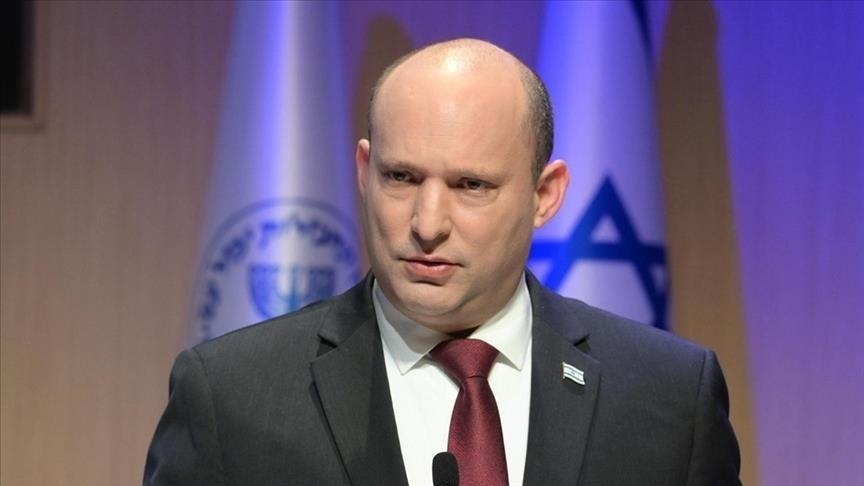
Former Israeli prime minister described the potential agreement as "a link in a chain of diplomatic failures for Israel"
Istanbul — Khaled Youssef, Anadolu Agency
Former Israeli Prime Minister Naftali Bennett criticized on Wednesday reports that President Donald Trump had approved a U.S.-Saudi agreement allowing Riyadh to establish a civilian nuclear program.
Bennett's criticism, who leads the opposition party Together, came in response to a report published by The Wall Street Journal on Tuesday evening regarding Trump's approval of the agreement, with the report expecting it to be signed on Wednesday.
On Tuesday evening, The Wall Street Journal quoted unnamed U.S. officials as saying that Trump approved an agreement on a Saudi civilian nuclear program.
The newspaper added that the agreement has a duration of 30 years, is estimated to be worth billions of dollars, and described it as a 'big win for the kingdom.'
It explained that it grants U.S. companies a central role in building the Saudi civilian nuclear program, while excluding foreign competitors.
It includes building nuclear reactors using U.S. company Westinghouse technology, among them the AP1000 reactor, which produces about 1,100 megawatts of electricity.
It also stipulates a joint U.S.-Saudi study over two years to assess the commercial feasibility of uranium enrichment within the kingdom.
If the study shows a need for it, an enrichment facility will be built under strict U.S. supervision to prevent the transfer of sensitive technology, according to the newspaper.
Under the agreement, Saudi Arabia commits not to turn to any other partner for 10 years if the United States objects.
As of 13:30 GMT, neither Washington nor Riyadh had commented on what the American newspaper reported.
The Israeli Channel 12 reported on Wednesday evening that Bennett said this agreement means joining a series of diplomatic failures that Israel has experienced recently.
Bennett explained that 'the nuclear agreement currently being worked on is a serious strategic failure that threatens our national security, and joins a series of diplomatic failures in which Israel loses its influence over its destiny.'
He added: 'Israel is not present at the negotiating table; it is absent from it, and under the outgoing government (the government of Benjamin Netanyahu), Israel is no longer even in the decision-making rooms.'
Bennett's remarks came after former Israeli Defense Minister Avigdor Lieberman called on Wednesday for the Netanyahu government to 'strongly oppose' this potential agreement.
Lieberman, leader of the right-wing opposition party Yisrael Beiteinu, claimed that the Saudi civilian nuclear program 'will end with the possession of nuclear weapons, and will lead to a frantic arms race across the Middle East.'
Israel is considered the United States' most prominent regional ally and the only country in the Middle East that possesses an officially undeclared nuclear arsenal not subject to the oversight of the International Atomic Energy Agency.
For decades, Israel has occupied Palestine and territories in Lebanon and Syria, refusing to withdraw from them, and also rejects the establishment of an independent Palestinian state as stipulated in relevant United Nations resolutions.
According to The Wall Street Journal, the Trump administration intends to submit the agreement to Congress in the coming days, and blocking it would require passing legislation with a two-thirds majority to override any presidential use of veto power.
Once the agreement is submitted to Congress, a review period of about 90 days of continuous sessions begins, during which lawmakers can object to it, otherwise it will enter into force.
Original source: Anadolu Agency




Comments (0)
Be the first to comment.