Reading the Fluctuations and Contradictions of 'Al-Qadadi'
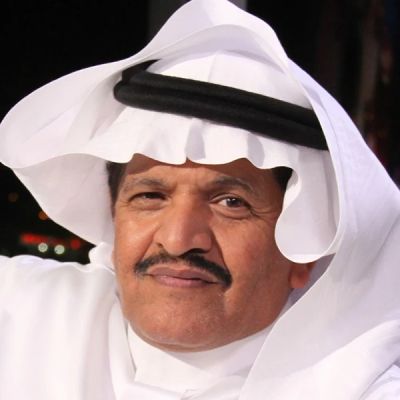
Adnan Jastaniah
Reading the Fluctuations and Contradictions of 'Al-Qadadi'
17 July 2026 - 00:02 | Last updated 17 July 2026 - 00:02
Follow Okaz channel on WhatsApp
In social norms, particularly in initiatives of reconciliation among people, we are accustomed to the initiator receiving words of thanks and gratitude from both parties or one of them, in appreciation of their efforts in mending fences and ending disputes. This is the familiar image established by society's values and ethics.
- But what caught my attention this time was a completely different scene, after colleague Muhammad al-Qadadi published a tweet expressing his thanks and gratitude to colleague Ahmad al-Shamrani, following a mediation by the latter that contributed to ending a legal case that was ongoing due to an offense he had suffered.
- And lest I be misunderstood, I appreciate the stance of colleague Ahmad al-Shamrani, and I see that what he did embodies a noble character reflecting the spirit of tolerance and reform. I also have no doubt that he expressed his thanks directly, verbally or through a private message accepting his intercession, as this is natural. However, the complete opposite happening and publishing this thanks publicly, coupled with reference to the details of the mediation, is what aroused my surprise, because it is customary that in such cases, the forgiving person often prefers to keep such initiatives away from the spotlight, to protect the feelings of the one he forgave, even if he did not mention his name, and seeking reward, not seeking praise.
- This situation brought back to my memory a television interview that brought together al-Qadadi and colleague Turki al-Ajma, in which he explicitly stated that he would not accept any intercession in a case where someone accused him of forgery, unless it came from specific Makkan figures whose names he mentioned himself.
- Out of curiosity, I went back to his account on the 'X' platform, searching for any indication that this mediation had taken place, or words of thanks he addressed to those whose intervention he had stipulated, but I found nothing... Here the questions began to impose themselves in search of an answer: Was the mediation not carried out at all? And if it was, why did he not thank the Makkan figures he mentioned by name? Or did he change his stance and concede? Or did the case end in another way? I have no answer, so I suffice with raising questions without anticipating answers or delving into intentions, even though his recent video keeps that accusation under the microscope, especially that the one who made it, to this day, has not apologized.
- This situation was not the only thing that caught my attention; I also recalled a number of media interviews and newspaper articles in which al-Qadadi spoke about historical issues concerning Al-Ittihad Club, then compared them with later statements, and found substantial differences in some narratives, perhaps most notably regarding the presidency of Al-Ittihad Club, and other historical information that he had previously presented differently.
- In truth, I do not see reviewing information as a flaw; rather it is a virtue if accompanied by acknowledgment and clarification. But when narratives change without explanation, that opens the door to legitimate question marks, and gives the follower the right to ask about the reasons for this change?!
- And when these positions come together—the mediation position, the intercession position, and the historical narratives position—they paint a picture worthy of contemplation, not because they condemn anyone, but because they diagnose a pattern of personalities whose words do not match their actions, volatile and contradictory in their stances.
- For this reason, I tried to read these situations realistically, away from emotion, and I looked into some studies that addressed the contradiction between discourse and practice, and I found that what most weakens a person's image before his audience is not the error itself, but the lack of consistency between what he says and what he does. People tolerate error, but they rarely tolerate contradiction.
- In the end, what I have written remains just a personal reading that may be right or wrong, while the full truth remains clear from a perspective that no two differ on: 'Credibility is built over years, and it may be shaken by divergent stances that even your closest people do not find a convincing explanation for, let alone the followers.'
Original source: Okaz




Comments (0)
Be the first to comment.