After Suffering from 'Havana Syndrome'... Former CIA Director James Woolsey Dies
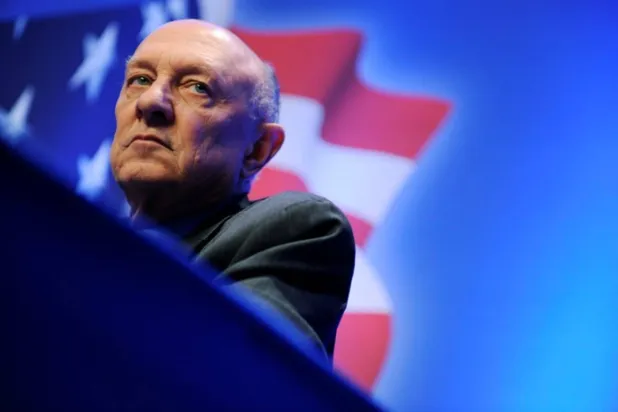
James Woolsey Jr., former director of the U.S. Central Intelligence Agency, has died at age 84, after a career spanning decades in intelligence and defense work.
James Woolsey Jr., former director of the U.S. Central Intelligence Agency (CIA), has died at age 84, after a career spanning decades in intelligence and defense work, during which he held prominent positions in Democratic and Republican administrations.
His wife, Conchita Sarnoff Woolsey, announced that the cause of death was a stroke, noting that his health had deteriorated in recent years as a result of being afflicted with what is known as 'Havana Syndrome,' the mysterious health condition that hundreds of American diplomats and intelligence officers have reported experiencing in various countries, according to The Washington Post.
Havana Syndrome is a mysterious health condition first reported in 2016 among U.S. and Canadian diplomats and intelligence personnel working in the Cuban capital, Havana, hence its name.
It is officially referred to in the United States as 'Anomalous Health Incidents' (AHIs), and its cause remains a subject of debate among scientists and intelligence agencies.
His wife explained that Woolsey began experiencing symptoms of 'Havana Syndrome' after two incidents: one in Washington in 2017 and another in Istanbul the following year.
Symptoms of this condition include dizziness, memory disturbances, and other neurological problems.
His wife said they traveled between several countries seeking treatment or a way to alleviate the symptoms, but all attempts failed.
Woolsey was married three times; his first marriage to Susan Hayley ended in divorce, then he married Nancy Miller, who died in 2019, before marrying Conchita Sarnoff, an anti-human trafficking activist, in 2020. He had three children from his first marriage, two stepchildren, and ten grandchildren.
Woolsey's sharp personality and strained relationship with the White House weakened his position (Reuters)
Leading the CIA in a Transitional Period
Woolsey served as Director of Central Intelligence between 1993 and 1995, during the administration of President Bill Clinton, a period that saw major challenges for U.S. intelligence agencies following the end of the Cold War and the collapse of the Soviet Union.
Much of his efforts focused on protecting the Agency from severe budget and personnel cuts at a time when the administration and Congress were seeking to reap what was then called the 'peace dividend' by reducing defense spending.
The Aldrich Ames Spy Scandal
His tenure witnessed one of the biggest crises in the history of the U.S. intelligence agency when the FBI arrested Aldrich Ames, a senior counterintelligence officer, in 1994, who was confirmed to have spied for Moscow for nine years.
Woolsey's decision to merely issue reprimands to several Agency officials, without firing or demoting any of them, drew widespread criticism in Congress.
He argued that the case reflected an 'institutional failure' within the Agency rather than the responsibility of specific individuals, noting that collective negligence led to the failure to uncover Ames, who was accused of causing the deaths of at least ten intelligence assets.
Strained Relationship with the White House
Woolsey sought to change the work culture within the Agency and was known among some staff by the nickname 'the vacuum cleaner' for his passion for obtaining as much information as possible.
But his sharp personality and strained relationship with the White House weakened his position, to the extent that he complained upon leaving office that he could not get an appointment with President Clinton.
The Clinton administration judged that he had failed to restructure the Agency and set new priorities, despite then-President's praise of him as a strong advocate for maintaining an 'unrivaled' intelligence apparatus.
Academic and Military Career
Robert James Woolsey Jr. was born in Tulsa, Oklahoma, in 1941.
He graduated with honors from Stanford University in 1963, then won a Rhodes Scholarship to study at Oxford University in the United Kingdom, and later earned a law degree from Yale University in 1968, where he served as editor-in-chief of the Yale Law Journal.
He also served in the U.S. Army before moving to Washington in the early 1970s to work as an assistant to arms control negotiator Paul Nitze, then as a legal counsel to the Senate Armed Services Committee.
Woolsey served as Undersecretary of the Navy between 1977 and 1979, during the administration of President Jimmy Carter, before later undertaking roles in the administrations of Republican Presidents Ronald Reagan and George H.W. Bush, including participation in arms control negotiations and reaching a European conventional arms control treaty.
Outside government work, he practiced law in Washington, representing American defense companies and foreign entities as a legal counsel.
Original source: Asharq Al-Awsat





Comments (0)
Be the first to comment.