Why do boys throw stones at trains in Egypt?

The government stressed the need to "hold those involved in train stoning incidents accountable, and not to show leniency or tolerance at all with any disruptive behavior that threatens the security and safety of public transport passengers."
Why do boys throw stones at trains in Egypt?
Government stresses accountability for perpetrators after repeated incidents
Repeated incidents of boys throwing stones at trains in Egypt despite warnings (Ministry of Transport page on Facebook)
Cairo: Asharq Al-Awsat
Published: 18:27-17 July 2026 AD - 02 Safar 1448 AH
Cairo: Asharq Al-Awsat
Published: 18:27-17 July 2026 AD - 02 Safar 1448 AH
Why do boys throw stones at trains in Egypt?
Repeated incidents of boys throwing stones at trains in Egypt despite warnings (Ministry of Transport page on Facebook)
The Egyptian Ministry of Transport issues repeated condemnations regarding incidents of "boys throwing stones at trains." Despite the ministry's warnings about the dangers of this, the recurrence of the incidents raises questions about the reasons behind the boys' behavior.
LIVE
An error occurred. Please try again later
With the circulation of footage of the latest train stoning incidents in Aswan Governorate (southern Egypt), the government stressed the need to "hold those involved in train stoning incidents accountable, and not to show leniency or tolerance at all with any disruptive behavior that threatens the security and safety of public transport passengers." The Ministry of Transport stated on Friday that "these actions are not limited to material losses, but they endanger train passengers."
Experts offered multiple interpretations regarding the motives for boys throwing stones at trains. They told Asharq Al-Awsat that "lack of sufficient awareness and improper upbringing are among the main reasons for these incidents."
The Ministry of Transport last week denounced "a group of boys throwing stones at a railway train while it was running in Aswan Governorate," and stated in a statement that "material losses occurred as a result."
Transport Minister Kamel Al-Wazir is directing that legal measures be taken in coordination with the Ministry of Interior and the Transport and Communications Police, "to identify the perpetrators of these incidents, pursue them judicially, and bring them to immediate trial."
He stresses that "there is absolutely no leniency or tolerance with any disruptive behavior that threatens the security and safety of users of public transport means."
The Transport Minister had made a phone call on Thursday to an Egyptian woman who documented the Aswan train stoning incident, and praised her role in "confronting the boys while they were stoning the train," considering it "a patriotic stance reflecting a degree of awareness and positive responsibility," according to the Ministry of Transport.
According to Hala Ramadan, director of the National Center for Social and Criminal Research: "The majority of train stoning incidents are carried out by boys in adolescence."
She says, "The nature of this age stage, along with a sense of adventure and challenge, may drive some of them to commit train stoning incidents." She explains that among the main reasons is "the lack of sufficient awareness among these boys about the importance of preserving public property."
Ramadan believes that "upbringing problems are among the main factors behind committing such incidents," and she says, "The intent to harm and damage are behaviors that express a state of protest among some segments."
The Egyptian government stresses holding those involved in train stoning incidents accountable (Ministry of Transport page on Facebook)
Immediate punishment for such incidents forms part of the deterrent and confrontational measures against train stoning incidents, according to Hala Ramadan. However, she pointed to the need to "take other measures to confront this, including roles for public upbringing institutions, and holding awareness meetings for youth in areas where train stoning incidents recur to warn against the dangers of this behavior."
The Ministry of Transport provides continuous awareness messages about the dangers of throwing stones at trains, and intensifies appeals and awareness videos on social media platforms, emphasizing in its messages that "preserving the railway facility is a shared societal responsibility."
Professor of Family Behavior and Human Development Expert Tarek Elias believes that "train stoning incidents primarily express a state of societal protest by some groups that feel marginalized." He pointed out that "public prosecution investigations with some boys accused in such incidents confirmed that the main motive is to express rejection of their difficult living reality."
Illiteracy is added to the reasons for attacking trains, according to Elias, who said: "Previous investigations with some accused in such incidents showed that they dropped out of education due to families' inability to bear expenses." He also noted that among the factors are "addiction and drug abuse."
He also noted that "the security solution will not prevent these incidents." He said, "The greater role in confronting this falls on civil society institutions, which must intensify awareness of the dangers of such incidents."
Topics
Most read
Today
Week
Related articles
What are the implications of the meeting of the Libyan 'Unity' Defense Undersecretary with the head of Egyptian intelligence?
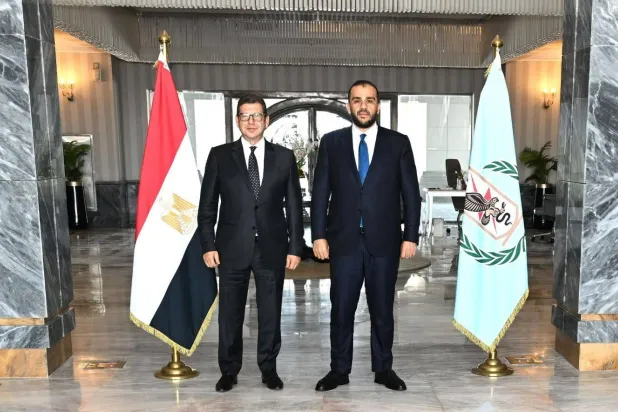
Rashad receiving Al-Zubi in Cairo (Libyan Unity)
Cairo: Gamal Gohar
Published: 18:19-17 July 2026 AD - 02 Safar 1448 AH
Cairo: Gamal Gohar
Published: 18:19-17 July 2026 AD - 02 Safar 1448 AH
What are the implications of the meeting of the Libyan 'Unity' Defense Undersecretary with the head of Egyptian intelligence?
Rashad receiving Al-Zubi in Cairo (Libyan Unity)
Tripoli and Cairo have expanded the scope of consultation and discussions regarding political and security concerns currently facing Libya, particularly concerning the activation of the "American initiative," which is supposed to contribute to establishing a unified government that leads the country to end the division it has been experiencing for nearly 12 years.
Lieutenant General Hassan Rashad, head of the Egyptian General Intelligence Service, met in El Alamein with the Undersecretary of the Ministry of Defense of the interim Libyan Government of National Unity, General Abdul Salam Al-Zubi, on Thursday, in his first official visit to Egypt, aimed at discussing the position on the initiative sponsored by Massad Boulos, Senior Advisor to US President Donald Trump.
Abdul Hamid Dbeibeh receiving Rashad in Tripoli (Dbeibeh's office)
Cairo adheres to its vision for resolving the Libyan crisis, which stems from "the importance of preserving Libya's unity and territorial integrity, unifying national institutions, and reaching a comprehensive political settlement through a purely Libyan-Libyan path that paves the way for holding presidential and parliamentary elections."
Observers believe that Cairo is cautious of any uncalculated steps that could deepen the division in Libya, rather than pushing towards unifying its institutions on stable institutional foundations. They point out that the Government of National Unity has not yet announced a clear position on the "American initiative," which is being consulted upon, and is among the files being discussed with Cairo.
Cairo did not announce the content of the meeting between Rashad and Al-Zubi, but the Government of National Unity in Tripoli said it comes within the framework of "continuous consultation between the two sides regarding developments in the situation in Libya, and enhancing joint coordination in a way that serves the security and stability of both countries."
It also indicated that the meeting "addressed a number of issues of common concern, including developments in the Libyan scene, ways to support efforts to unify national institutions, and enhancing security and military cooperation, in a way that contributes to consolidating stability and creating a suitable environment for proceeding with the political path."
The meeting of Rashad and Al-Zubi also touched on "discussing mechanisms to intensify coordination and consultation regarding regional security challenges," stressing the importance of continued joint work to enhance security and stability in the region and preserve the common interests of the two countries.
Original source: Asharq Al-Awsat



Comments (0)
Be the first to comment.