Iran Transfers Battle to Kuwait and Yemen

النظام الإيراني يشرع في تنفيذ تهديداته بتوسيع الحرب عبر فتح جبهتين جديدتين: الأولى في باب المندب عبر الحوثيين، والثانية عبر تهديدات غير مسبوقة للكويت.
On the ground, the Iranian regime has begun implementing part of its threats to expand the scope of the conflict by igniting two new border fronts: the first in the southern Red Sea, by threatening to close the Bab el-Mandeb Strait through the Houthis, and the second in the northern Arabian Gulf through direct and unprecedented threats against Kuwait.
The danger of this shift is not limited to Kuwait or the Red Sea, but extends to the entire regional security system. Iran is no longer confining the confrontation to its original parties, namely the United States and Israel, but has begun to transfer the conflict to neighboring countries and strategic corridors. This behavior does not represent a defensive reaction so much as it reflects a strategic direction that the Iranian military project has been building for decades, based on expanding influence and geopolitical control over surrounding countries.
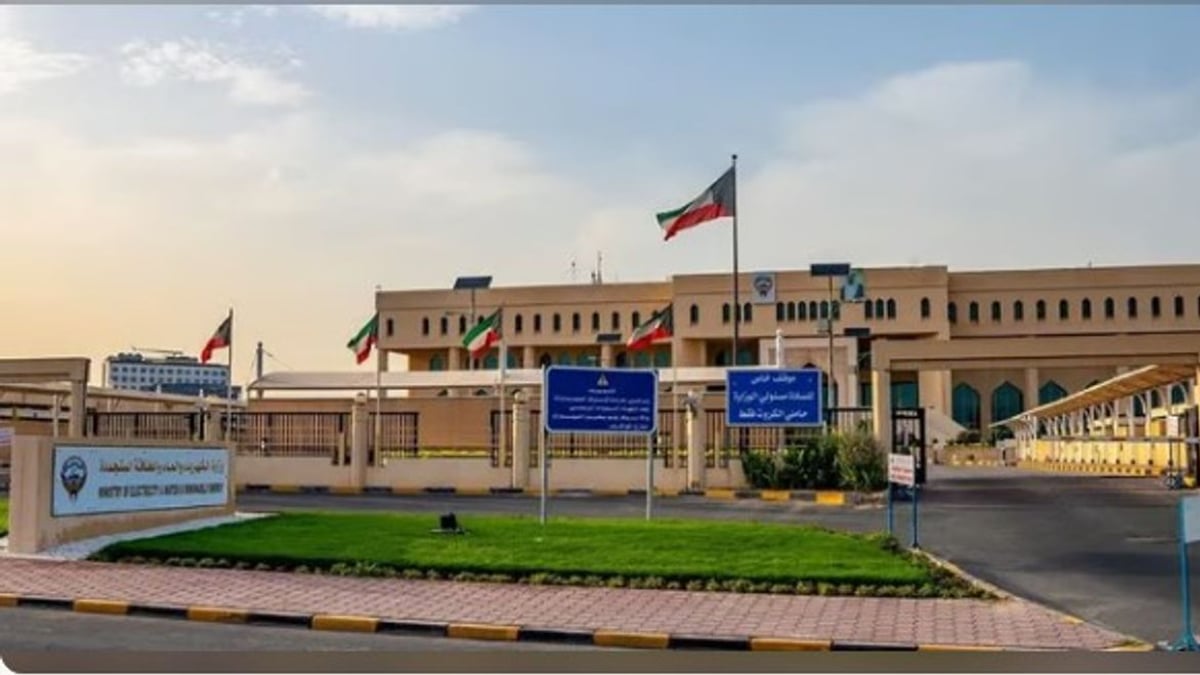
The statements emanating from Iranian institutions deserve attention, as the intensity of threats against Kuwait has increased. Tasnim News Agency issued statements that closely resemble the statements from Baghdad that preceded the Iraqi invasion of Kuwait in 1990. Tehran uses the limited American military presence in Kuwait as a pretext for attack, ignoring the fact that this presence dates back decades and primarily serves a deterrent function against any potential invasion, and was not a main base for recent American operations against Iran.
The question today is: How can Kuwait, along with the Gulf states, deal with this threat?
The challenge exceeds individual national capabilities and requires a return to the concept of collective action, through building a cohesive regional front supported by an international coalition that clearly rejects any pretexts for expanding the war or legitimizing aggression against neighboring countries. Washington, preoccupied with managing the military confrontation, may not be expected to lead the diplomatic initiative, but it can draw clear red lines affirming that the security of the Gulf and its sea lanes are among its supreme strategic interests. Iran has not only verbally threatened Kuwait, but has repeatedly bombed water and electricity facilities and expanded the circle of threat to include Bahrain as well.
It seems that Tehran realizes that tightening the naval blockade on its ports and the possible expansion of American operations on its coasts could cost it its influence over Hormuz, the most important pressure card it used in war and negotiations. Therefore, it is trying to produce alternative cards, including transforming Bab el-Mandeb into a strategic extortion point through the Houthis, and seeking to impose a new security reality in the northern Gulf, in an attempt that, although circumstances differ, recalls some features of the fait accompli policy followed by Saddam Hussein's regime in 1990.
It is noted that Iranian behavior is becoming repetitive; whenever it loses a strategic card, it hastens to open a new front to re-produce tools of pressure and extortion. To reduce political and legal costs and to avoid appearing as an aggressor state directly, it is likely to rely more on its regional proxies, such as the Yemeni and Iraqi militias.
What are the chances of success of this new Iranian positioning?
The answer is not easy because analyzing Iranian behavior cannot rely solely on assumptions of traditional rationality. The Iranian leadership also faces complex internal equations and fears that any impression of defeat could shake its domestic position, after spending decades of the country's resources on building military capabilities and funding wars.
It appears that the Houthis in Yemen have been tasked with turning Bab el-Mandeb into the operational alternative to the Strait of Hormuz, as Iran's ability to use the latter as a pressure card diminishes due to American military attacks. With the Houthis actually moving toward threatening navigation, it is likely that the Yemeni forces, along with the coalition led by the Kingdom of Saudi Arabia, will find regional and international support to prevent the disruption of one of the most important arteries of global trade.
The expected response is not limited to the military dimension; the diplomatic arena may be broader, especially on this front. The major powers that depend on navigation in the Red Sea, led by China and India, in addition to European countries, have a direct interest in ensuring freedom of navigation. Therefore, any military move aimed at ending the Houthi threat to the sea lane could gain broader international consensus, because it would be a defense of the principle of freedom of international navigation, not an extension of the ongoing war in the Gulf.
In any case, building this regional and international bloc is no longer a political option but a strategic necessity, not only to confront current threats but also to deal with any arrangements that the outcomes of the war may impose in the future. Iran is not only seeking to manage a temporary crisis, but is trying to redraw the strategic map of the region according to its new narrative, so that it emerges from the war—even if it ends early—with different zones of influence and rules of engagement than those that existed before the war. Hence, the debate is no longer just about how to end the war, but about the shape of the regional system that will subsequently form.
Source: Asharq Al-Awsat
Advertisement
Disclaimer: All published articles represent the views of their authors only.
Original source: Al Arabiya




Comments (0)
Be the first to comment.