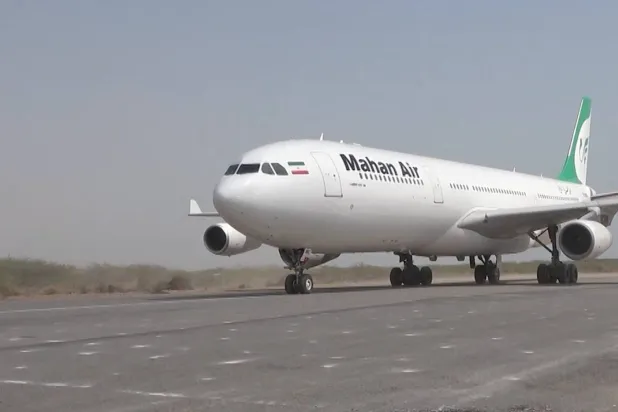
Iranian Mahan Air flight turned back after being denied entry to Yemeni airspace

The internationally recognized Yemeni government has vowed to block illegal Iranian flights following recent attempts to bypass official procedures, even as it welcomes an initiative to resume commercial flights from Amman to Sana'a to address humanitarian needs.
The legitimate government has pledged not to allow Iranian aviation to breach the country's airspace again, amidst Houthi threats to establish a daily air route between Sana'a and their backers in Tehran.
The legitimate Yemeni government prevented a plane belonging to the Iranian company Mahan Air from completing its flight to Sana'a and ordered it to turn back for failing to pass through approved official channels and procedures, according to Transport Minister Mohsen Al-Omari.
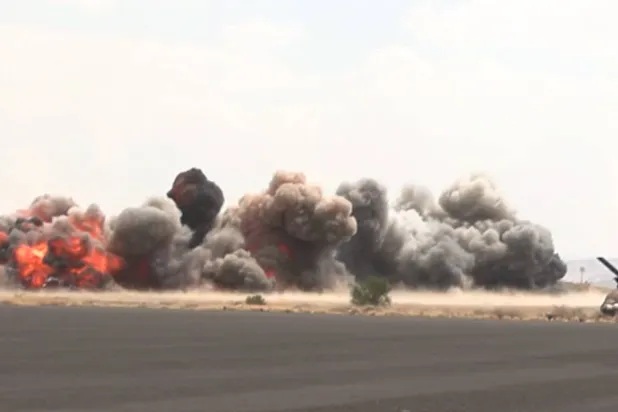
This comes days after the landing of another Iranian flight at Sana'a Airport was thwarted following strikes on the airport, which forced the plane to change course and land at Hodeidah Airport.
The Yemeni government had previously vowed to block any Iranian flights that do not adhere to official procedures, amid escalating tensions with the Houthis and Tehran.
Meanwhile, the UN Special Envoy for Yemen, Hans Grundberg, welcomed the initiative by Jordanian authorities on Saturday to resume flights between Amman and the Houthi-controlled capital, Sana'a.
The Foreign Ministry announced on Friday that Royal Jordanian Airlines would implement an initiative to operate regular flights from Amman to Sana'a, "in response to the humanitarian needs of our brothers in the Republic of Yemen."
The Jordanian Foreign Ministry stated that this move aims to "support the efforts of the sisterly Kingdom of Saudi Arabia in backing the peace process in Yemen and implementing previous understandings regarding operating commercial flights between Jordan and Yemen," with flights to Sana'a to begin "once all required technical and logistical procedures are completed."
This comes as the specter of war looms again between the internationally recognized government and the Houthi militia, following the breach of Yemeni airspace on July 13th by an Iranian "Mahan Air" plane carrying a Houthi delegation that had attended the funeral ceremony of the former leader Ali Khamenei in Tehran—a flight the Yemeni government deemed a violation of national sovereignty and a trigger for escalation threatening years of de-escalation.
Last Monday, the Yemeni government prevented the second Iranian flight from landing at Sana'a Airport after it was targeted by a series of strikes, forcing the plane to divert to Hodeidah Airport (west).
At the time, the legitimate government vowed not to allow Iranian aviation to breach the country's airspace again, against the backdrop of Houthi and Iranian threats to operate a daily air route between Sana'a and Tehran, which they followed up with drone attacks targeting Saudi civilian facilities.
Closing the pretexts of the blockade: The Royal Jordanian initiative is viewed as a response to government efforts to support UN and regional mediation by facilitating flights between Sana'a and Amman to serve patients and citizens as a first phase, which is expected to be followed by other destinations, with the operating airlines managing their own flights.
Over the past years, both sides have traded accusations regarding the causes of the obstruction of the Houthi-controlled airport, but the legitimate government has renewed its determination to support the resumption of its activities "to serve citizens in areas controlled by the militia" rather than turning it into "a military barracks to receive Iranian support," according to a previous government accusation against the Houthis, who reject this, conditioning it on receiving operating revenues and the Yemenia Airlines company. However, the legitimate Yemeni government has revealed the Houthis' intent to operate an air bridge with Tehran via an airline belonging to the Revolutionary Guard "to facilitate the transport of weapons and Iranian specialists to the militia's areas."
To show good faith and negate Houthi arguments about the "blockade of Sana'a airport," the Yemeni government hastened to welcome the Royal Jordanian Airlines initiative to resume flights between Sana'a and Amman, confirming its readiness to provide all necessary facilities for its success.
In a statement, it said that the Jordanian initiative aligns with its previous proposals to operate Sana'a Airport legally and safely through the national carrier, Yemenia Airlines.
It reiterated its accusation that the Houthis "thwarted previous initiatives" and called on the group to enable the company to resume its work and release its detained funds and assets.
The operation of Sana'a Airport has remained one of the most prominent points of contention between the government and the Houthi group since the outbreak of war in 2014, amidst regional and international efforts to keep civilian and humanitarian flights away from military escalation.
Other conditions: Despite the breakthrough in air travel created by the Royal Jordanian announcement, which was welcomed by citizens in Sana'a and neighboring governorates, the Houthi position was as observers expected, as the group rejected this initiative and continued to set new conditions ensuring that such steps result in financial benefits for them.
The "Al-Masirah" channel quoted a source in the group's negotiating delegation as saying that the resumption of flights to Sana'a is welcome if it comes within an agreement that ends what he described as the restrictions imposed on the airport, adding that the group demands it be opened to all destinations without conditions.
However, he also conditioned that these measures include "other humanitarian issues, including paying employee salaries," in reference to the legitimate government, which they demand to pay the salaries of employees in areas they control, while they distance themselves from any obligations to the society they rule with the force of arms, which has exacerbated the humanitarian situation there.
According to observers, the swift Houthi rejection reinforces the position of the President of the Yemeni Presidential Leadership Council, Rashad Al-Alimi, who accused the group of obstructing initiatives to restart the airport.
Al-Alimi said last Thursday that the state "was never a reason for closing Sana'a Airport."
He listed in confirmation a set of successive initiatives to operate flights via the national carrier "Yemenia Airlines" and to guarantee the continuation of travel legally for all Yemenis.
Combat readiness, no Houthi gains: The crisis has escalated to the point of frequently hinting at resorting to force and returning to the language of war, the various fronts of which have seen an almost complete standstill since entering an undeclared UN-brokered de-escalation in 2022.
The Houthi escalation was met with a government endeavor towards "sticking to the peace option," but at the same time, the President of the Presidential Leadership Council, Rashad Al-Alimi, indicated that "the armed forces and security agencies will remain in a state of readiness to deal with any escalation that threatens the country's sovereignty and security."
Al-Alimi said in a meeting that included provincial governors, the Supreme Security Committee, intelligence services, the Prime Minister, and several ministers, that the government dealt with the "repeated Iranian violations of Yemeni sovereignty" and the escalation of their Houthi proxy—which is designated as a terrorist group—with "state logic," based on the fact that "the priority lies in protecting sovereignty without being dragged into confrontations that give the group an opportunity to escape its crises."
Regarding the timing of the measure, which some observers considered a "concession to Houthi conditions," Al-Alimi confirmed "the state's adherence to its exclusive right to manage airspace and airports."
He pointed out that the state's responsiveness to humanitarian initiatives to alleviate the suffering of citizens does not mean relinquishing sovereignty or granting the Houthi group any legitimacy or political gains.
Original source: Independent Arabia




Comments (0)
Be the first to comment.