Sailors Stranded and Starving in Hormuz... Death Pursues Them Amid Shelling and Neglect
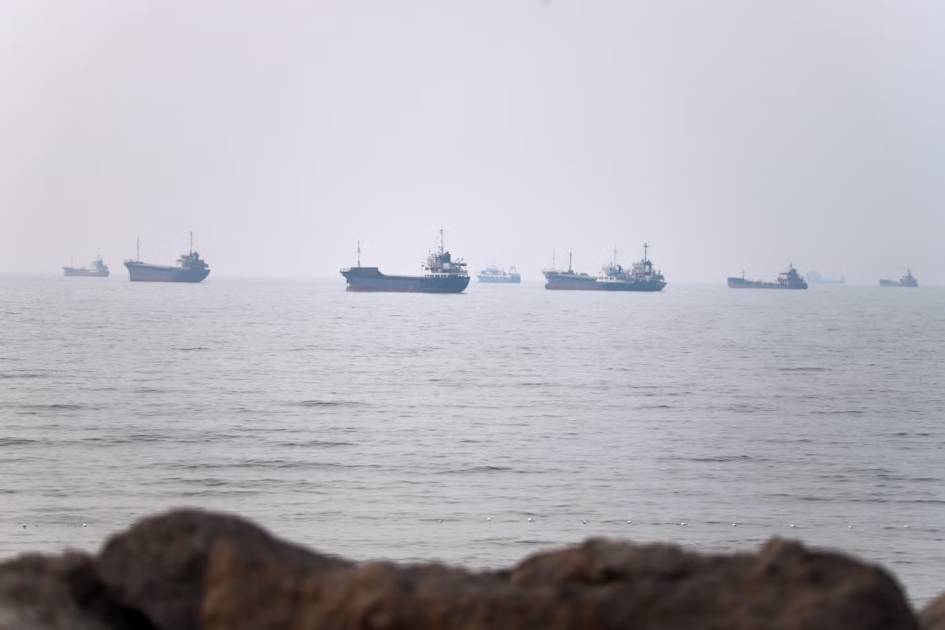
Summary: The impact of the military escalation in the Strait of Hormuz is not limited to disrupting global oil trade, but extends to thousands of sailors stranded on their ships without food, medicine, or wages. Between Iranian attacks and the complexities of maritime law, unionists and UN officials warn of a humanitarian catastrophe escalating away from the spotlight.
"Our ship crossed the strait safely." These were the last words Hiramb Karmakar sent to his family after his ship left the Strait of Hormuz.
The 30-year-old marine engineer did not know that would be the last text message he would send in his life. Hours later, he was killed in an Iranian attack targeting his ship, the 'GFS Galaxy', flying the Cypriot flag, as it passed off the Omani coast last Sunday.
Karmakar was listed as missing for several days before his family in India received the news they feared last Wednesday.
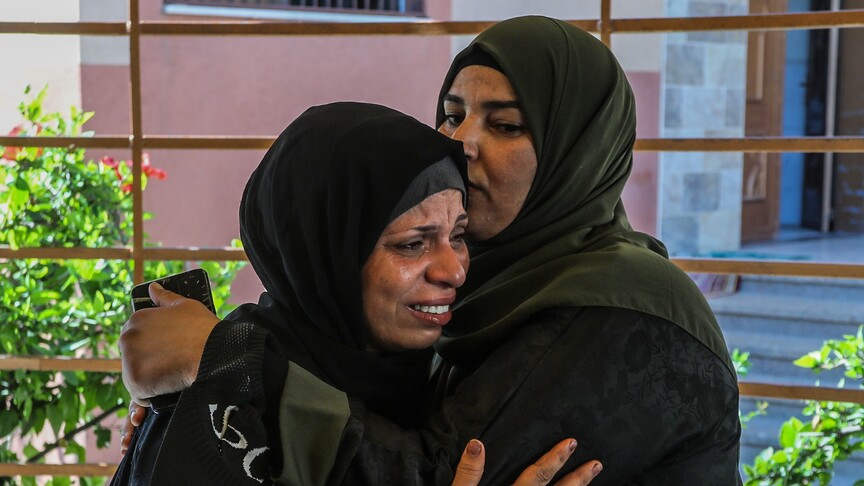
His father-in-law Vivek Tandon told The National: 'We received a condolence message from the company informing us that Hiramb is no longer alive. Everyone is in shock, and all we want now is to recover his body to complete his funeral rites.'
Read more
The Game of the Hormuz Weapon... Bigger Than America and Iran
Sailors Stranded Due to Closure of Strait of Hormuz Struggle to Survive
Options for 'Hormuz Sailors' Limited to Corridors of 'Bitter Sweetness'
Sailors Stranded in Gulf Suffer 'Cocktail' of Psychological Pressures
Stranded Sailors Look to Hormuz... Strait of Fear and Hope
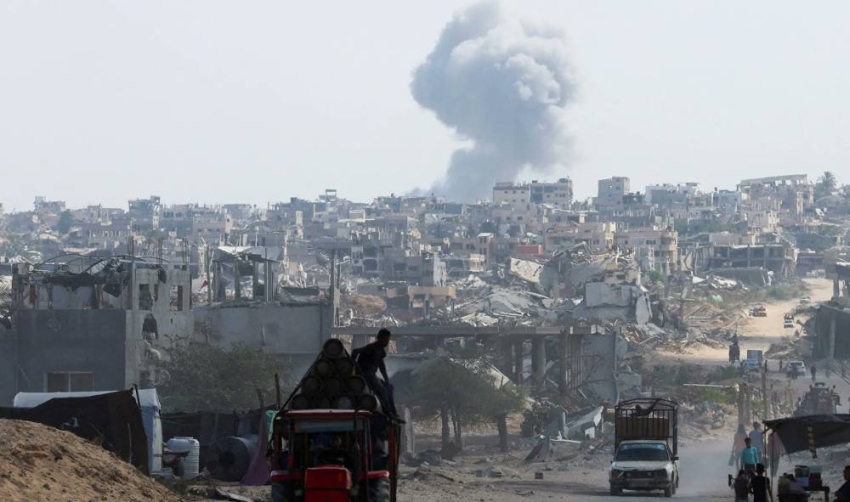
The US Central Command announced that the ship, a container carrier heading to Dubai with 24 crew members on board, was hit by an unknown projectile while crossing the Strait of Hormuz. Since the outbreak of the US-Israeli war against Iran last February, ships have been subjected to repeated attacks as part of Tehran's efforts to use the strait as a pressure card to disrupt oil supplies and unsettle the global economy.
Karmakar was not the only sailor who died while crossing the strait; at least 16 other sailors have been killed since the war began, most of them Indians.
Rohan Kumar, 31, was killed after the two Emirati oil tankers 'Mombasa B' and 'Al Bahia' were attacked last Tuesday. His brother Manish Kumar told Hindustan Times that Rohan was 'working tirelessly at sea' to support his family, adding 'those dreams are now shattered.'
As a result, India banned its sailors from working in the Strait of Hormuz until further notice. According to the International Maritime Organization, there are more than 20,000 workers of various nationalities in the region, with plans to evacuate at least 6,000 of them who are still stranded.
Hiramb Karmakar, 30, and Rohan Kumar, 31, were killed in Iranian raids on commercial ships (Forward Seamen's Union of India/photo from victim's family)
Those who do not die or get injured in Iranian attacks face horrific conditions on board ships, as labor unions confirmed to The Independent that the crisis has worsened into a humanitarian catastrophe. For weeks, sometimes months, sailors have been left without food or fuel to operate basic services, including air conditioning, amid scorching summer temperatures, in addition to lacking medicine.
Most of these sailors come from Global South countries, and their families depend entirely on their income. However, many have not received their salaries for months, according to unions. Behind the headlines about the slowing global economy, fuel shortages, and fluctuating oil prices, a heavy human cost is hidden.
Mohamed Al-Rashidi, coordinator of the International Transport Workers' Federation network in the Arab world and Iran, says: 'This is impunity. It is a form of modern slavery and systematic exploitation. Especially when people are deprived of food and water. These are basic human rights.'
The International Transport Workers' Federation confirms that it has received more than 3,000 distress calls from stranded sailors since last February.
Al-Rashidi explains: 'This number does not represent the number of individuals; it is much higher. Each call we receive comes from a person representing his crew, which may include five people or 20 people.'
Stranded in a Legal Gray Zone
Most requests relate to unpaid wages or the desire to return home, while about 10 percent of them are linked to concerns over shortages of supplies and fuel.
Al-Rashidi says workers live in a state of constant fear, as they have been effectively left on board ships without legal protection.
Empty refrigerators and food stores on board stranded ships (International Transport Workers' Federation)
Under the Maritime Labour Convention of 2006, crew members are considered 'abandoned' if they are deprived of food, water, fuel, and medical care for at least two months.
However, implementing the convention faces great difficulties, as international waters often become a legal gray zone. The ship's crew may consist of multiple nationalities, while the ship flies the flag of a country unrelated to the port of arrival or the operating company, which may itself be registered in another country. This complexity makes determining responsibilities a long and complicated process that may take months before a solution is reached.
Meanwhile, Al-Rashidi says many sailors have reached the brink of despair.
He explains: 'One person told me he would end his life if he did not find a solution. And this is not the only case we have received since the start of the war; a person has limits.'
Others suffer from chronic diseases such as high blood pressure and have gone months without medication. One person needs to see a doctor for a possible prostate problem after noticing blood in his urine.
Frozen bread and dwindling supplies on a ship in the Strait of Hormuz (International Transport Workers' Federation)
Shipping companies' responses to these cases vary. Some demand sailors pay the cost of their return tickets to their countries, which may exceed a thousand dollars. For a sailor whose salary does not exceed $200 a month, these amounts seem exorbitant and unbearable.
Al-Rashidi recounts the case of a worker who demanded to be repatriated; the company promptly removed him from work and confined him to his cabin.
The International Transport Workers' Federation and other unions are working on developing collective bargaining mechanisms that give sailors the right to refuse passage through the Strait of Hormuz.
But thousands of non-unionized workers remain unprotected, working under precarious contracts and lacking sufficient knowledge of their rights. The number of ships operating outside the union umbrella is estimated at about 15,000.
Unions demand compensation for workers whose lives were endangered while performing their duties.
Sailors Turn to the Courts
In a case described as unprecedented, three Thai sailors who were aboard the ship 'Mayuri Naree', which was hit by a projectile north of Oman on March 11, filed a lawsuit against the ship's operating company on charges related to workers' rights violations and wrongful termination.
The attack had killed three people, while 20 others were rescued.
The lawsuit, filed early this month, is based on the plaintiffs risking their lives by sailing through the strait despite known security dangers, according to their lawyer Konpat Singthong.
Original source: Independent Arabia

Comments (0)
Be the first to comment.