Trump vows to hold Iran accountable for every US soldier killed
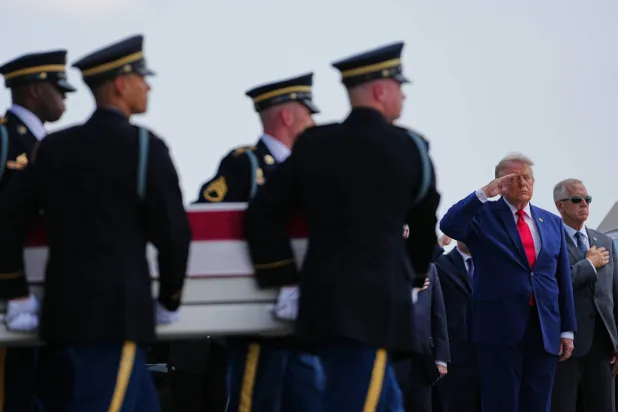
US President Donald Trump vowed that Iran would pay double for killing any American soldier, saying that each time Tehran kills a US military member, 'it will pay many times over,' as the death toll of US forces since the start of the war rose to 17 service members, with costs reaching $37.5 billion.
Trump participated on Wednesday at Dover Air Force Base in a ceremony transferring the remains of four service members killed in Jordan and Iraq, amid growing pressure on his administration to clarify the war's objectives and exit strategy.
Trump arrived at the base to take part in returning the soldiers' remains to their families, his third attendance at this military tradition since the war began on February 28.
He said before leaving Joint Base Andrews that his message to the families of the fallen would be: 'We love you. We love your children,' adding: 'All you can do is give them your heart.'
The ceremony includes the remains of two soldiers killed in an Iranian attack with missiles and drones on a base in Jordan, along with the remains of a third soldier who was declared missing after the same attack, before the Defense Department said it believes he was killed.
Also returned were the remains of a fourth soldier killed in Iraq while dealing with an Iranian drone.
US President Donald Trump and Defense Secretary Pete Hegseth salute during the ceremony transferring the casket of Sergeant Michael Emmanuel Swinton, killed in an attack on Erbil Air Base in Iraq (AP)
The Defense Department had identified the two soldiers killed in Jordan as First Lieutenant Tyler James Feehan, 25, and Private First Class Isabella Gonzalez, 19.
It said Sergeant Angel Rampersad, 28, is the soldier who went missing after the attack and is believed to be dead.
The soldier killed in Iraq is Sergeant Michael Emmanuel Swinton, 30, who died during a controlled detonation of an Iranian drone at an air base in Erbil.
First Killed by Direct Iranian Fire
The soldiers killed in Jordan were the first American fatalities from direct Iranian fire since the early days of the war.
US Central Command said the attack was carried out with ballistic missiles and drones, targeting forces deployed as part of the US mission against ISIS.
The command initially announced two soldiers killed and a third missing, before remains were found whose identities were not immediately confirmed.
A US Army team carries the casket of First Lieutenant Tyler James Feehan, killed in an attack on Muwaffaq Salti Air Base in Jordan on July 17 (AP - Getty)
The Defense Department later said Rampersad is believed to be the missing soldier, with his official status still listed as 'missing in action.'
The losses came during a new wave of Iranian attacks on sites housing US forces in Jordan and Iraq, coinciding with the eleventh night of US strikes inside Iran.
According to the Associated Press, the Defense Department announced the deaths of three additional service members in recent days, raising the toll to 17 killed, plus more than 100 wounded since the beginning of July.
Trump had said air defenses intercepted most of the munitions targeting US forces, but acknowledged that some breached the defenses in Jordan.
He added: 'We stopped almost everything, but something managed to get through in Jordan.'
The US president did not specify whom he blamed for the failure, merely saying that relying on others to protect US forces 'doesn't always work.'
0 seconds of 0 secondsVolume 90%
Press shift question mark to access a list of keyboard shortcuts
00:00
00:00
00:00
Trump vowed that Iran would pay double for killing any American soldier, and said that each time Tehran kills a US military member, 'it will pay many times over.'
He earlier affirmed that the United States continues to strike Iran 'in honor' of the soldiers who were killed.
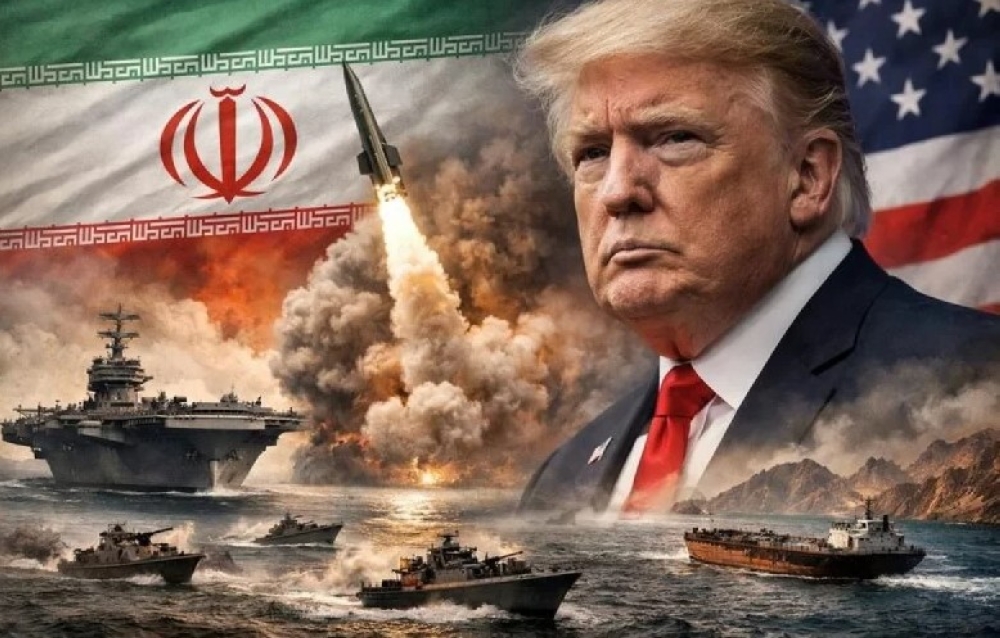
In his latest threats, Trump announced that the United States would destroy a bridge or power station inside Iran for every Iranian attack on a ship in the Strait of Hormuz, after the two sides exchanged strikes amid stalled diplomatic efforts to restore a temporary ceasefire.
US forces deployed in the Middle East face increasing missile and drone attacks, as the scope of Iranian retaliation expands to include sites in Jordan and Iraq.
The US State Department also warned its citizens of the possibility that Iran and its supporting groups could target American interests or US-linked sites outside the region.
Congressional Pressure
The rise in the death toll coincided with increasing financial costs of the war, estimated by Defense Secretary Pete Hegseth at about $37.5 billion.
Questions are mounting in Congress about the war's duration, its ultimate objectives, and the strategy the administration intends to follow to exit it.
During a stormy session before the Senate Appropriations Committee, Hegseth defended the administration's request for additional funding to continue operations, amid interruptions from protesters and questions from Democratic and Republican members about the lack of a clear strategy to end the war.
US Defense Secretary Pete Hegseth and Joint Chiefs of Staff Chairman General Dan Kain arrive at Dover Air Force Base to participate in the ceremony transferring the remains of US soldiers killed in Jordan and Iraq during the war with Iran (Reuters)
Hegseth said the additional funding is an 'urgent and necessary' need, warning that without it the military would face a severe resource shortage.
Republicans are pushing a $95 billion package that includes funding for military operations, along with other items related to farmers and voting procedures.
The cost of the war includes airstrikes and missile strikes, strengthening defenses at US bases, intercepting missiles and drones, and deploying troops and naval vessels to the region.
Oil and gasoline prices have also risen with the disruption of navigation in the Strait of Hormuz and threats to shipping in the Bab el-Mandeb, increasing the economic pressures accompanying the war.
Trump faces increasing pressure to end the confrontation, especially with the approach of the midterm congressional elections in November, and amid criticism from his political base about getting involved in a long war in the Middle East.
Trump had run his previous campaigns on a platform of avoiding extended wars, but he insists that the United States has not finished its mission in Iran and will not withdraw for now.
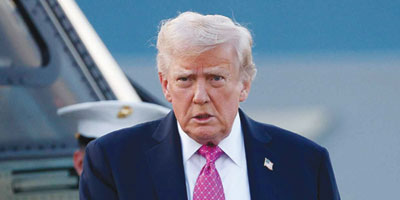
US President Donald Trump speaks to journalists before boarding Air Force One at Joint Base Andrews in Maryland on Wednesday (AP)
Dover Ceremony
The transfer of remains ceremony at Dover Air Force Base is considered one of the most solemn duties for US presidents, as flag-draped caskets are carried from the military aircraft to vehicles that transport them to the base's forensic facility.
First Lieutenant Feehan is to be posthumously promoted to captain and awarded the Bronze Star, Purple Heart, and Combat Action Badge.
Swinton will also receive the same awards, with promotion to sergeant first class.
Trump had participated in similar ceremonies twice since the start of the war, the most recent in March.
Original source: Asharq Al-Awsat

Comments (0)
Be the first to comment.