Can Klopp revive German football's glory days?

Klopp has a track record of reviving fallen giants... which prompted the German Football Association to give him the job at this stage.
Two years after stepping down as Liverpool coach due to feeling drained, Jürgen Klopp returned to the dugout to take on the enormous task of restoring German football to its former glory. The most decorated national team in European major tournaments has been on a streak of failures since winning the World Cup in 2014, transforming from a formidable force into a team stumbling from setbacks to disappointments. Klopp has a proven record of reviving struggling giants and returning them to the top of the game, which led the German Football Association to entrust him with leading the national team at this stage.
While the German media greeted the news with high hopes that Klopp, 59, would build a team employing the 'heavy metal' style reminiscent of his best periods at Liverpool and Borussia Dortmund, the most pressing task ahead of him appears more fundamental. At his first press conference with Liverpool in 2015, Klopp said: 'If someone wants to help Liverpool, they should turn from a doubter into a believer.' Today, with the four-time world champions reaching new lows, his primary mission is to restore the lost confidence in German football.
'The Normal One'
Klopp's unconventional story has long been told almost as a legend. As a player, the Stuttgart native spent most of his years with Mainz in the second division. The former defender said of his playing career: 'I had fifth-division talent and a first-division (Bundesliga) brain. The result was a second-division career.' Klopp took over Mainz as coach at age 33, saved them from relegation, then led them to promotion to the top flight for the first time in their history.
In 2008, he took charge of Dortmund, the 1997 Champions League winner that was going through a tough period. Dortmund was still recovering from a crisis that nearly led to bankruptcy, after at one point being forced to borrow €2 million ($2.3 million) from rival Bayern Munich to pay player wages, and had finished the season before Klopp's arrival in 13th place. Klopp led Dortmund to two consecutive Bundesliga titles and to the 2013 Champions League final, where they narrowly lost to Bayern. After a short break, Klopp moved to Liverpool in 2015. There he was tasked with a similar mission to that in Dortmund: resurrecting a struggling giant, but this time on a global scale.
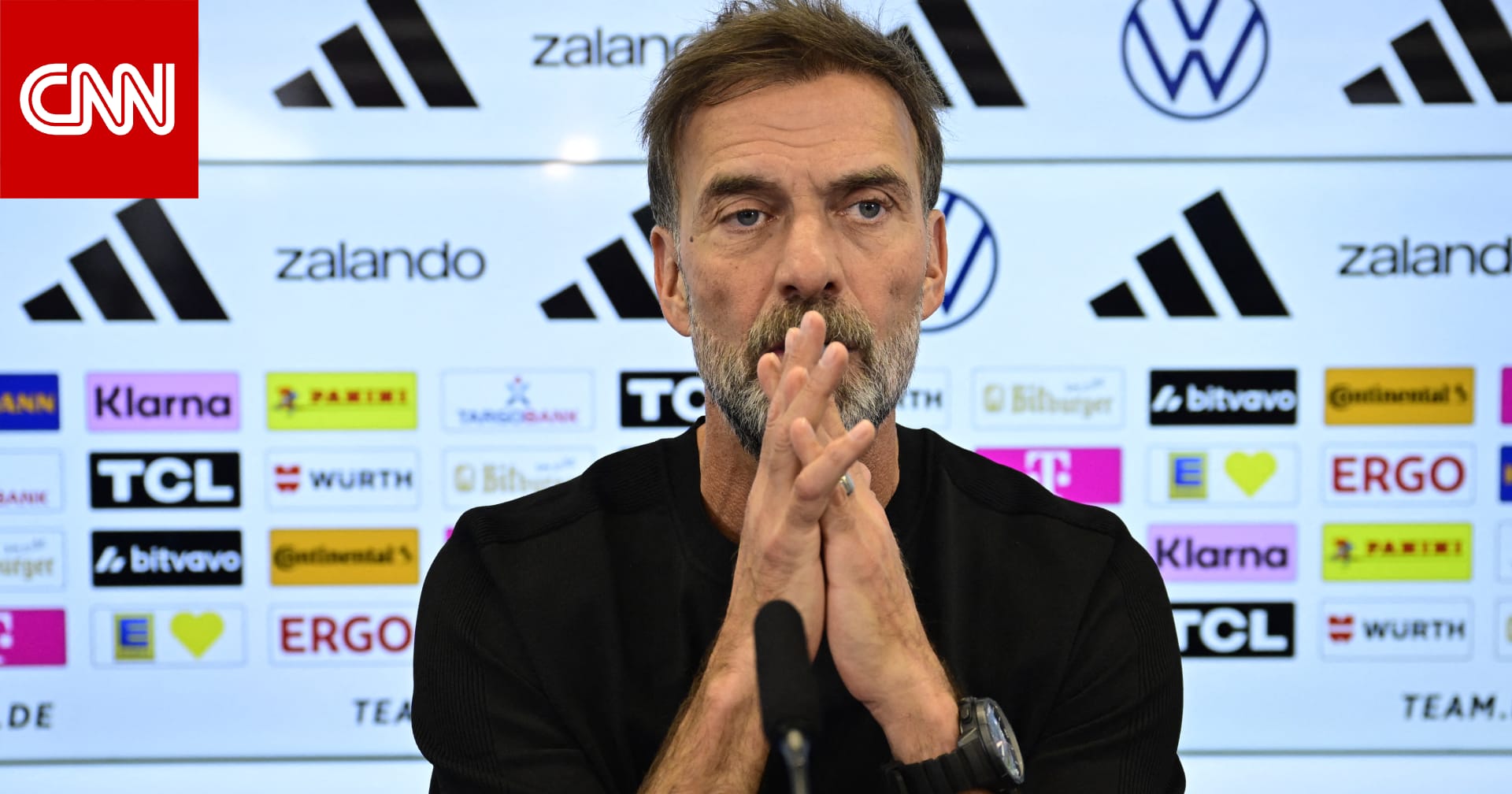
Klopp during the press conference after his appointment as national team coach was announced (EPA)
In his first press conference, Klopp displayed the humor and self-awareness that became his trademarks, declaring himself 'The Normal One,' in stark contrast to José Mourinho, who had dubbed himself 'The Special One' and left Chelsea in the year the German arrived in the Premier League. Klopp showed the down-to-earth qualities that made him beloved by fans beyond the English Merseyside region. Klopp, whose contract takes effect on August 15, expressed his immense delight at taking the job, saying in the press conference: 'It's a great honor to sit here. I was aware of the size of the task, but when you are involved, you feel the responsibility even more. It's a very special day for me.' At the same time, Klopp warned the press that he would resign if they misbehaved, saying: 'It's not just about the first team, but our immediate priority is to deliver better performance with the players we have available.'
Amid talk of the German team lacking a world-class player of the highest caliber, Klopp revealed: 'As a coaching staff, we aim to deliver a complete performance. We have a few weeks before the first match, which is enough time for me to prepare. We are all ready.' Klopp stressed: 'The day you don't want me, tell me and I'll leave,' before seeming to warn the assembled media: 'If you misbehave and don't leave my family alone, I will leave.'
Klopp continued during his introduction to the media: 'We have to do everything we can; not to become world champions, but to play in a way that proves we can achieve that.' He added: 'We cannot achieve that without the fans standing by us. I want us to play football that makes people go home and say: Wow, that was really great.' Klopp explained that it would require 'a degree of patience' to implement his ideas. Klopp agreed with the view that the German team, four-time World Cup winners, currently does not match teams like France and sits 12th in the FIFA rankings. But he continued: 'Can we beat the 11 teams ahead of us? Yes,' before adding a touch of realism about the current squad's lack of star power. He added: 'Success is performance relative to expectations. And our expectations must be realistic.'
Klopp bids farewell to Liverpool fans after a storied career (AP)
'From Doubter to Believer'
Klopp diagnosed Liverpool's problems as not merely a lack of talent but also a lack of self-belief. Nine years later, after winning every possible title, including the league and Champions League, Klopp's phrase 'from doubters to believers' became synonymous with the club's transformation. Klopp left Anfield in 2024, and after his departure, several clubs and national teams expressed interest in his services, including Real Madrid and the England national team. But as time passed, and with Klopp seemingly comfortable in his role as Head of Global Soccer for Red Bull, doubts grew about his return to coaching.
In a media interview in January, Klopp hinted that he had ended his coaching career, saying: 'I don't expect to change my mind, but I don't know.' He added: 'That might sound arrogant, but I know I can coach a football team. But I don't need to do that until the last day of my life.' Although the prospect of returning to the daily grind of club coaching began to fade, the position of Germany coach always remained most capable of luring him back. But a new World Cup failure, exiting in the round of 32 against Paraguay, opened the door for Klopp's return.
Germany's problems seem numerous and varied, but as was the case at Anfield, the main ailment is a loss of confidence. The reputation Germany built as a confident tournament team that delivered its best under the spotlight has largely evaporated. Perhaps the best image of Germany's situation came during the penalty shootout against Paraguay. After Manuel Neuer saved the fifth attempt to keep Germany's hopes alive, captain Joshua Kimmich was pleading with hesitant players to take the sixth penalty. It was a far cry from the team known for its mental toughness, which had won its last six penalty shootouts in major tournaments; defender Jonathan Tah, who had never taken a penalty in senior football, stepped up and kicked the ball over the bar.
Original source: Asharq Al-Awsat




Comments (0)
Be the first to comment.