The Revolution of Numbers: Full Harvest of the 2026 World Cup and Observations Unseen on Screens

المنتخب الإسباني يحرز لقبه الثاني بفوزه على الأرجنتين بهدف نظيف في الوقت الإضافي، في نسخة استثنائية تستضيفها ثلاث دول. الهيمنة الأوروبية تتجسد بوصول ستة منتخبات إلى ربع النهائي، فيما تسجل المنتخبات العربية عوائد مالية قياسية تتجاوز 115 مليون دولار.
Blatant European dominance returns to professional planning and sustainable financial and technical investment
Record Arab participation saw wide disparity in results
The tournament witnessed record financial harvest for Arab teams, with total revenues exceeding $115 million
Major leagues are the primary engine of the World Cup
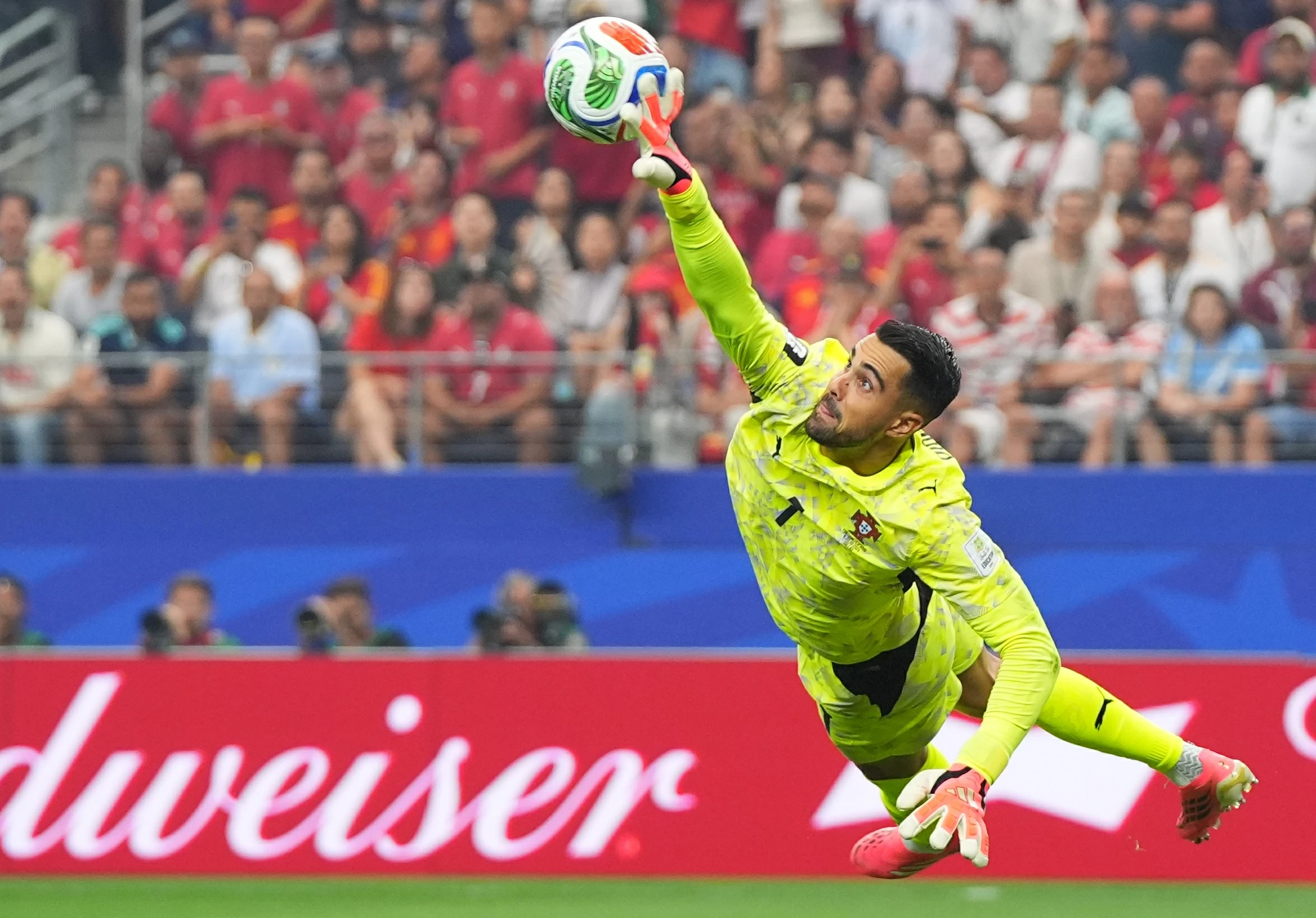
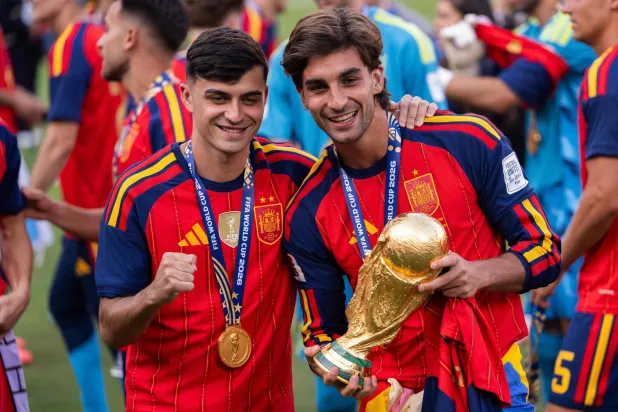
The Spanish national team was crowned champion of the 2026 World Cup for the second time in its history after an exciting victory in the final match against its Argentine counterpart 1-0 in extra time.
This historic and exceptional edition was co-hosted by three countries: the United States, Canada, and Mexico.
As soon as the final whistle blew for the 2026 World Cup, attention immediately turned to the exceptional 2030 edition! It will not be just an ordinary football tournament, but a historic intercontinental journey celebrating the World Cup's centenary.
This edition will make history as the first tournament to be held across three continents and distributed over six countries, honoring 100 years of enchanting passion that began in 1930.
The blatant European dominance in the 2026 World Cup stems from solid foundations built by years of professional planning and sustainable financial and technical investment in the old continent.
The arrival of six European teams—France, Spain, Belgium, England, Norway, and Switzerland—in the quarterfinals was not a fleeting surge or a stroke of luck, but a living embodiment of the firmly established football adage: 'A strong league necessarily produces a strong national team.' The top five leagues have become the factory and technical laboratory that shapes the standards of modern football in terms of high speed, strict tactical commitment, and high physical capacity.
This organizational superiority was not limited to European teams but also formed the backbone of other identity teams that succeeded in breaking this dominance and reaching this advanced stage. The Moroccan team, the sole Arab and African representative at this stage, and the Argentine team, the defending champion and representative of South America, draw their striking strength from the fact that most of their key players are professionals and shine daily within those major European clubs. This constant exposure to the highest levels of global competition has given these players the mental experience and physical readiness to compete with and outperform the giants of the game.
In the current era, football has transcended the concept of relying on innate or individual talents; reaching the final stages of major global tournaments is now closely linked to having an integrated and sustainable professional environment that nurtures the player from his development and continuous growth.
These findings serve as a clear and emphatic message to all football associations around the world: the real and guaranteed gateway to building national teams capable of competing and reaching the podium begins with reforming local competitions, implementing comprehensive professional standards, and smart integration into the European football system that leads the development of the game globally.
Arabs: From Honorable Participation to Serious Contender
Nations and peoples remain alive through their achievements, and the value of civilizational and sporting achievement stems not from mere transient presence but from dedication and hard work that transforms ambition into an inspiring national legacy and a badge of pride that history preserves for future generations. In the expanded and largest edition of the World Cup 2026, Arab football experienced a historic turning point that changed the world's perception of it, as Arab teams transcended the role of 'staunch participant' to become 'fierce competitor' imposing their prestige and respect on the most traditional football schools.
Although the record participation of eight Arab teams saw a wide disparity in results, with six teams exiting in the early rounds, the exceptional and epic brilliance of the Moroccan and Egyptian teams succeeded in engraving Arab football in golden letters in the knockout stages of the World Cup.
The 2026 World Cup carried three crucial lessons and messages for football associations across the Arab world. The first is that the Moroccan and Egyptian experiences proved that moving from the stage of honorable representation to competing for titles requires a strong institutional structure, real investment in young talents, and long-term planning based on clear scientific visions. The second lesson is that this tournament witnessed record financial harvest for Arab teams, with total revenues exceeding $115 million. The Moroccan, Egyptian, and Algerian teams accounted for the largest share of these profits, exceeding 45%. This financial abundance represents a historic opportunity that rarely repeats; these funds must be reinvested as fuel to develop infrastructure, modernize training centers, and support youth and age-category sectors to build a sustainable generation of professional players.
This tournament witnessed record financial harvest for Arab teams, with total revenues exceeding $115 million.
The Moroccan, Egyptian, and Algerian teams accounted for the largest share of these profits, exceeding 45%. This financial abundance represents a historic opportunity that rarely repeats; these funds must be reinvested as fuel to develop infrastructure, modernize training centers, and support youth and age-category sectors to build a sustainable generation of professional players. The third lesson is that the great Arab brilliance gained on the fields of North America provides an ideal launch pad for the upcoming World Cup in 2030. With the anticipated historic Arab hosting led by the Kingdom of Morocco, the ceiling of ambitions has risen unprecedentedly. The next goal for Arab teams is no longer just to advance past the group stage, but the shared ambition is to break the quarterfinal barrier and directly compete for the coveted trophy.
Absorbing these three lessons and turning them into actionable plans on the ground is the real challenge for Arab federations to ensure Arab football's global leadership in the coming years.
Statistics from the 2026 World Cup
The 2026 World Cup achieved exceptional and unprecedented records in terms of attendance and organization, along with distinctive statistics for players and teams. Here, dear reader, is a set of statistics and figures:
Total number of matches: 104.
The tournament has recorded 308 goals so far, with a notable scoring average of 2.96 goals per match.
Total attendance: 6,810,966 fans, the highest in history, averaging 65,490 fans per match.
The third-place match between England and France, which ended with England winning 6-4, was the highest-scoring match with 10 goals.
The biggest win in the tournament was Germany's 7-1 victory over Curaçao in the group stage.
314 yellow cards and 15 red cards were shown (the highest disciplinary rate in history).
The team receiving the most yellow cards was Argentina with 15 yellow cards.
The teams receiving the most red cards were South Africa and Qatar, each with one sending-off.
Original source: Al-Riyadh

Comments (0)
Be the first to comment.