What Does the AI Principles Document Add to Media?
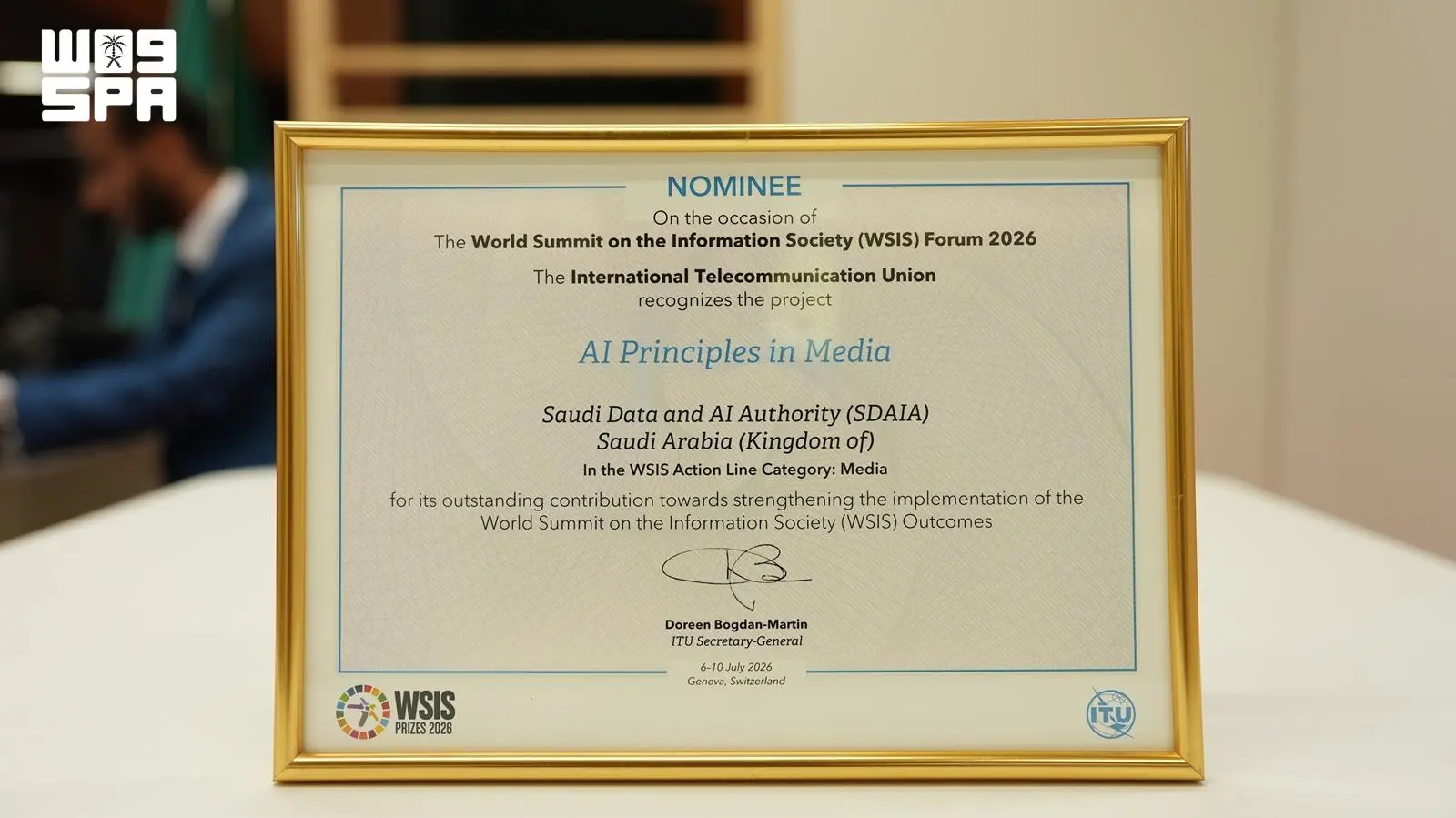
حظيت الوثيقة التي أطلقتها وزارة الإعلام وسدايا بإشادة دولية ضمن جوائز القمة العالمية لمجتمع المعلومات 2026، في تأكيد على أهمية الأطر الأخلاقية لضبط استخدام الذكاء الاصطناعي في المجال الإعلامي.
Every time a new generative AI model emerges, attention turns to its growing capabilities and speed of development. However, the more important question is not what these models can achieve, but the controls governing their use and the ethical boundaries that ensure they do not become a tool for undermining trust or harming society. The real challenge in the age of artificial intelligence is no longer purely technical, but primarily organizational and ethical.
Smart Machines and Artificial Intelligence
In this context, the document 'Principles of Artificial Intelligence in Media,' launched by the Ministry of Media in partnership with the Saudi Data and Artificial Intelligence Authority (SDAIA) during the Saudi Media Forum, emerges as a proactive step to regulate the use of artificial intelligence in media work. The document recently received international recognition within the World Summit on the Information Society (WSIS 2026) awards, in a sign that goes beyond honor to acknowledging the importance of building ethical frameworks that accompany digital transformation. Technology has often advanced faster than legislation's ability to keep up, which has at many stages created a regulatory vacuum that digital platforms exploited to impose new practices before public policies caught up. Today, the scene repeats with artificial intelligence, but with a fundamental difference: global competition is no longer limited to developing more efficient models, but has extended to building the ethical and regulatory frameworks that govern their use and preserve the public interest.
From this standpoint, the Saudi document represents more than just a guide; it establishes a national reference for regulating the employment of artificial intelligence in media, and enshrines principles of transparency and disclosure, content verification, protection of privacy and intellectual property, and curbing misinformation and deepfakes, while emphasizing responsibility and accountability as the foundation for any professional use of these technologies. It also provides a framework that can contribute to developing more consistent policies for AI governance in the media environment, especially given the disparity of regulatory frameworks and multiplicity of references at the regional and international levels.
The importance of these principles increases with the rise of deepfake challenges, which are no longer limited to producing fake images or videos, but have become capable of simulating reality to a degree that makes content verification more complex. In light of this transformation, media institutions are no longer required only to publish quickly, but are now required to prove the reliability of what they publish, disclose how it was produced, and bear editorial responsibility for it, whether it was produced entirely by humans or with the assistance of artificial intelligence.
Hence, the international recognition the document received can be read as an indicator of a broader shift in the concept of leadership. Leadership in the age of artificial intelligence is measured not only by who develops technical models first, but also by who early sets the rules that ensure their responsible use. Technology, no matter how powerful, cannot produce a value system, nor bear the responsibility of an editorial decision, or be held accountable for the impact of content on society.
In the end, the future of media remains dependent on its ability to maintain trust, not merely on possessing the latest technical tools. Algorithms can accelerate content production, but they cannot replace professional conscience or editorial responsibility. Therefore, the value of ethical initiatives, such as the AI Principles in Media document, lies not only in keeping pace with technical development, but in establishing a principle that will remain constant no matter how tools change: that humans remain responsible for the word, even when artificial intelligence shares in its production.
Other articles by the author
Editorial Safety Valve in the Age of Artificial Intelligence
The Path to Knowledge Is No Longer Neutral: From News Production to Controlling Access to It
What Will Our Children Do with All This Time?
The New Door to Knowledge
The Knowledge Environment: The Secret of Civilizations' Continuity
Original source: Al-Jazirah



Comments (0)
Be the first to comment.