A Coup Attempt That Changed Turkey: How Did Erdogan Reshape the Country Over a Decade?
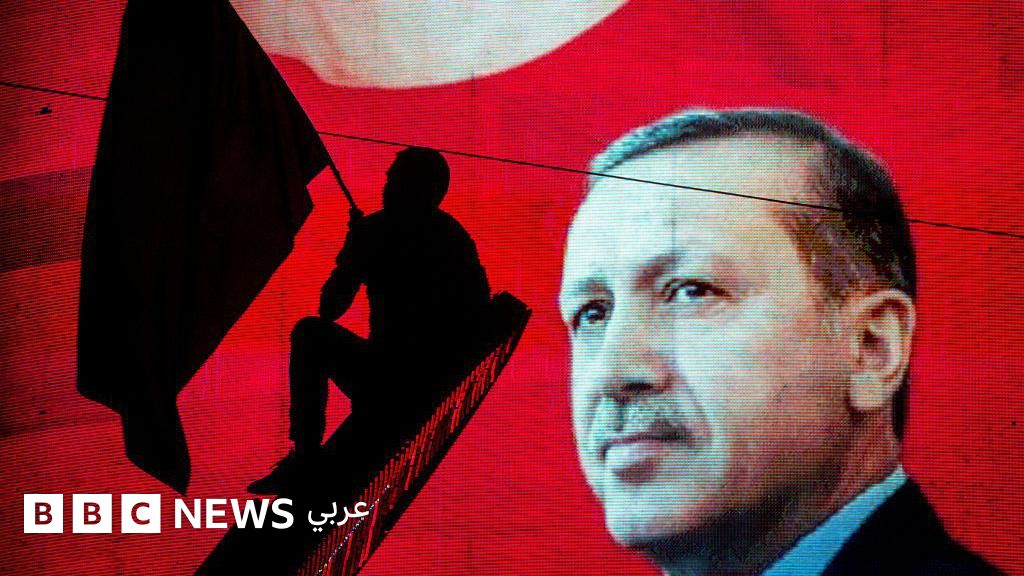
The aftermath of the July 15, 2016, coup attempt triggered comprehensive transformations across various facets of Turkish politics over the past decade, reshaping domestic power balances and profoundly impacting the country's foreign relations.
A coup attempt that changed Turkey: How did Erdogan reshape the country over a decade?
Image caption: The coup attempt lasted only a few hours, but its repercussions have reshaped Turkish politics over the last decade.
Article Information
Author: BBC Turkish
Published: 4 hours ago
Reading time: 8 minutes
The streets were filled with the sounds of gunfire, tanks were deployed, and jets flew at low altitudes over government buildings, while the parliament building was bombed. It was all broadcast live on television, becoming a harrowing scene witnessed by the world.
This terrifying scene was the opening of the night of July 15, 2016, which almost toppled the rule of President Recep Tayyip Erdogan.
Although Turkey has experienced three military coups and two other interventions in its history, the events of the night of July 15, 2016, were unique and unprecedented.
For the first time, the Turkish parliament was subjected to a direct attack. On the Bosphorus Bridge in Istanbul, which today officially bears the name 'July 15 Martyrs Bridge', people were killed and wounded when civilians answered President Recep Tayyip Erdogan's call to take to the streets and confront the coup plotters.
Turkey and NATO: A strategic partnership tested by crises since 1952
What did NATO leaders do with Erdogan's gun?
Image caption: President Erdogan's live appearance via a mobile phone, from an undisclosed location, became one of the most prominent scenes that defined the night of the coup attempt.
In a live intervention with a television presenter via a mobile phone application from an undisclosed location, Erdogan called on his supporters to take to the streets that night. Mosques across the country echoed his call via loudspeakers.
By dawn, the coup attempt had failed. The clashes resulted in the death of 253 people, including 184 civilians, in addition to 34 others accused of participating in the coup.
Image caption: Despite Turkey's long history with military intervention in politics, the parliament had never before been subjected to a direct attack.
The coup attempt lasted only a few hours, but its effects lasted throughout the following decade, shifting the balance of power internally and changing the trajectory of Turkey's foreign relations.
A broad purge campaign
The government blamed the network of US-based Islamic cleric Fethullah Gulen for orchestrating the coup attempt. Gulen continued to deny any connection to it until his death in 2024.
Days later, the authorities declared a state of emergency, which lasted until 2018 after being extended seven times.
Skip most read and continue reading
World Cup: Oyarzabal scores Spain's leading goal from the penalty spot
'How did Israel recruit former Iranian President Ahmadinejad?' - The New York Times
US blockade of Iranian ports is approaching, and Trump says the strait is open for navigation 'except for Iran'
The Houthis target Abha airport and warn against flying in Saudi airspace
During that period, the authorities launched one of the widest exclusion campaigns in modern Turkish history. The government justified these measures as necessary to dismantle the Gulen network.
Image caption: President Erdogan and Islamic cleric Fethullah Gulen were close allies for decades, before becoming bitter rivals.
Gulen was previously a close ally of Erdogan, while followers of his religious movement held influential positions within state institutions and bureaucratic apparatuses for decades.
After the coup attempt, tens of thousands of military personnel, including senior officers and generals, were arrested, dismissed, or suspended. The measures also included judges, prosecutors, police officers, academics, and civil servants.
Hundreds of private schools and educational institutions accused of being linked to the Gulen network were also closed, along with a number of universities.
Critics believe the campaign went beyond those suspected of participating in the coup attempt and supporters of the Gulen movement, and reached a wider segment of dissidents and those with opposing views.
Opponents say other religious groups expanded their influence within state institutions after the exclusion campaigns, which government officials deny.
Erdogan's consolidation of power
It can be said that the most prominent political outcome of the coup attempt was the consolidation of President Erdogan's power.
Image caption: Critics argue that the changes following the coup attempt led to the concentration of a significant amount of power in the hands of one person.
In 2017, voters narrowly approved constitutional amendments that ended the parliamentary system and established a presidential system with broad executive powers instead. The amendments entered into force the following year, with the abolition of the prime minister position and the expansion of the president's powers.
Supporters of the new system say it has established greater political stability, accelerated decision-making, and made state administration more effective.
Its critics argue that the amendments caused broad powers to be concentrated in the presidency, especially in the hands of one person.
The American organization 'Freedom House' says that the ability of parliament members to influence policy has declined significantly under the presidential system.
Its latest report on Turkey states that Erdogan 'repeatedly interferes in the work of ministries and independent public bodies when their decisions conflict with his wishes.'
Associate professor at Istanbul University, Dogan Cetinkaya, agrees with this assessment and says the presidential system is characterized by 'arbitrariness and ambiguity in its institutional structure.'
Fears of authoritarianism
For years, the Turkish government has faced criticism regarding its record on human rights and civil liberties, and these concerns intensified after the coup attempt and the subsequent exclusion campaigns.
With the dismissal of thousands of judges and prosecutors accused of links to the Gulen movement, human rights organizations and European institutions have warned of a decline in judicial independence.
Professor Cetinkaya says: 'After July 15, institutions at the core of the political and administrative systems in Turkey were dismantled, and they lost the independence they enjoyed.'
He adds: 'The judicial and legislative powers no longer represent actual centers of power.'
Image caption: Intensive security interventions by the police in demonstrations and public gatherings have long been criticized by human rights organizations.
Since then, organizing demonstrations and public gatherings has become more difficult, with authorities frequently resorting to imposing restrictions on them and deploying large numbers of security forces.
Press freedom has also declined as the government's influence over media ownership has expanded and prominent journalists have been prosecuted. Turkey ranks 163rd out of 180 countries in the 2026 World Press Freedom Index issued by Reporters Without Borders.
Freedom of expression remains a point of contention. Recently, a famous comedian was arrested for insulting the president, joining a long list of journalists, politicians, and public figures facing similar investigations.
Freedom House says: 'Turkey has become more authoritarian over the past decade, consolidating power through constitutional amendments and the imprisonment of political dissidents, independent journalists, and members of civil society.'
Image caption: Prosecutors are demanding a prison sentence exceeding 2,400 years for Ekrem Imamoglu.
Original source: BBC Arabic
Comments (0)
Be the first to comment.