Trump administration subpoenas 4 New York Times journalists over new Air Force One
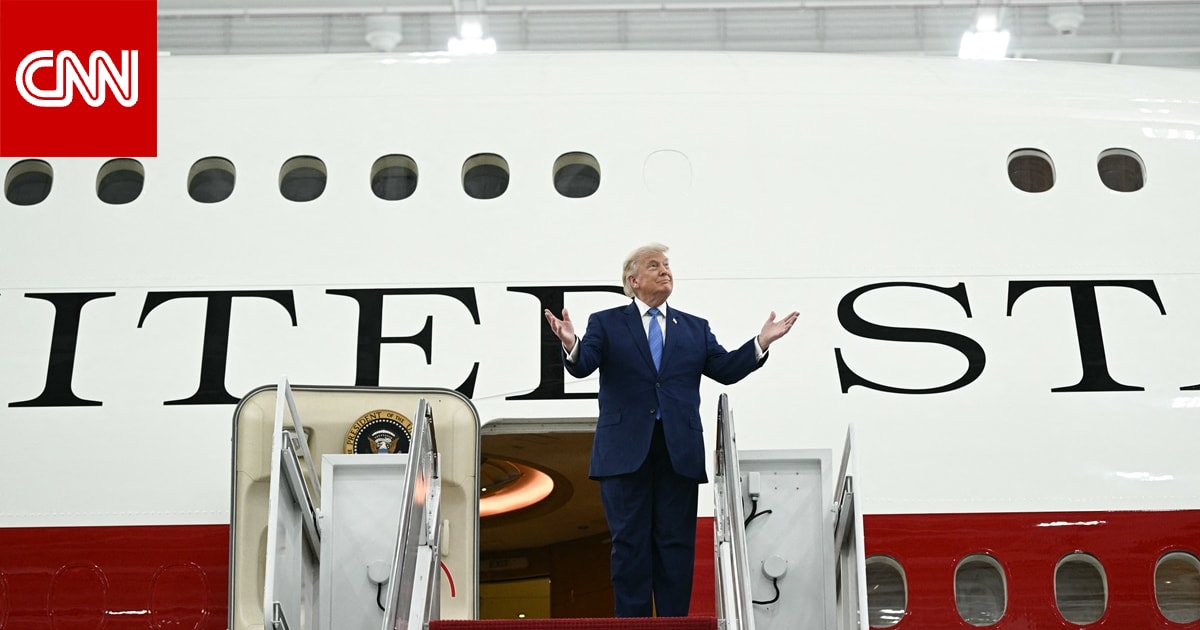
(CNN) -- The New York Times reported Saturday that the US Justice Department subpoenaed four of its journalists who had covered security concerns about a presidential plane gifted by Qatar, used as the new Air Force One.
According to the newspaper, the journalists — Julian E. Barnes, Eric Lipton, Tyler Pager, and Eric Schmitt — were subpoenaed to testify before a federal grand jury in Manhattan on Wednesday, noting that federal agents served some of the subpoenas at the journalists' homes.
In its report, the newspaper confirmed it would challenge the court decision, which it described as an unusual move and a direct threat to the media's ability to gather information that serves the public interest.
The subpoenas indicate that the Trump administration is seeking to identify who leaked information to the newspaper before it reported this week that President Donald Trump left the NATO summit in Turkey aboard the old Air Force One due to security concerns from the Secret Service.
The subpoenas for the journalists to testify came after FBI Director Kash Patel met with White House officials on Friday to discuss the bureau's investigation into leaks related to security concerns about the new plane, according to sources familiar with the matter.
One source said Patel also had a phone conversation with Trump on Friday about the investigation.
CNN spotted Patel leaving the White House complex at approximately 6:44 p.m. ET after the meeting, which was not previously disclosed.
Sources told CNN that Trump was furious about reports of security concerns regarding the $400 million gift from Qatar, and felt embarrassed and angry in recent days when it became clear the plane was not sufficiently equipped to fly directly from Turkey to the United States.
Trump has repeatedly called for federal investigations into leaks to the media. Earlier this year, The Washington Post and The Wall Street Journal fought a secret legal battle to prevent the government from subpoenaing several journalists in leak investigations related to national security.
Now, The New York Times finds itself in a similar position. David McCraw, the newspaper's senior legal counsel, condemned the subpoenas in a statement on Saturday morning.
McCraw said: 'The appearance of federal law enforcement officers at the doorstep of journalists should shock the conscience of any American who believes in the Constitution and the freedom of the press it guarantees.'
He added: 'This blatant act should be seen only as an attempt to prevent the public from knowing what is happening in their country by intimidating journalists and preventing them from doing their duty.'
CNN has contacted the White House and the US Attorney's Office in Manhattan for comment.
On Saturday, a Justice Department spokesperson told CNN in a statement that New York Times journalists are not targets of the investigation.
The spokesperson said: 'Every administration has addressed the crime of leaking national security information. We will continue to investigate any breach of national security when necessary. To be clear, the journalists are not the targets; rather, those who leak classified information are.'
Concerns about the new plane dominated discussion in Washington this week when Trump suddenly announced he would send the new plane to RAF Mildenhall in England before leaving Turkey. Trump said on social media that the plane change was simply to give US service members stationed at the base 'a chance to see the plane.'
He wrote: 'Everyone is very excited, and we thought they should be the first to see it.'
But CNN reported Thursday that security personnel were more comfortable with the president aboard the old Air Force One — which was specifically designed with presidential safety in mind — rather than the recently refurbished plane donated by Qatar.
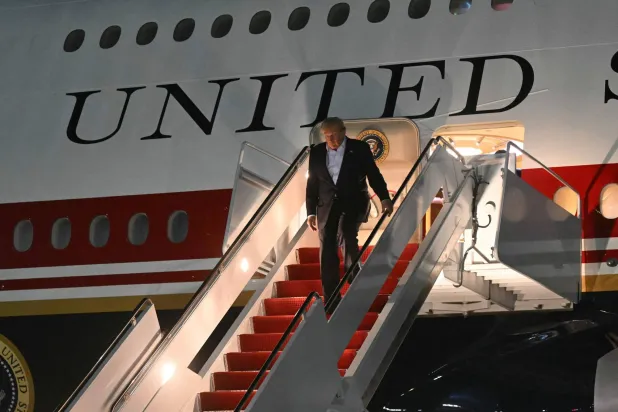
Trump then swapped planes at a secure US air base in the UK. He downplayed the idea that security was the reason for the change, though sources confirmed to CNN and other media outlets that it was.
When asked why journalists on the plane were told to lower their window shades during takeoff from Ankara, Trump acknowledged that security concerns related to Iran might be a factor.
He said: 'These are psychos, so I understand something like that,' adding that he was unaware of the instructions to journalists.
Press advocacy groups described the subpoenas as an assault on the public's right to know what the government is doing.
Steven J. Adler, president of the Committee to Protect Journalists, said: 'Ultimately, press freedom is about the public's rights — to know how their community and country are being run, and to make informed decisions based on independent reporting.'
Original source: CNN Arabic



Comments (0)
Be the first to comment.