After Ceasefire Collapse: US and Iran on Brink of Full-Scale Military Confrontation
The New York Times has predicted that the United States and Iran will slide into a broader military confrontation after two US soldiers were killed in an Iranian missile attack targeting a military base in Jordan, prompting Washington to respond with strikes targeting Iranian military sites, in an escalation that threatens to collapse the remaining efforts to contain the war that has been ongoing for more than four months.
Casualties and US Response to Iran
Two US soldiers were killed and others injured, while a third soldier remains missing, following an Iranian missile attack targeting Jordan on Friday. It is the first attack resulting in American casualties from hostile fire since the collapse of the last ceasefire with Iran, bringing the total death toll of the US military to 16 since the outbreak of the war. According to the newspaper, the latest Iranian attack was the fourth targeting Jordan in five days.
The US military announced on Sunday that it carried out strikes targeting Iranian coastal surveillance facilities and air defenses, as well as sites belonging to the Revolutionary Guard, which it said were responsible for the attack on US forces in Jordan. In response, Iran retaliated by attacking Kuwait and Bahrain.
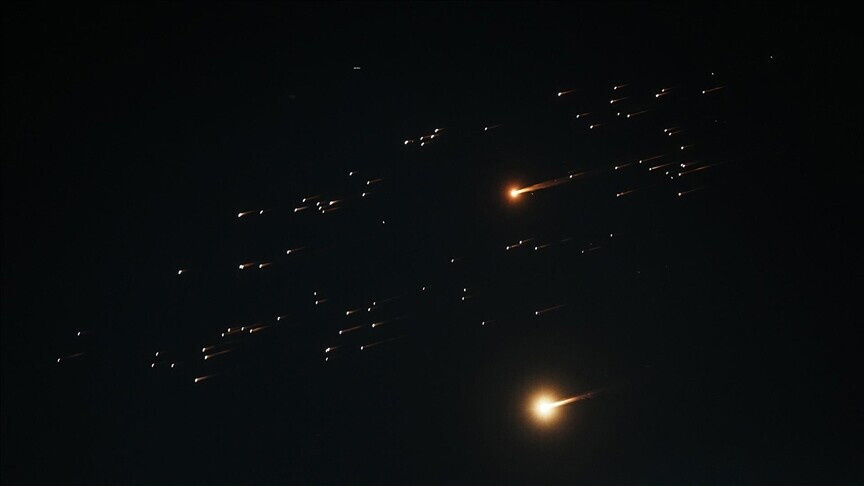
The Kuwaiti government announced that an oil facility, a power plant, and a water treatment plant were subjected to attacks, while Bahrain's television confirmed that air defense systems intercepted and destroyed Iranian aerial attacks in the kingdom's skies.
Diplomatic Path Retreats
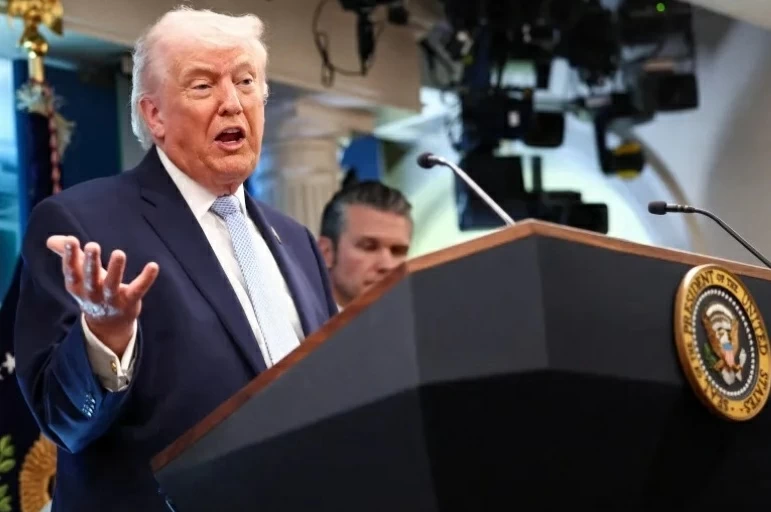
For his part, US Secretary of Defense Pete Hegseth affirmed that the killing of the two soldiers 'will only increase our resolve,' but the recent developments place President Donald Trump before a growing dilemma over how to manage the war he started alongside Israel more than four months ago, according to The New York Times.
Trump had repeatedly vowed that the military campaign would be short and decisive, but the war has dragged on for months, causing disruption in global energy markets, without yet succeeding in pushing Iran to abandon its nuclear program.
Despite the widening scope of attacks between the two sides, no signs have emerged of resuming diplomatic efforts to end the fighting. Trump had previously threatened to target civilian infrastructure in Iran to pressure Tehran into reaching an agreement to end the war, and Iranian officials confirmed that any targeting of civilian infrastructure would be met with a similar response against facilities in neighboring countries hosting US military bases.
Collapse of the War-Ending Memorandum
Meanwhile, Iranian Supreme Leader Mojtaba Khamenei renewed accusations that the United States violated the ceasefire agreement signed last June, and considered Trump's signing of the agreement 'worthless and void,' according to Iranian state media.
The memorandum aimed to end the war that began with a US-Israeli attack on Iran, by cementing the ceasefire announced since April and negotiating a final agreement within a 60-day deadline.
According to the Iranian Ministry of Health, US strikes since June 27 have killed at least 50 people and injured more than 500.
Original source: Okaz



Comments (0)
Be the first to comment.