Araghchi Drops a Bombshell: I Have Not Met the Iranian Leader
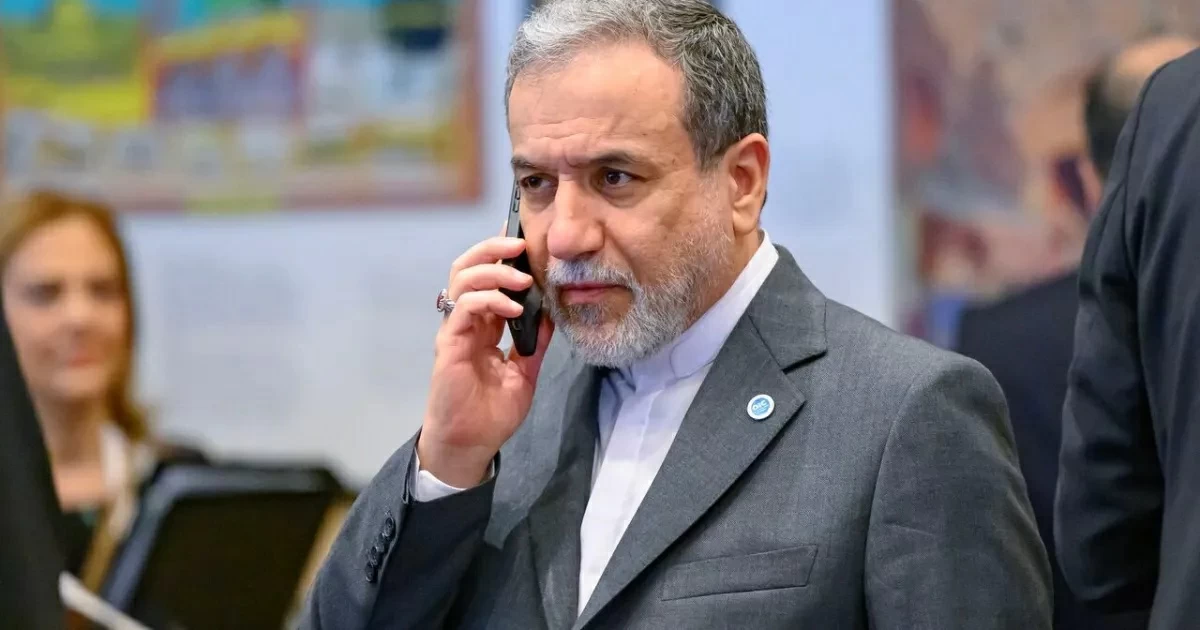
Statements by Iranian Foreign Minister Abbas Araghchi, in which he confirmed that he has not met with the Iranian leader Mojtaba Khamenei, have sparked significant controversy in Iran.
In an interview on YouTube with documentary filmmaker Javad Moghouei, Araghchi reviewed the behind-the-scenes management of negotiations with the United States and the decision-making process in Tehran, explaining that a small committee consisting of six members within the Supreme National Security Council was responsible for making immediate decisions regarding the memorandum of understanding with Washington.
He noted that he has not yet met the new Iranian leader Mojtaba Khamenei, adding: 'I don't think anyone has seen him at this stage except for a very limited number of people.'
These statements have led to widespread debate in Iran, resulting in the complete removal of the interview just hours after it was published.
The Iranian Foreign Minister considered Mojtaba's election as a confirmation of the continuity of the principles of the Iranian republic and that there would be no change in its approach.
Regarding the decisions on negotiations, Araghchi stated that decisions related to negotiations with the United States were not made within the Supreme National Security Council with all its members, but rather through a small committee that included six members, among them Iranian President Masoud Pezeshkian, Parliament Speaker Mohammad Baqer Qalibaf, and Secretary of the Supreme National Security Council Mohammad Baqer Zolqadr, in addition to himself and two other members whose identities were not disclosed.
He pointed out that the committee made decisions at the time due to the difficulty of communicating with the top leadership, indicating that all files related to the negotiations passed through it according to the same procedures adopted within the Supreme National Security Council.
He noted that the committee was formed after the 12-day war, initially as a committee concerned with the nuclear file chaired by Ali Shamkhani, before it later transformed into a negotiation committee chaired by Ali Larijani.
Iranian media criticized the interview, considering that it presented sensitive information regarding how the state was managed during the war.
The newspaper 'Javan,' close to the Revolutionary Guard, viewed Araghchi's interview as presenting 'matters that should not have been disclosed,' directing a torrent of sharp criticisms at him.
These statements come at a time when Mojtaba Khamenei has not appeared publicly since his appointment as the third leader of the Iranian regime, and he has not released any audio or video messages, with the messages attributed to him being limited to written statements since he was injured in the attack that killed his father and predecessor Ali Khamenei last February.
His long absence from public view has raised increasing questions about the extent of his actual role in managing the country's affairs, as well as intensifying the debate over the legitimacy crisis faced by the Iranian regime.
The statements made by Iranian Foreign Minister Abbas Araghchi, in which he confirmed that he has not met with the Iranian leader Mojtaba Khamenei, have sparked significant controversy in Iran.
In an interview on YouTube with documentary filmmaker Javad Moghouei, Araghchi reviewed the behind-the-scenes management of negotiations with the United States and the decision-making process in Tehran, explaining that a small committee consisting of six members within the Supreme National Security Council was responsible for making immediate decisions regarding the memorandum of understanding with Washington.
He noted that he has not yet met the new Iranian leader Mojtaba Khamenei, adding: "I don't think anyone has seen him at this stage except for a very limited number of people."
These statements have led to widespread debate in Iran, resulting in the complete removal of the interview just hours after it was published.
The Iranian Foreign Minister considered Mojtaba's election as a confirmation of the continuity of the principles of the Iranian republic and that there would be no change in its approach.
Regarding the decisions on negotiations, Araghchi stated that decisions related to negotiations with the United States were not made within the Supreme National Security Council with all its members, but rather through a small committee that included six members, among them Iranian President Masoud Bezhakian, Parliament Speaker Mohammad Baqer Qalibaf, and Secretary of the Supreme National Security Council Mohammad Baqer Zolqadr, in addition to himself and two other members whose identities were not disclosed.
He pointed out that the committee made decisions at the time due to the difficulty of communicating with the top leadership, indicating that all files related to the negotiations passed through it according to the same procedures adopted within the Supreme National Security Council.
He noted that the committee was formed after the 12-day war, initially as a committee concerned with the nuclear file chaired by Ali Shamkhani, before it later transformed into a negotiation committee chaired by Ali Larijani.
Iranian media criticized the interview, considering that it presented sensitive information regarding how the state was managed during the war.
The newspaper "Javan," close to the Revolutionary Guard, viewed Araghchi's interview as presenting "matters that should not have been disclosed," directing a torrent of sharp criticisms at him.
These statements come at a time when Mojtaba Khamenei has not appeared publicly since his appointment as the third leader of the Iranian regime, and he has not released any audio or video messages, with the messages attributed to him being limited to written statements since he was injured in the attack that killed his father and predecessor Ali Khamenei last February.
His long absence from public view has raised increasing questions about the extent of his actual role in managing the country's affairs, as well as intensifying the debate over the legitimacy crisis faced by the Iranian regime.
Original source: Okaz

Comments (0)
Be the first to comment.