Michael Kimaj | Putin Will Turn Ceasefire into a Weapon
Summary: The authors believe that any ceasefire in Ukraine will not necessarily be a prelude to ending the war, but may rather constitute a new tool in the hands of Russian President Vladimir Putin to achieve his political goals that he failed to attain militarily, whether by destabilizing Ukraine internally or deepening divisions between the United States and Europe.
Recalling the last negotiated peace experience with Russia leads to a frustrating story. Russia invaded Ukraine in March 2014, annexed Crimea, then pushed regular and irregular forces into the Donbas region in eastern Ukraine. After months of war and intensive interference in Ukraine's internal affairs, Moscow signed a series of ceasefire agreements in the Belarusian capital Minsk in September 2014 and February 2015. Russia retained the territories it had seized in Ukraine and proceeded to strengthen its military presence there. The Minsk agreements addressed none of the fundamental issues, yet Europe and the United States coexisted with the reality they created until Russia launched its full-scale invasion of Ukraine in February 2022.
The Minsk process reveals how Putin has consistently mixed traditional diplomacy with intimidation tactics. Despite building a formidable war machine, he has always sought to play the role of a European statesman, as did Joseph Stalin and a number of Russian tsars before the Bolshevik Revolution of 1917. Putin views diplomacy as another form of war, and he used previous negotiations on Ukraine to divert attention and keep Europeans in a state of confusion. He hoped to trigger a political collapse in Kyiv, waning European interest, and deepening divisions within transatlantic relations due to the rise of populism. When the Minsk agreements did not achieve the results he wanted, he returned to the option of war.
If Putin eventually agrees to a full or partial ceasefire, he is likely to follow the same strategy he adopted a decade ago. He has so far stubbornly refused to stop fighting before obtaining substantial concessions from Ukraine, insisting that Russia seeks a comprehensive settlement, not just a suspension of hostilities. But if he agrees to some truce, he will see it as an indirect way to achieve war goals that were unattainable on the battlefield.
Read more
Time to Confront Putin in His Moment of Weakness
Trump and 'Putin's 2036 Strategy'... and the Ukrainian Crisis
Is Putin Approaching a Stage of Decline?
Ukraine: A Settlement More Dangerous Than War
Putin in a Dire Situation and May Slip into a Wider War
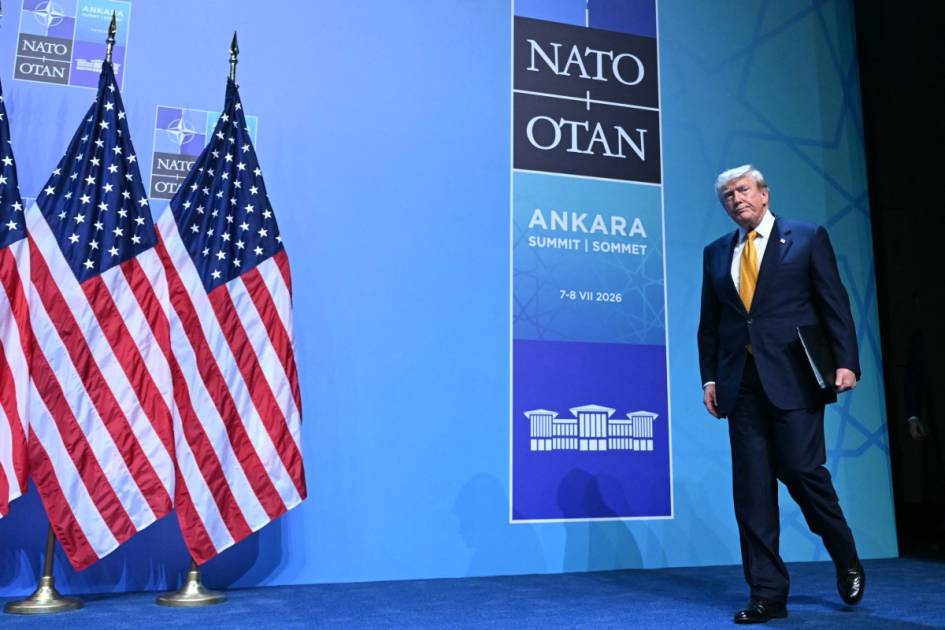
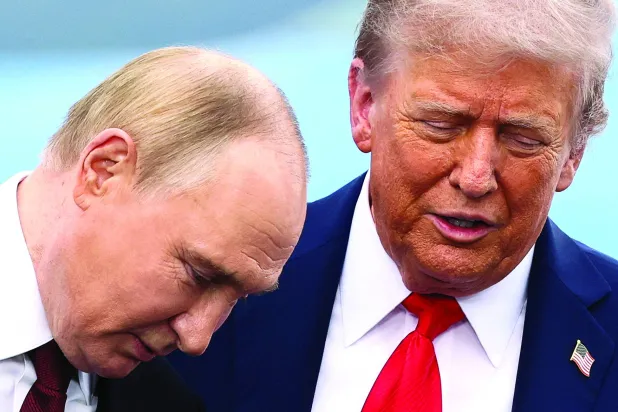
He will exploit an imperfect peace to stir political instability inside Ukraine, and urge pro-Russian forces in Europe to call for a return to normal dealings with Moscow. He will hope that giving U.S. President Donald Trump credit for achieving a ceasefire will widen the gap between the United States and Europe. And if he finds that the results of this step do not meet his expectations, he will be able to resume fighting at any moment, having risked only the time period that the truce might afford Ukraine to catch its breath.
Therefore, American and European officials must treat the legitimate goal of ending the war with great caution. A mere cessation of hostilities in Ukraine will not have a great chance of ending the broader conflict. Unless there is a fundamental change in Putin's calculations, a ceasefire may only be a transition to the next phase of the war.
Dead End
The Russian political project in Ukraine has failed miserably. The Kremlin never mobilized enough coercive force to turn Ukraine into a client state, which would have required full control and long-term occupation. When Russia invaded Ukraine in 2022, a country with a population of over 35 million, it used only about 150,000 troops.
Its goal at that time was to make the Ukrainian government appear weak and illegitimate, to incite uprisings among pro-Russian groups, and to force the rest of the country to accept a Moscow-friendly government. But four years of brutal war have led to the exact opposite result, cementing Ukraine's hostility toward Russia for years, if not generations. After exhausting enormous human and military resources, Putin no longer has a clear path to military victory. After all his efforts, he finds himself at a dead end.
To salvage his position, Putin still has a number of escalation options, but each carries significant constraints and risks. He could leverage Russia's population of about 143 million by ordering a large-scale mobilization. However, based on the wave of Russians leaving the country during the partial mobilization in the fall of 2022, such a step would be unpopular, especially in major cities.
Putin, with his love of history, must remember that a war-weary people, backed by angry soldiers, toppled the tsarist rule in February 1917. He also witnessed firsthand how the Afghan war weakened the Soviet Union in the late 1980s, even though he later sponsored the reframing of that war's official narrative as a heroic mission. In short, Putin cannot ignore the domestic political constraints that stand between him and waging a total war.
The Russian president could attempt to subdue Ukraine through bombardment. With Kyiv lacking Patriot interceptor missiles, Moscow may intensify its ballistic missile attacks on Ukrainian cities in the coming months and during the winter. However, betting on plunging the population into collective suffering to achieve military gains remains fraught with danger. It could strengthen Ukrainian resilience, as happened after the numerous war crimes committed by Russian forces in the first weeks of the 2022 invasion.
The same applies to the use of nuclear weapons, which could anger China and India, two countries that have provided Russia with an important economic lifeline. Putin could also expand the scope of strikes to what he calls Ukraine's 'strategic rear areas' by targeting defensive infrastructure in European countries supporting Kyiv, such as Poland or the Baltic states. But such steps would be extremely risky for Russia due to the possibility of a European or even American military response. Putin, often known for his caution against risk, will think carefully before taking such action.
As he weighs his options, the cost of the war and the absence of tangible military achievements are beginning to take their toll inside Russia. Limited divergences have emerged among experts, influencers, and segments of Russian society over Putin's endless war. Russians have so far accepted what the authorities call the 'special military operation,' but Ukrainian long-range strikes have brought the war closer to their daily lives. Moreover, the Kremlin's tightening grip on the internet is causing growing unease.
Original source: Independent Arabia

Comments (0)
Be the first to comment.