For the Second Time in a Week... Ukraine Strikes Russia's Largest E-Commerce Company
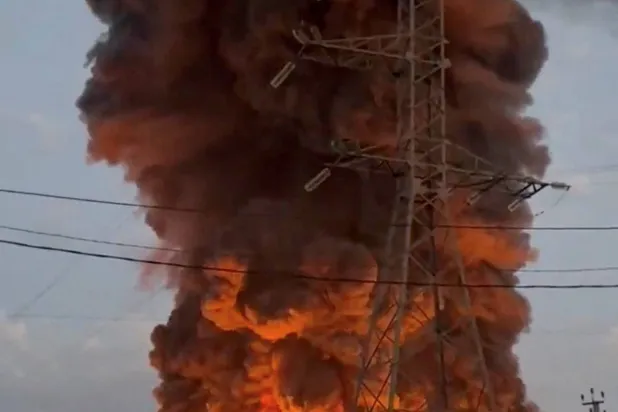
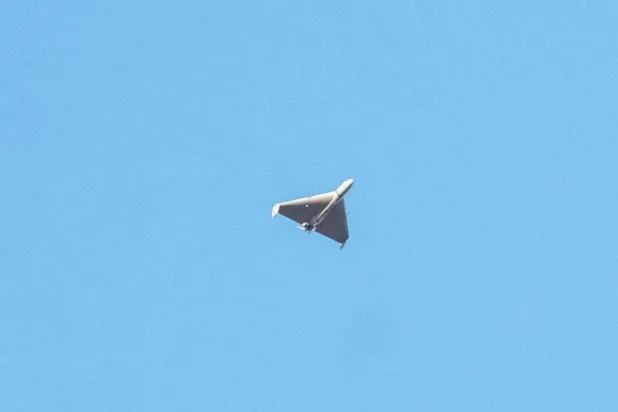
For the second time in a week, Ukrainian drones targeted a massive e-commerce company in Russia on Wednesday, resulting in one death and 15 injuries.
For the second time in a week, Ukrainian drones on Wednesday targeted a massive e-commerce company in Russia, which Ukrainian President Volodymyr Zelensky accused of supplying the Russian army, in an attack that left one person dead and 15 others injured.
This comes as a meeting was announced between Russian Foreign Minister Sergey Lavrov and US counterpart Marco Rubio on Thursday, on the sidelines of a gathering hosted by the Philippine capital, Manila.
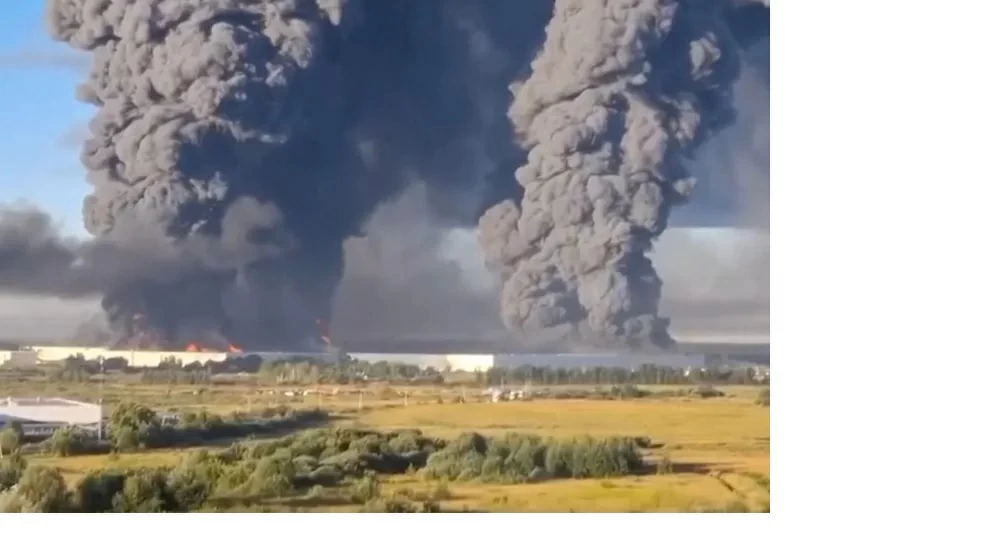
Ukraine struck warehouses belonging to the retail giant Wildberries in southern Russia, four days after an attack targeted two large warehouses belonging to the company near Moscow, killing eight employees and sparking a fire that caused extensive damage to the facilities, according to Agence France-Presse.
Wildberries is Russia's largest online shopping company, often described as the equivalent of America's Amazon.
The company's board chairwoman, Tatyana Kim, said in a statement via Telegram: "Our logistics centers were attacked last night in Krasnodar and Nevinnomyssk in southern Russia," noting that the centers had been evacuated of employees.
For his part, Zelensky said that Kyiv struck "logistics centers involved in supplying the Russian army with drone components, navigation equipment, and other gear."
He had stated earlier that the company stores drone components. He also revealed that Kyiv targeted an oil depot, as well as a tanker and four cargo ships in the Black Sea and the Sea of Azov, where Ukraine has intensified its attacks in recent days.
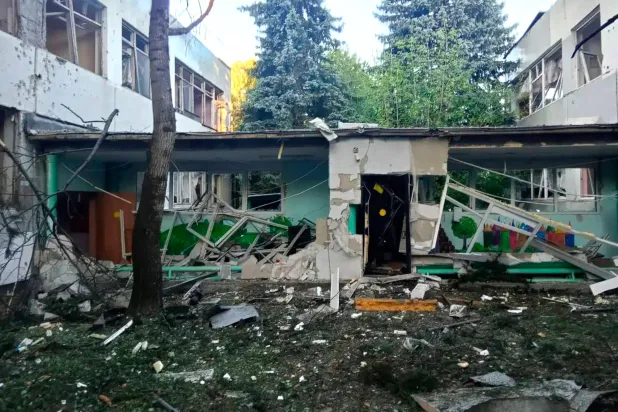
Ukrainian firefighters trying to extinguish a fire at a shopping center targeted by a drone in the Sumy region on Tuesday (AFP).
The Ukrainian strikes disrupted Russian shipping traffic in the Sea of Azov, forcing Moscow to seek alternative shipping routes. The range of the strikes reached as far as the Ural Mountains and Siberia, causing nationwide fuel shortages.
Zelensky said on Wednesday: "We are fairly bringing the war back to where it came from."
More than four years after the outbreak of the war, both sides have escalated their strikes over the past few months. Ukraine has stated that its strikes aim to curb the sources of funding for Russia's war effort and force the Kremlin to negotiate an end to the war.
Casualty Data
The UN High Commissioner for Human Rights warned on Tuesday that the toll of civilian deaths and injuries increased by 37 percent during the first half of the year.
The Ukrainian army announced on Wednesday that the number of Russian military casualties since the beginning of the war on February 24, 2022, has risen to about 1,433,230 personnel, including 1,330 killed or wounded over the past 24 hours.
This came according to a statement published by the General Staff of the Armed Forces of Ukraine on its social media page on Facebook, and reported by the Ukrainian News Agency (Ukrinform) on Wednesday.
According to the statement, since the beginning of the war, Ukrainian forces have destroyed 12,163 tanks, 24,982 armored combat vehicles, 46,492 artillery systems, 1,958 multiple launch rocket systems, and 1,513 air defense systems.
The statement added that 438 warplanes, 354 helicopters, 421,900 drones, 4,933 cruise missiles, 34 warships, 2 submarines, 123,702 vehicles and fuel tanks, and 4,450 units of special equipment were also destroyed.
Such data cannot be independently verified.
On the Russian side, the Ministry of Defense announced on Wednesday that its air forces shot down Ukrainian drones over various regions.
The ministry issued a statement, reported by the Russian news agency Sputnik, which stated: "During the night... on-duty air defense forces intercepted and destroyed 242 Ukrainian drones over the territories of Belgorod, Bryansk, Kaluga, Kursk, Novgorod, Oryol, Leningrad, Rostov, Ryazan, Smolensk, Tver, and Tula."
It added: "Drones were also shot down over the Moscow region, Krasnodar Krai, Stavropol Krai, the Republic of Crimea, and over the basins of the Black Sea and the Sea of Azov."
New Commander for the Ukrainian Army
Zelensky announced the dismissal of army commander Oleksandr Syrsky late Tuesday, following days of protests, to be replaced by Mykhailo Drabaty.
The protests erupted after Zelensky dismissed politician Mykhailo Fedorov, who is credited with recent Ukrainian successes in the drone war, from his position as defense minister last week.
From right: New Ukrainian army commander Mykhailo Drabaty, President Volodymyr Zelensky, ousted commander Oleksandr Syrsky, and Acting Defense Minister Yevhen Khamara in Kyiv on Wednesday (AP).
Following his dismissal, Fedorov (35) disagreed with the older Syrsky regarding the direction of the war, prompting protesters to demand the army commander's removal, according to the German Press Agency.
In a farewell message after his dismissal, Syrsky said on Wednesday that he "handed over an army that knows how to fight in an offensive posture."
For its part, the Kremlin announced on Wednesday that the appointment of a new commander-in-chief for the Ukrainian army will not change the situation on the front line, stressing that the Russian army will continue its advance. Kremlin spokesman Dmitry Peskov said during a daily press briefing: "I don't think this will lead to any changes whatsoever... Our armed forces are continuing their offensive along the entire front line."
Lavrov-Rubio Meeting
On the sidelines of a forum hosted by the Philippine capital, Manila, Russian Foreign Minister Lavrov stated that an agreement was reached to hold a meeting between him and his US counterpart Rubio on Thursday for talks focused on the war in Ukraine and the Middle East.
Lavrov told reporters on Wednesday that the meeting "will be useful in any case. It is good to ask questions and get answers."
The meeting is being held on the sidelines of the Association of Southeast Asian Nations (ASEAN) foreign ministers' meeting.
In Manila, the foreign ministers of India, the United States, Australia, and Japan also met on Wednesday amid monitoring of Chinese influence in the region, pledging to work to maintain stability in the Indo-Pacific region and support ASEAN.
Alongside Rubio, the Quad foreign ministers' meeting was attended by Indian External Affairs Minister S. Jaishankar, Australian Foreign Minister Penny Wong, and Japanese Minister Toshimitsu Motegi, according to the Indian Express newspaper.
Original source: Asharq Al-Awsat



Comments (0)
Be the first to comment.