Iran Threatens 'All-Out Attack' if US Strikes Continue
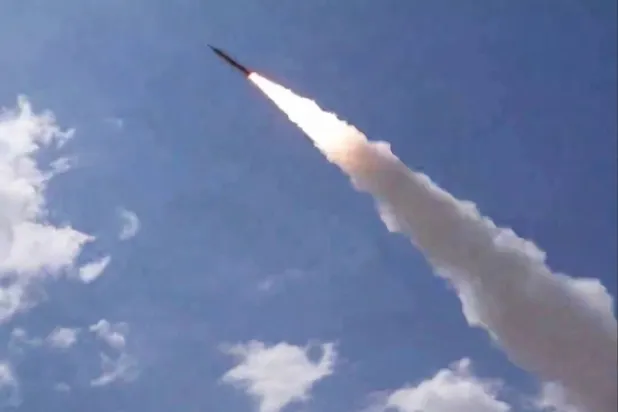
Mohsen Rezaei, military adviser to Iran's supreme leader, threatened that Tehran would enter a 'comprehensive offensive phase' if US strikes continue for 'more than two to three days.'
Mohsen Rezaei, military adviser to Iran's supreme leader, threatened that Tehran would enter a 'comprehensive offensive phase' if US strikes continue for 'more than two to three days.'
Rezaei said, as reported by state television on Friday, that 'Iran will not be content with retaliation from now on, and no borders will be safe' from its attacks.
The United States intensified its strikes on Iran for the sixth consecutive night on Friday, while Tehran announced the deaths of eight people in bombings that hit civilian infrastructure, coinciding with Gulf states coming under attack, including a strike on a power station, marking a new widening of the conflict.
The US military said on platform X that it attacked 'dozens of Iranian military targets, including coastal surveillance and air defense sites, military logistics infrastructure and naval facilities' overnight from Thursday to Friday.
Iran announced that the power grid in the south was damaged by the raids, and urged residents to conserve electricity. It also reported that bridges, a port, an airport, and a train station were bombed.
The official news agency IRNA reported eight killed and 20 injured in attacks targeting these facilities overnight.
0 seconds of 0 secondsVolume 90%
Press shift question mark to access a list of keyboard shortcuts
00:00
00:00
00:00
Infrastructure
The commander of the Islamic Revolutionary Guard Corps’ Aerospace Force, Majid Mousavi, threatened on Friday that Tehran would not stop its attacks in the region until the United States stops its strikes on Iran's southern coast and the Strait of Hormuz, according to Agence France-Presse.
Majid Mousavi said in a social media post: 'In our calculations, every inch of Iran's land is Iran, so Tehran and the south are one unit,' adding: 'Our effective and precise strikes launched from various parts of Iran against the enemy will continue until calm returns to the southern coast and the Strait of Hormuz.'
US President Donald Trump had threatened during the week to strike bridges and power plants in Iran if an agreement was not reached.
In response, state television quoted an Iranian army spokesman as saying: 'If the Americans target infrastructure, then all infrastructure in the region will become legitimate targets for Iran.'
UN High Commissioner for Human Rights Volker Türk had affirmed during the conflict that targeting civilian infrastructure constitutes a war crime.
Energy conservation
Kuwait announced on Friday that one of its power and water desalination plants was hit by an Iranian attack, causing a fire and damage, calling on citizens to 'conserve electricity in this exceptional phase.'
0 seconds of 0 secondsVolume 90%
Press shift question mark to access a list of keyboard shortcuts
00:00
00:00
00:00
Temperatures reached 48 degrees Celsius in Kuwait and 45 degrees Celsius in southwestern Iran on Friday.
Earlier, the armed forces of Kuwait, Jordan, Bahrain and Qatar said they repelled aerial attacks at dawn on Friday.
In Qatar, a child was wounded by shrapnel, while Iran's Revolutionary Guard announced it targeted the US Al Udeid base, claiming destruction of radar systems and military aircraft there.
The Iranian armed forces said they targeted US military positions in Kuwait with explosive drones and bombed US aircraft in Jordan using ballistic missiles and drones, in response to the overnight US bombing.
Tehran had earlier said that US strikes since June 22 had killed 38 people and wounded more than 400.
Strait of Hormuz
The war in the Middle East erupted on February 28 following Israeli-American strikes on Iran, and it continues to shake the global economy.
The foreign ministers of China and Pakistan on Friday called on the warring parties to resume negotiations within the framework of the memorandum of understanding signed in mid-June, which later collapsed.
Parliament speaker and chief Iranian negotiator Mohammad Bagher Ghalibaf had earlier said that 'the memorandum of understanding only gains meaning when its clauses are in effect and implemented.'
Islamabad also called for 'a swift return to normal conditions in the Strait of Hormuz,' which Iran closed again last weekend. In response, the United States reimposed its blockade on Iranian ports.
White House spokeswoman Karoline Leavitt said on Thursday that Trump 'remains open to diplomacy at the same time.'
She added that the Iranians 'told the president they still want to reach an agreement. We are talking to them, but the president will not allow them to fire on ships in the strait without consequences.'
0 seconds of 0 secondsVolume 90%
Press shift question mark to access a list of keyboard shortcuts
00:00
00:00
00:00
Ship Hit
Shipping traffic in the Strait of Hormuz, through which a fifth of the world's oil and liquefied natural gas passed before the war, has declined.
A ship was hit by an 'unidentified projectile' off the coast of Oman near the Strait of Hormuz, according to the British maritime security agency UKMTO.
The attack, which occurred on Thursday 19 nautical miles from the Omani city of Khasab, caused 'minor structural damage,' according to the agency's statement, which noted that the crew is 'safe' and the ship 'continues its course to its next port of call.'
In contrast, oil prices remained relatively stable despite the developments, with Brent crude at around $85 a barrel on Friday.
Original source: Asharq Al-Awsat


Comments (0)
Be the first to comment.