Shabana Mahmood: Margaret Thatcher of the British Left
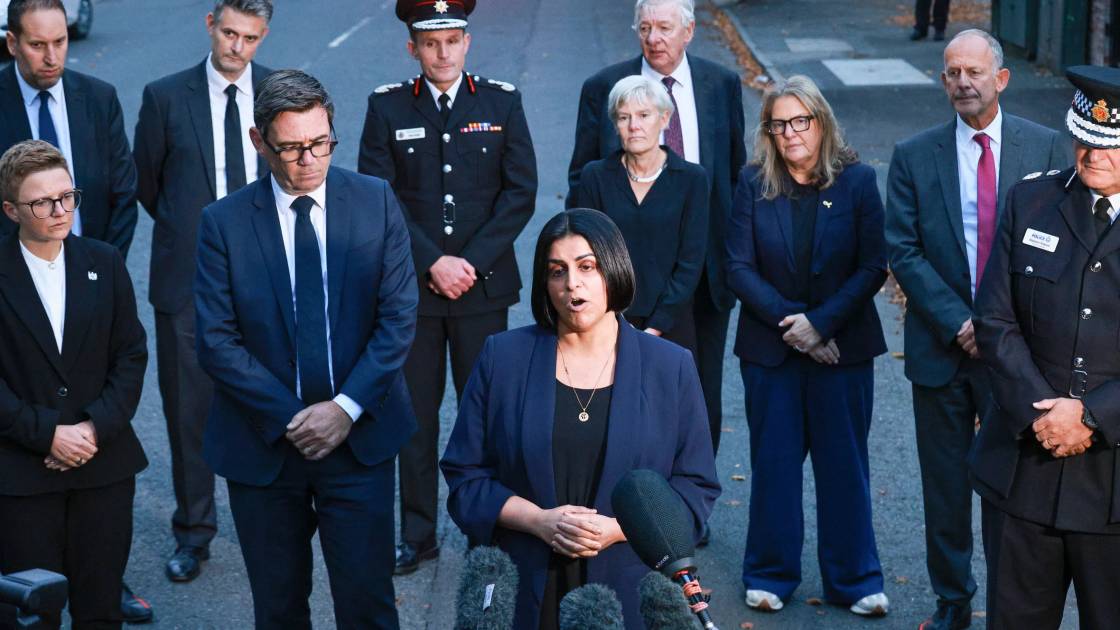
In September 2025, Shabana Mahmood became the first Muslim woman to serve as Home Secretary in the history of the United Kingdom, carrying a biography that stretches from a small family shop in one of Birmingham's poorest neighborhoods to the heart of executive power. Today, she is leading the toughest asylum policies in decades, a striking paradox given her background as the daughter of Pakistani Muslim immigrants, amid criticism from both right and left, and anticipation of her ability to navigate between personal convictions and the demands of her office.
British media are buzzing that Shabana Mahmood, the current Home Secretary, is a candidate for the Treasury in the new government expected to be announced once Labour leader and new Prime Minister Andy Burnham arrives at Number 10 Downing Street next Monday. So who is Mahmood, and how did she get here?
In September 2025, the United Kingdom found itself facing an unprecedented scene in its political history: a Muslim woman of Pakistani origin taking over the Home Office, one of the most sensitive positions in the British government, whose responsibilities include policing, national security, immigration, and asylum. This is Shabana Mahmood, MP for Birmingham Ladywood since 2010, and the first Muslim woman to hold this sovereign post in British history.
The appointment came in the cabinet reshuffle conducted by outgoing Prime Minister Keir Starmer on 5 September 2025, replacing Yvette Cooper who moved to the Foreign Office, following the resignation of Angela Rayner as Deputy Prime Minister over a stamp duty land tax issue. The appointment was a logical culmination of Mahmood's path starting at the Ministry of Justice between July 2024 and September 2025, where she left a reputation for decisive reform, handling the prison overcrowding crisis through an early release program for thousands of prisoners. Since September 2025, Mahmood has also chaired the National Executive Committee of the Labour Party, the party's governing body.
Read more
Can Shabana Mahmood save Starmer and Britain?
The salvation of the British Labour government may come at the hands of Minister Shabana Mahmood
Do immigrants and refugees pose a burden on Britain?
Shabana Mahmood Ahmed was born on 17 September 1980 in Birmingham to immigrant parents, Mahmood Ahmed and Zubeda. The family's roots trace back to the Mirpur region of Pakistan-administered Kashmir. She is the eldest of four daughters and a twin to her brother.
Mahmood's childhood was not entirely British; between 1981 and 1986, the family lived in Taif, Saudi Arabia, where her father worked as a civil engineer in water desalination. After returning to Britain, the family settled in Small Heath, one of Birmingham's poorest and most ethnically diverse neighborhoods. There, Shabana spent her teenage years, helping her mother who ran a small shop the family bought after returning from Saudi Arabia. Mahmood recalls that her parents kept a cricket bat behind the shop counter to deter theft attempts—an experience she says gave her an early awareness of the precarious security many people in the country face.
The family home was a highly political environment. Her father was a long-time Labour Party member and became chairman of the Birmingham branch, known locally as an honest mediator resolving neighborhood disputes. The family home hosted party meetings and discussions. Tom Watson, former Deputy Labour Leader and a visitor to the home in the 1990s, told The Guardian that young Shabana would tell attendees exactly what to do and when, and that she could see through problems from a young age. Mahmood says her political awareness deepened after the September 11 attacks in 2001, when she found herself held accountable by strangers for events thousands of miles away, having first experienced racism at age seven. Among the figures she cites as role models are Margaret Thatcher and Benazir Bhutto.
Mahmood attended Small Heath School and then King Edward VI Camp Hill School for Girls, before enrolling at Lincoln College, Oxford, graduating in 2002 with a law degree, where she chaired a student committee. She later completed the Bar Professional Training Course at the Inns of Court in 2003 and worked as a qualified barrister specializing in professional indemnity cases.
Shabana Mahmood speaks in the British Parliament (Getty)
The Front Benches
Mahmood entered the House of Commons in 2010 for Birmingham Ladywood with a majority exceeding ten thousand votes, succeeding former International Development Secretary Clare Short. With her victory, she became, along with Rushanara Ali and Yasmin Qureshi, one of the first Muslim women MPs in British parliamentary history. The constituency itself holds special symbolism as one of the most ethnically diverse in the country.
Mahmood rose through the shadow cabinet under Ed Miliband's leadership, holding posts in home affairs, higher education, and then the Treasury in 2013. However, Jeremy Corbyn's election as Labour leader in 2015 marked a turning point; she resigned from her brief role as Shadow Chief Secretary to the Treasury, citing fundamental differences with him on economic issues, and remained on the backbenches from 2015 to 2021, serving on the party's National Executive Committee from 2016 and the National Policy Forum. She supported Owen Smith in his failed challenge to Corbyn's leadership in 2016. Politically, Mahmood identifies with the "Blue Labour" wing, which is more socially conservative within the Labour Party, and has described herself as socially conservative in the small-c sense if one wants to place her in a specific political box.
Her effective return began with Keir Starmer's rise; in May 2021, she became National Coordinator for election campaigns, credited with Labour holding the Batley and Spen seat in that year's by-election—a victory considered crucial in saving Starmer's leadership from an internal challenge. She later became the right-hand woman to the party's chief strategist, Morgan McSweeney. In September 2023, she was appointed Shadow Justice Secretary, and with Labour's victory in the July 2024 elections, she became Justice Secretary and Lord Chancellor in Starmer's government—a role in which she confronted the prison overcrowding crisis firmly and implemented reforms to the sentencing system that The Guardian described as transformative.
Shabana Mahmood graduated from Oxford University's law faculty in 2002 (Getty)
The Immigration File
The paradox that follows Mahmood and dominates any discussion about her is that she, the daughter of immigrants and a Muslim, adopts from her position as Home Secretary one of the toughest approaches to immigration and asylum in modern British political history. On 17 November 2025, just ten weeks after taking office, Mahmood presented a statement to the House of Commons on a reform package she herself described as the most fundamental to the asylum system in a generation, while CNN called it the most significant in the modern era.
Original source: Independent Arabia


Comments (0)
Be the first to comment.