Rubio: Washington Ready to Negotiate, Tehran Not Serious
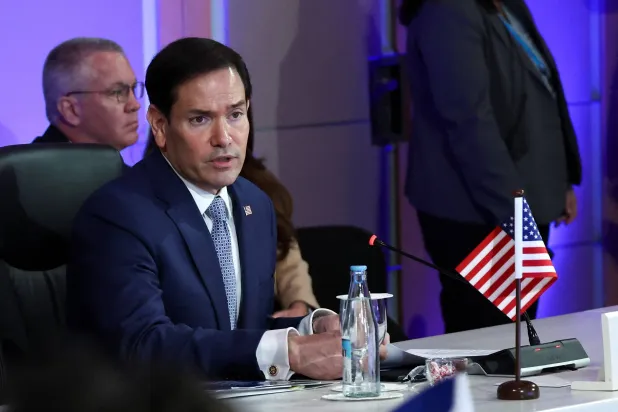
US Secretary of State Marco Rubio said the United States is open to dialogue on the conflict in the Middle East, ready to negotiate, and settle differences with Iran.
US Secretary of State Marco Rubio said Wednesday that the United States remains ready to negotiate an end to the crisis with Iran, but accused Tehran of not taking the talks seriously, as Pakistani efforts intensified to revive the ceasefire that collapsed with renewed fighting.
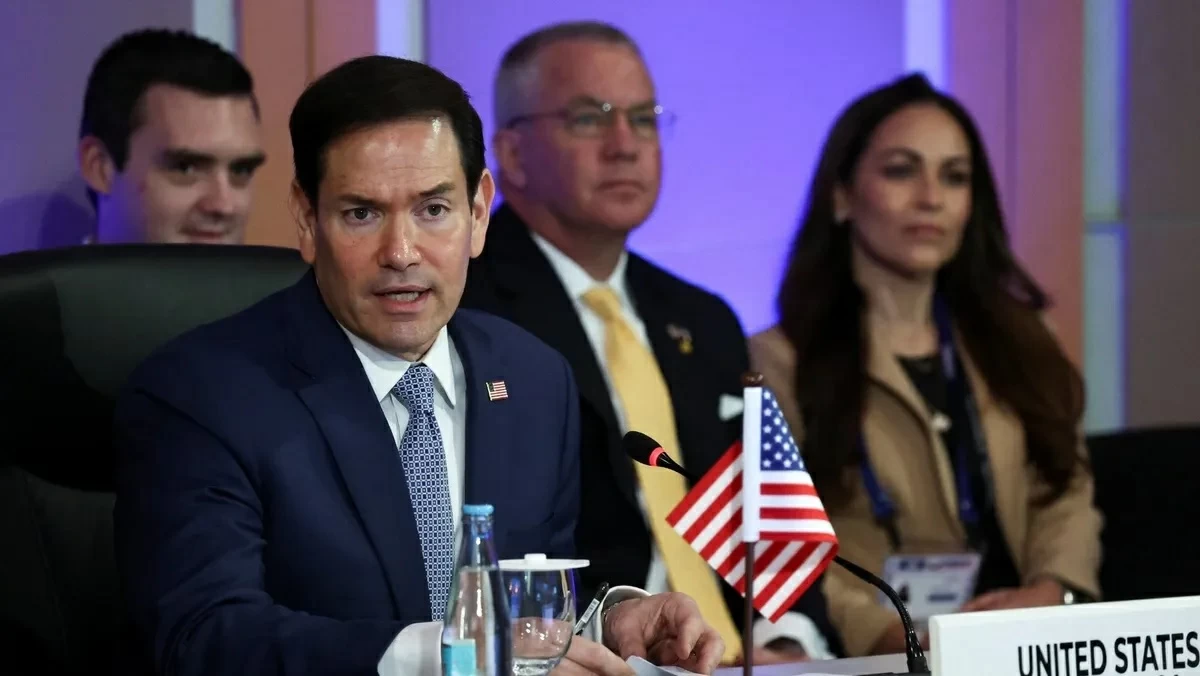
Rubio said during the annual meeting of ASEAN foreign ministers in Manila that Washington is 'always committed to diplomacy,' adding that the problem is that the Iranians 'do not take the talks seriously.'
He added: 'If they are serious, we will be serious. If they are not, we will do what is necessary to protect our interests and those of our allies.'
Rubio said Tehran has contacted Washington 'directly and indirectly' to enter talks on settling differences, but he did not announce a date for resuming negotiations or reveal Washington's readiness to immediately enter a new round.
0 seconds of 0 secondsVolume 90%
Press shift question mark to access a list of keyboard shortcuts
00:00
00:00
00:00
Rubio renewed his accusation that Tehran has backtracked on its commitments under the previous agreement, referring to the understanding reached by the two sides before military operations resumed and differences widened over navigational security and transit arrangements in the Strait of Hormuz.
His remarks came a day after US President Donald Trump said the United States 'has no interest in meeting' under current circumstances, dampening hopes for rapid progress toward a new truce, despite continued communication channels through mediators.
Iranian Foreign Ministry spokesman Esmaeil Baghaei said Monday that diplomatic contacts with Washington through mediators are ongoing, without announcing a breakthrough or setting a date for direct talks.
In a parallel track, Reuters quoted a senior Iranian official as saying Tehran received a proposal through mediators for a ten-day ceasefire, in an attempt to restore calm and halt military escalation.
Neither the United States nor Iran has announced acceptance of the proposal, and the associated conditions are unclear, as is whether it includes halting operations in the Strait of Hormuz and attacks on sites hosting US forces in the region.
Pakistani mediation
The contacts coincided with a visit by Iranian Interior Minister Eskandar Momeni to Pakistan, which has played a role in mediation efforts between Washington and Tehran and, according to Islamabad, contributed to the previous memorandum of understanding.
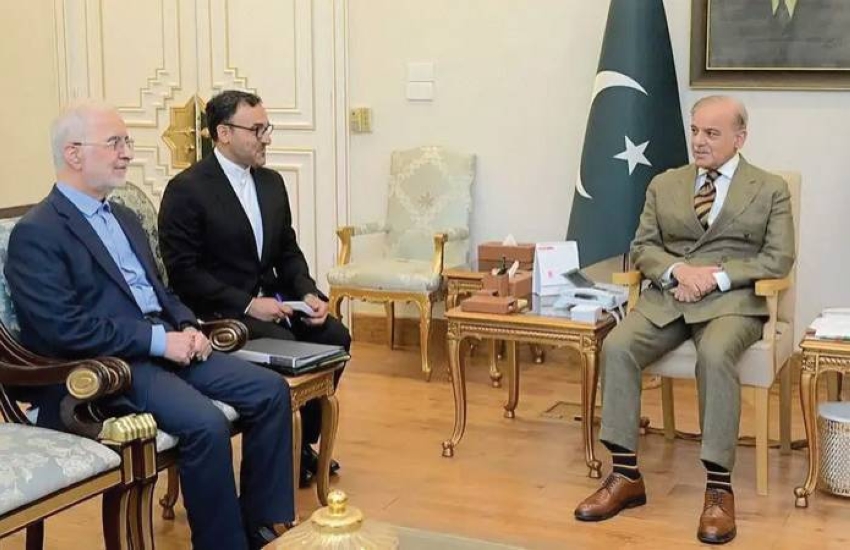
Pakistani Prime Minister Shehbaz Sharif called on the parties to exercise restraint and refrain from any steps that could further destabilize the region, stressing during his reception of Momeni that his country would continue its efforts between the two sides.
Pakistani Prime Minister Shehbaz Sharif during his meeting with Iranian Interior Minister Eskandar Momeni at the Prime Minister's Office in Islamabad on Tuesday (Pakistani Prime Minister's Office)
Sharif's office said in a statement that the prime minister informed the Iranian minister that Pakistan would continue the efforts that contributed to the previous understanding. The statement did not reveal any new contacts with the US administration or the response of Washington and Tehran to the temporary truce proposal.
Pakistani efforts face growing obstacles since the previous agreement faltered and military operations resumed. Disagreements have escalated over ship movements in the Strait of Hormuz, the terms of halting strikes, and the guarantees each side demands before returning to negotiations.
Washington accuses Tehran of backtracking on its commitments regarding navigational security and halting attacks, while Iran accuses the United States of expanding the war and returning to military operations before exhausting political contacts.
Rubio placed the Strait of Hormuz file at the heart of the dispute, warning that Iran's demand to control the passage and impose fees on ships could threaten the global economy and set a precedent that might be repeated in other regions.
0 seconds of 0 secondsVolume 90%
Press shift question mark to access a list of keyboard shortcuts
00:00
00:00
00:00
He said allowing a country to control an international waterway, impose fees on transiting vessels, and threaten ships that refuse to pay would constitute a 'dangerous precedent' that could extend to other parts of the world, including Asia.
His warning came before foreign ministers of Southeast Asian countries, who have expressed growing concern over the war's impact on energy supplies and regional markets, as many of the region's economies rely on oil and gas from the Middle East.
According to the International Energy Agency, Asian markets accounted for about 80 percent of crude oil and about 90 percent of liquefied natural gas that transited the Strait of Hormuz during 2025, making the region's countries among the most affected by any prolonged disruption to navigation.
International calls to stop the war
International calls to halt the fighting and resume the political track emerged from the Manila meetings. Russian Foreign Minister Sergei Lavrov said Moscow wants a swift settlement between the United States and Iran, stressing that Russia is not among the parties seeking to push the two sides to continue the conflict.
He added that the continuation of the war harms the global economy, and that Moscow is concerned with stabilizing energy prices to allow the implementation of long-term economic policies.
Australian Foreign Minister Penny Wong also called for an end to the war, a ceasefire, resumption of negotiations, and reopening of the Strait of Hormuz.
Wong warned that the situation could deteriorate 'with little warning,' noting that the repercussions of energy market disruptions have become direct and tangible for populations in the region's countries.
Russian Foreign Minister Sergei Lavrov speaks during the ASEAN ministerial meeting (AP)
Diplomatic efforts continue as US strikes inside Iran enter their eleventh night, and Tehran launches attacks on sites in countries hosting US forces, making it more difficult to establish a temporary ceasefire.
Trump also threatened to target the 'Jabal al-Fas' nuclear facility near Natanz, while Iran warned that attacking the site would expand the war and target US interests and its allies.
The continuation of strikes places mediators before a complex task, as they must reconcile the demand to halt military operations, the dispute over the Strait of Hormuz, and mutual accusations of violating the previous understanding.
The proposal for a ten-day truce remains without an announced acceptance from both sides. It is also unclear whether the proposal includes detailed arrangements for navigation in the strait or a mechanism to monitor the halt of attacks.
Read also
Original source: Asharq Al-Awsat


Comments (0)
Be the first to comment.