China and ASEAN Call for Ceasefire on All Fronts in Middle East
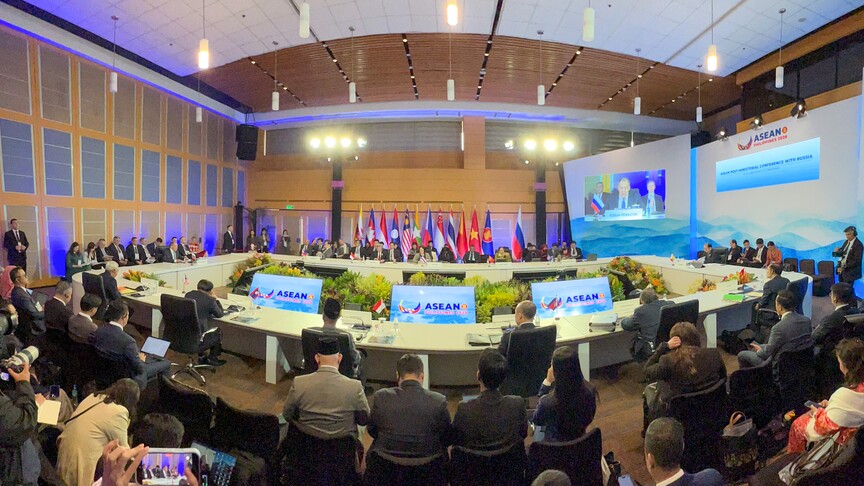
Foreign ministers of China and ASEAN countries in a joint statement from Manila called for an immediate halt to military operations in the Middle East and full compliance with ceasefire arrangements between the United States and Iran amid fears of an expanding conflict.
Ankara / Anadolu
On Friday, the foreign ministers of China and the Association of Southeast Asian Nations (ASEAN) demanded an end to all combat operations on all fronts in the Middle East, with strong emphasis on the need to comply with the terms of the existing ceasefire between Washington and Tehran.
These international demands come amid rising regional tensions and growing fears of the conflict expanding and its negative implications for global stability.
This position was included in a joint statement issued by the foreign ministers of China and ASEAN countries at the conclusion of their meeting hosted by Manila, the capital of the Philippines.
The statement noted the impact of the situation in the Middle East on civilian life, regional and global peace and stability, and the economy.
The statement further emphasized the centrality of resolving differences through peaceful means and relying on diplomacy and dialogue based on the rules of international law.
The statement called on the United States and Iran to strictly adhere to the ceasefire conditions, adding: 'We call for a complete and immediate cessation of hostilities on all fronts in the Middle East, respect for the sovereignty and territorial integrity of all states, and the protection of civilians and civilian infrastructure in armed conflicts.'
The U.S. Central Command (CENTCOM) announced early Friday that it had carried out the 13th wave of strikes against Iranian positions.
For about two weeks, the United States has been launching successive waves of strikes on sites inside Iran, while Tehran responds with missile and drone attacks on military bases and facilities and sites it claims are linked to Washington in regional countries.
The escalation comes despite Washington and Tehran signing a memorandum of understanding last June that included a ceasefire and the start of negotiations to reach a broader agreement.
However, U.S. President Donald Trump declared the end of the ceasefire on July 8 of this month, following attacks on tankers in the Strait of Hormuz that Washington accused Tehran of being behind, prompting the United States to resume strikes inside Iran, amid escalating Iranian responses in the region.
Washington demands that Tehran stop attacking ships and guarantee freedom of navigation through the Strait of Hormuz, while Iran insists on subjecting the passage of ships to a mechanism it regulates through the waterway off its coast, exacerbating fears of disruption to oil and gas exports from the region.
This military escalation comes despite the previous understandings reached last June between Washington and Tehran, before the ceasefire collapsed on July 8 of this month following attacks targeting tankers in the Strait of Hormuz. The two sides exchanged accusations over responsibility for those acts, amid U.S. insistence on ensuring freedom of navigation and Iranian demands to regulate transit through the waterway. These developments are causing grave international concern over their potential repercussions on global trade and vital energy supplies from the region.
Original source: Anadolu Agency



Comments (0)
Be the first to comment.