Egypt and Oman Renew Condemnation of Repeated Iranian Attacks on Gulf States
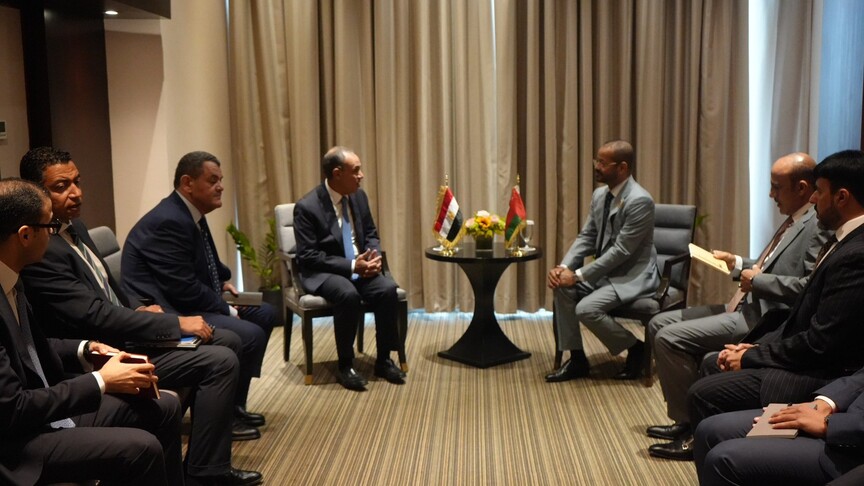
During a meeting between the foreign ministers of the two countries in Manila on the sidelines of the ASEAN ministerial meeting
Cairo / Anadolu
Egyptian Foreign Minister Badr Abdelatty and his Omani counterpart Badr bin Hamad Al Busaidi affirmed on Thursday their joint rejection of Iranian operations targeting Gulf Cooperation Council states.
These diplomatic talks come within the framework of ongoing coordination between the two countries on regional and international issues of mutual interest.
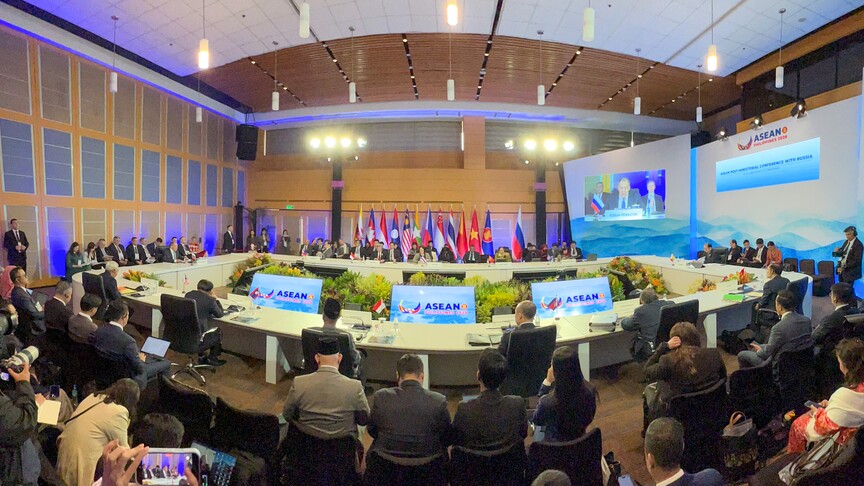
A statement by the Egyptian Foreign Ministry clarified that this stance came during bilateral talks between the two sides in the Philippine capital Manila, on the sidelines of their participation in the ministerial meeting of the Association of Southeast Asian Nations (ASEAN) to discuss ways to strengthen relations and political coordination.
The Foreign Ministry said that Abdelatty affirmed during the meeting the depth of historical relations binding the two countries, praising the outcomes of the visit made by Egyptian President Abdel Fattah el-Sisi to the Sultanate of Oman last May.
The Egyptian minister also stressed his country's firm desire to advance joint cooperation with Muscat to include all political, economic, commercial, and investment sectors.
He pointed to the importance of holding the 17th session of the Joint Committee between the two countries and quickly activating the Egyptian-Omani Business Council as soon as possible, in a way that serves the common interests of the two countries.
Regarding regional developments, the two ministers renewed their condemnation of the 'repeated Iranian attacks that targeted Gulf Cooperation Council states.'
Abdelatty reviewed Egyptian efforts to de-escalate and bridge views among all parties, affirming Cairo's full solidarity with the Gulf states and Jordan.
He stressed that 'the repeated attacks represent a flagrant violation of states' sovereignty and a serious threat to the security and stability of the region.'
He affirmed the importance of an immediate halt to all escalatory acts, and refraining from any practices that could fuel tension, expand the circle of escalation in the region, or threaten the security of Arab states.
The two ministers agreed on the importance of 'preserving freedom of navigation in the Strait of Hormuz in accordance with the rules of international law, and the necessity of ensuring the security and safety of international navigation and not obstructing the movement of ships.'
They expressed their rejection of any 'attempts to impose restrictions on passage through international waterways,' due to its negative repercussions on the global economy and energy security.
The Strait of Hormuz region is witnessing escalating security tensions against the backdrop of the war launched by the United States and Israel on Iran on February 28, 2026.
For about two weeks, the United States has been launching attacks on Iran, claiming to respond to Tehran's targeting of commercial ships in the Strait of Hormuz.
Tehran responds by bombing 'American military installations' in Arab countries, while some of those countries announced that Iran's attacks resulted in civilian casualties and damaged civilian facilities.
Washington and Tehran had signed a memorandum of understanding last June that included a ceasefire, following Qatari and Pakistani mediation, paving the way for a final agreement to end the war, before US President Donald Trump announced on July 8 the termination of the ceasefire due to renewed escalation.
Washington demands Tehran stop attacking ships and ensure freedom of navigation through the Strait of Hormuz, while Iran insists on subjecting the passage of ships to a mechanism it regulates through the waterway overlooking its coasts, exacerbating fears of disruption of oil and gas exports from the region.
Washington supports the passage of commercial ships through the Strait of Hormuz on a route different from that set by Iran, which Tehran rejects, affirming that it targets any ship that does not coordinate with it before crossing the strategic strait for global energy supplies.
The two ministers exchanged views on a number of regional files of common interest, foremost of which are the developments in the Gaza Strip and Yemen, stressing the importance of continued coordination and consultation to support the security and stability of the region, according to the same statement.
These discussions reflect the keenness of Egypt and the Sultanate of Oman to unify visions regarding the escalating security challenges in the Middle East. Securing navigation in vital waterways such as the Strait of Hormuz represents a strategic interest for the countries of the region and the world. Egyptian diplomacy continues its efforts to calm and prevent the expansion of regional conflicts. Bilateral meetings and joint committees are expected to contribute to advancing economic and trade relations between Cairo and Muscat in the coming period.
Original source: Anadolu Agency



Comments (0)
Be the first to comment.