Israeli Municipalities Open Shelters Amid Fears of Confrontation with Iran
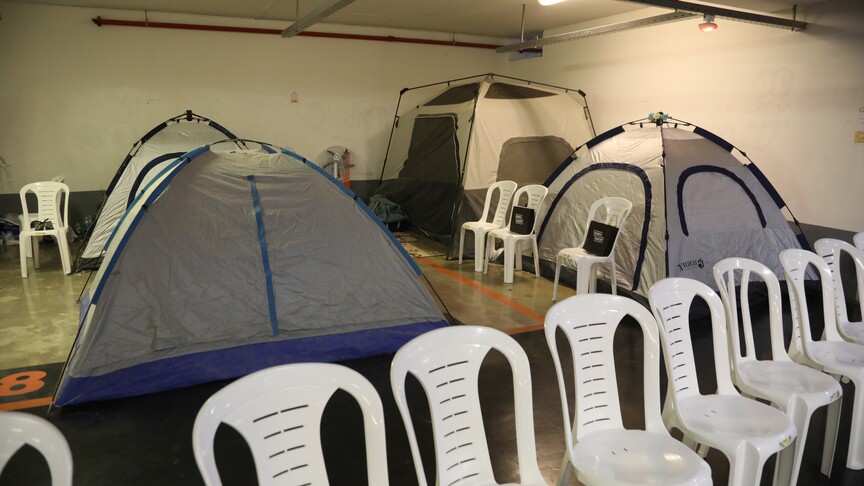
The move came despite no new warnings or instructions from the military, amid reports of raising alert levels in Israel.
JERUSALEM (AA)
In a precautionary step, municipalities in northern and southern Israel on Thursday began opening public shelters for fear of a possible Iranian attack, despite no official instructions from the military or the Home Front Command.
These measures come at a time of rising tensions in the region between the United States and Iran, raising Israeli fears of a possible widening of the confrontation.
Municipalities confirmed in separate statements that they had not received specific security warnings, but decided to open shelters as a precaution in light of the recent security developments.
The municipality of Karmiel in northern Israel said in a Facebook post that there are currently no special instructions or specific warnings, but explained that the mayor ordered the opening of all public shelters two days ago.
It considered that 'early preparedness is part of personal and community responsibility.'
In Eilat, the municipality announced the opening of public shelters by a decision of its mayor Eli Lankari, despite no change in Home Front instructions, noting that emergency teams are conducting regular inspection rounds of the shelters.
The Maariv newspaper quoted the Haifa municipality as saying it had opened public shelters, affirming continued communication with the Home Front and the readiness of all municipal bodies, with no change in defense instructions.
The municipality of Ramat Gan in the Greater Tel Aviv area had earlier announced the opening of public shelters as well.
These steps come amid growing fears inside Israel of a possible widening of the confrontation with Iran.
The Israeli Broadcasting Corporation said on Wednesday that Israel raised its alert level in anticipation of a possible direct confrontation with Tehran, as the United States escalates its attacks inside Iran.
It added that US President Donald Trump's threat to target Iranian infrastructure in response to any Iranian retaliation increases the likelihood of Israel's involvement in the confrontation and the possibility of Iran launching missiles toward Israeli territory.
It also reported that Washington informed Israel of its intention to escalate its attacks in the coming days and use heavy bombers for the first time since the start of the current escalation round, as part of security coordination aimed at enabling Israel to prepare for any possible Iranian response.
The corporation indicated that contacts are underway to arrange a meeting between Israeli Prime Minister Benjamin Netanyahu and US President Donald Trump next week.
For about two weeks, the United States has been conducting successive waves of strikes inside Iran, while Tehran carries out attacks on ships, facilities, and military bases it claims are American in several countries in the region.
This comes despite Washington and Tehran signing a memorandum of understanding on June 18 that included a ceasefire and the start of negotiations to reach a broader agreement.
However, the US president announced on July 8 the end of the ceasefire, after Iran targeted three ships in the Strait of Hormuz, prompting Washington to resume its strikes inside Iran, amid escalating responses from Tehran in the region.
Washington demands 'guaranteeing freedom of navigation in the Strait of Hormuz,' while Tehran, as a coastal state, insists on imposing a mechanism to regulate the passage of ships through the strategic waterway, exacerbating fears of disruption to oil and gas exports from the region.
Israel previously participated with the United States in two rounds of attacks against Iran, the first in June 2025 and the second in February 2026, during which the two sides exchanged attacks following the collapse of negotiations on Iran's nuclear program.
The Israeli Broadcasting Corporation reported that Israel raised its alert level in anticipation of a direct confrontation with Tehran, amid Washington's escalation of its attacks inside Iran. This is accompanied by President Trump's threat to target Iranian infrastructure, increasing the likelihood of Israel's involvement in any Iranian retaliation. Despite this, official sources affirm that there is no immediate change in defense instructions, but field preparations reflect growing concern.
Original source: Anadolu Agency




Comments (0)
Be the first to comment.