Leadership Positions in Libya: When Competence Clashes with 'Quota and Tribalism'
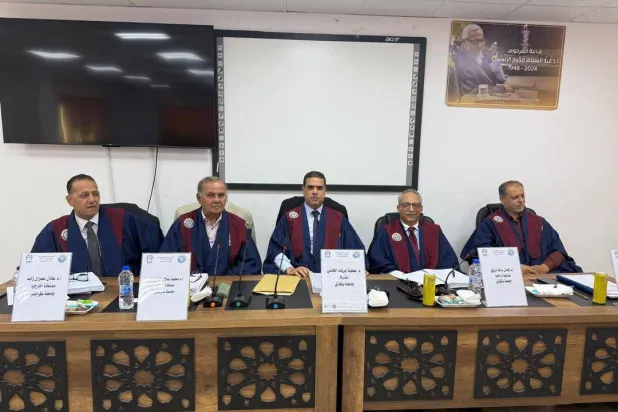
Libyan politicians and academics believe that 'quota and loyalty to centers of power marginalize qualified individuals and hinder the building of state institutions that suffer from a climate of division and polarization.'
Libyan academics and specialists have complained about the decline in reliance on competence in favor of 'tribal, regional, and mediation considerations in filling public positions and leadership posts,' considering that 'quota and loyalty to centers of power marginalize qualified individuals and hinder the building of Libyan state institutions.'
This issue was raised following a post by academic Ahmed Salem Qasim, a faculty member at the College of Technical Sciences in Derna, in which he said that 'his nomination for the position of economic controller in the city was rejected despite his academic qualifications,' considering that 'tribal considerations and mediation have come to take precedence over competence in filling leadership positions.'
The post sparked widespread interaction among his followers, with some seeing it as reflecting 'the suffering of many qualified individuals,' while others considered that the crisis goes beyond tribal considerations to include 'nepotism, corruption, and the preference of loyalties over merit criteria.'
Al-Sharq Al-Awsat attempted to contact the government of Osama Hammad, appointed by the House of Representatives, under whose control Derna falls, but received no response regarding Qasim's complaint.
In a statement to Al-Sharq Al-Awsat, Qasim sees that this problem 'is not new but has persisted for decades, but has worsened with political division and multiple centers of power, which, in his view, has impacted hiring mechanisms and the selection of leaders in state institutions.'
Absence of Competence Criteria
This complaint does not appear to be an exception. Libyan academic Saifallah Al-Hattab, who holds a master's degree in political science and is preparing for a doctorate at the Libyan Academy for Graduate Studies, says that 'he no longer counts on reaching a position where he can employ his expertise to serve his country.'
Al-Hattab adds to Al-Sharq Al-Awsat that his ambition is to contribute to building state institutions, but he sees that 'tribal loyalties and personal interests far outweigh competence criteria, allowing unqualified individuals to reach influential positions within state institutions.'
However, this debate is not new. Faculty member at the University of Zintan, Farhat Abu Zakhhar, had previously warned that the crisis of appointments in Libya 'reflects a defect in state administration, with the preference of mediation, quotas, and loyalty to centers of power over competence, which weakens institutions, wastes talents, and hinders reform.'
For his part, Libyan political analyst Ramadan Shliq acknowledges the reality of tribal presence in the scene of leadership positions in Libya, and tells Al-Sharq Al-Awsat that 'the influence of tribal affiliations in occupying public positions has strengthened more after 2011.'
Libyan dialogues sponsored by the UN mission in previous years concluded the necessity of adopting competence and experience in senior appointments, while noting a widespread belief that political, regional, tribal, and personal loyalties still influence the filling of leadership positions.
Abdul Majeed Mliqita (circulated)
But the debate has continued, recently reaching sovereign institutions with the crisis over the appointment of Abdul Majeed Mliqita as head of the Intelligence Service, by a decision of Presidential Council head Mohamed al-Menfi this month. The Supreme Council of the Saian tribes in Zintan objected to the dismissal of the former agency head Hussein al-Ayeb, a member of the tribe, considering the decision reflects a policy of 'exclusion and marginalization.'
Tribal Considerations
Higher education was not spared from complaints about the role of tribal and regional considerations, which faculty member at the University of Tripoli, Ziyad Habib, believes 'have come to take precedence over competence in selecting university leaders,' warning that the 'politicization' of universities weakens their performance and independence.
This phenomenon is not limited to the central government, but extends to municipalities and local councils, which, according to Al-Hattab, are often subject to 'tribal quotas,' closing the door to qualified individuals, delaying the building of a state of institutions, and undermining the principle of equal opportunity.
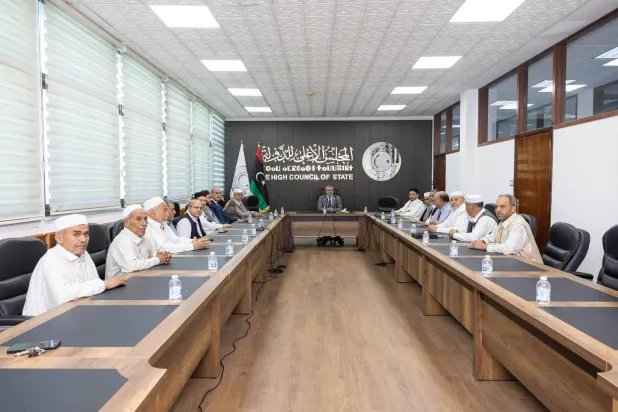
From within the legislative authority, member of the House of Representatives Ali al-Tekbali considered that tribalism 'still represents one of the most prominent obstacles to the arrival of true qualified individuals to public positions, along with regionalism, quota, and favoritism.' He tells Al-Sharq Al-Awsat that 'the preference of social affiliations over competence criteria deepens the weakness of state institutions and undermines opportunities to build a civil state based on equal opportunity and the rule of law,' considering that this phenomenon is 'deep-rooted for decades' and will only recede through educational, media, and cultural reforms that promote citizenship values and reduce traditional loyalties.
Many Libyans believe that the role of tribal and regional considerations takes precedence over competence in selecting university leaders (Al-Sharq Al-Awsat)
The map of the social composition in Libya, according to local experts and international reports, reveals a diverse tribal and social composition in the three historical regions.
In eastern Libya, historical tribes such as al-Obaidat, al-Awaqir, and al-Bara'asa maintain an influential social presence, while tribal ties in the west intertwine with major cities like Tripoli and Misrata. The south is characterized by demographic diversity that includes Arab tribes alongside Tuareg and Tebu.
However, social and tribal leaders call for a more balanced reading of the scene. Salem Karwad, a notable from Misrata, believes that tribal affiliation may sometimes reflect on holding some leadership positions, but it is not the only factor, as political, regional, and security considerations also intersect.
He affirms to Al-Sharq Al-Awsat that the state-building project requires 'adopting competence, integrity, and merit as the primary reference when selecting leaders, in a way that achieves justice and preserves national interest.'
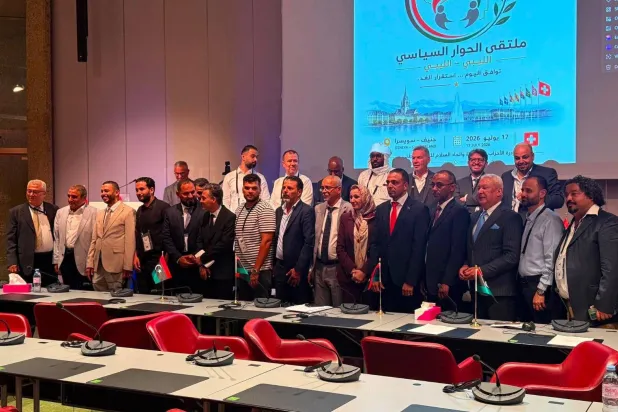
As for Hawa Zayed, a member of the 'Structured Dialogue' sponsored by the United Nations, she acknowledges that 'quotas have played a role in shaping the Libyan political scene,' but at the same time she believes that the specificity of the Libyan case requires consideration of the element of balance in representing different regions and components.
She tells Al-Sharq Al-Awsat that building a state of institutions requires competence to be the basic criterion for assuming positions, 'but in the Libyan case, the importance of inclusiveness and fair representation of all Libyan components cannot be overlooked,' as they are necessary elements to ensure stability alongside merit criteria.
Libya suffers from an institutional division between the governments of Abdul Hamid al-Dbeibeh in Tripoli (west) and Osama Hammad in Benghazi (east).
"); googletag.cmd.push(function() { onDvtagReady(function () { googletag.display('div-gpt-ad-3341368-4'); }); }); }
Original source: Asharq Al-Awsat
Comments (0)
Be the first to comment.