National Dialogue in Ethiopia Amid Sharp Political Polarization
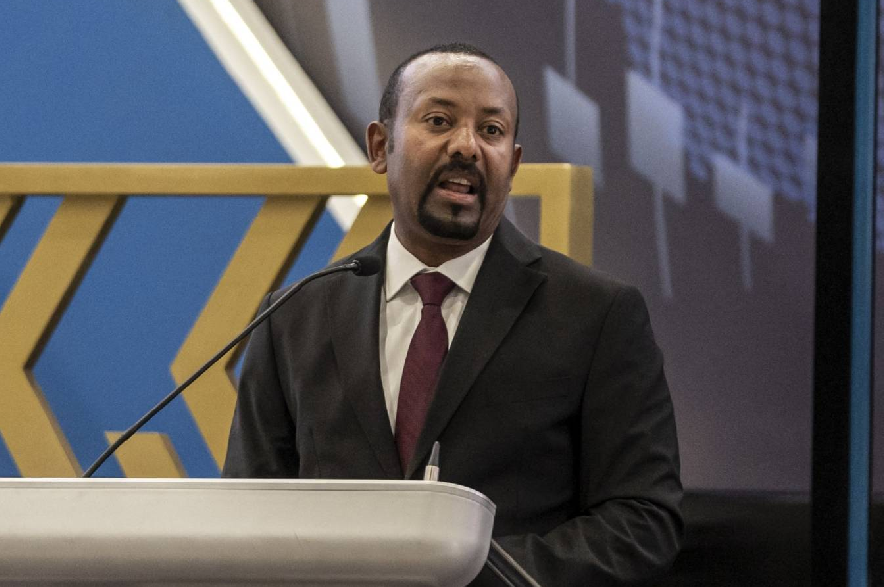
Summary: Ethiopian Prime Minister Abiy Ahmed said, 'The time has come to address this imbalance definitively,' noting that the final word on making deep constitutional amendments belongs to the representatives participating in the national dialogue who will produce a new draft to be put to a popular vote.
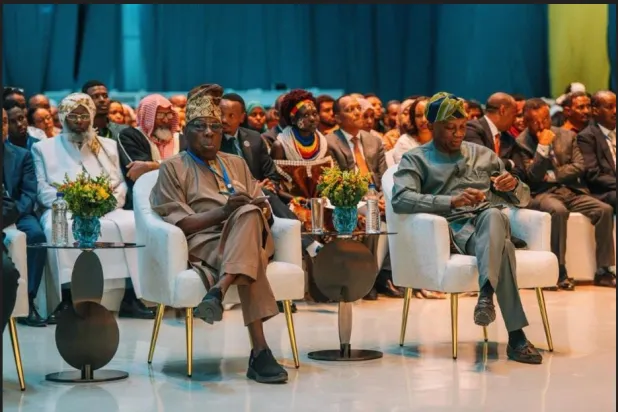
The Ethiopian government announced the launch of a national dialogue conference in the capital Addis Ababa, aimed at reviewing the Ethiopian constitution in effect since 1995 and reassessing the feasibility of the political system based on ethnic federalism. The ruling Prosperity Party appears to be seeking to adopt a more centralized system, especially in light of growing ethnic polarization and successive wars between the central government and some ethnically-oriented federal regions. The ruling system believes these conflicts are a product of the ethnic approach endorsed by the current constitution.
In his opening address to the conference, attended by some four thousand participants from various nationalities and political spectra, Prime Minister Abiy Ahmed said, 'The launch of the national dialogue represents an opportunity to address the prevailing political pattern in the country,' which 'has often led to resorting to force to resolve disputes instead of dialogue.' He added, 'The time has come to address this imbalance definitively,' noting that the final word on making deep constitutional amendments belongs to the representatives participating in the national dialogue who will produce a new draft to be put to a popular vote.
Mehari Salmon said that the conference recently launched in Addis Ababa 'did not represent the Tigray region despite its historical and political importance' (AFP).
Messages to the outside
Abiy Ahmed continued: 'Ethiopia's loss of its direct outlet to the Red Sea is due to internal factors linked to political divisions and the state of internal weakness that the country has experienced through various historical stages, more than its connection to external factors.' He considered that Ethiopia has become 'geographically imprisoned' as a result of its failure to effectively manage its internal disputes. He affirmed that the historical inability to manage internal differences allowed external parties to benefit from divisions within the country, which reflected 'on Ethiopia's strategic interests, including access to the Red Sea.' Ahmed accused, without naming specific countries, external parties of exploiting conflicts and internal divisions in Ethiopia to achieve their own interests. He said there are countries that bear 'centuries-old animosity' and await any signs of internal turmoil in Ethiopia, adding that these parties do not appear during periods of construction and development, but become active when the country faces crises or internal divisions. He noted that those parties were absent during the developmental stages the country witnessed, but appear when internal disputes escalate. The Ethiopian Prime Minister likened those entities to 'vultures circling in Ethiopia's sky,' considering that they await opportunities arising from internal divisions. He said, 'My message to the vultures circling in Ethiopia's sky is that we are the ones who buy the cattle, and we are the ones who decide how to distribute it, and unless we decide to share what remains, no vulture will be able to take a single kilogram of meat from our table by force.'
Files under review
Observers believe that the national dialogue conference may help calm some conflicts if its members enjoy the freedom to propose solutions, especially since the country is witnessing civil wars in both the Amhara and Oromia regions, while the Tigray region suffers from political isolation due to its lack of participation in the government and elected parliament, at a time when other areas are experiencing historical political crises, particularly in the Ethiopian Somali and Benishangul-Gumuz regions.
The head of the national dialogue conference, Mesfin Araya, announced that the conference will focus on eight files as a main agenda for discussion, most notably 'state-building, which includes issues related to national identity, historical narratives, and social cohesion, in addition to studying the existing governance model related to reviewing the federal system, power-sharing mechanisms, constitutional governance, and the institutional frameworks regulating state administration, as well as studying the status of federal cities, which is based on demands related to the status of the capital Addis Ababa and the city of Dire Dawa, both of which enjoy a special status in the Ethiopian federal constitution, separate from the federal status due to their particular sensitivity in the national system, along with other files related to managing diversity and conflicts concerning borders between Ethiopian regions.'
Meanwhile, political analyst Beyene Gedow said that the launch of the national dialogue activities represents a historic opportunity to face challenges that limit state effectiveness, 'especially those related to the form of government based on ethnic federalism,' noting that this type of system is not implemented in any country in the world, as countries that adopt a federal system rely on geographic criteria rather than ethnic. He explained that Ethiopia is the only country that resorted to ethnic definition during the rule of the 'Tigray People's Liberation Front.'
Gedow added that this system contributed to the country entering into civil conflicts in more than four federal regions, because it strengthens ethnic belonging at the expense of national belonging, and that there is an urgent need to review this experience after nearly three decades of its adoption. The Ethiopian political analyst explained that the country has only reaped more civil wars from that experience over the past three decades, stressing that it is likely to maintain the federal formula of governance, but with a geographic rather than ethnic criterion, noting that this requires redrawing existing borders and redefining federal regions in a new way, while keeping the capital with its national identity. Gedow pointed out that the Ethiopian national fabric has been greatly damaged by civil wars, and that enacting new provisions in the federal constitution may help rebuild trust, noting that 'there is a clear trend to cancel Article 39 of the current constitution, which allows federal regions to secede from the state.' He stressed that this clause enhances the likelihood of disintegration, and was put in place during an exceptional period in Ethiopian history, following the Tigrayan separatist front's takeover of power in Addis Ababa. 'Moreover, redefining the federal system on geographic grounds, if approved in the new constitution, will end factors of conflict between Ethiopian nationalities and contribute to national unity.'
Read more
Did Washington side with Addis Ababa in the Tigray crisis?
Ethiopia: Peace and security are the priorities of the 'Prosperity' party to face challenges
Abiy Ahmed contradicts Abiy Ahmed and faces Trump
How does Ethiopia serve Russian strategy in Africa?
Disagreements between blocs delay meeting of Sudanese political forces in Addis Ababa
Lack of representation
Original source: Independent Arabia


Comments (0)
Be the first to comment.