Historic Recession of the Nile in Sudan and the Ethiopian Renaissance Dam as the Main Accused
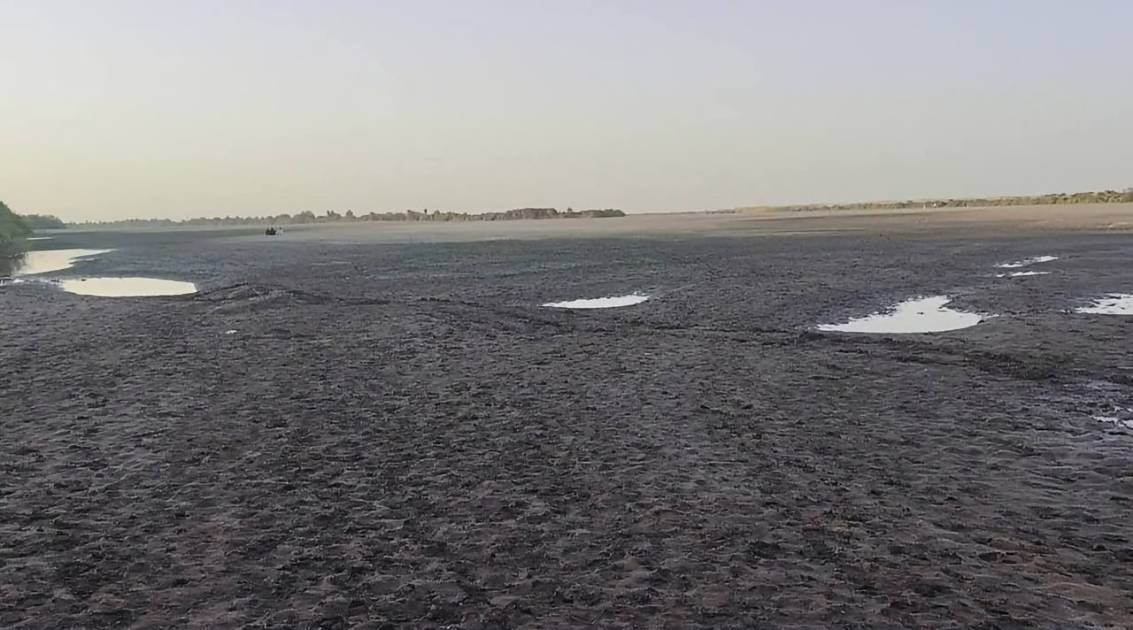
Summary: Water has receded from the banks of the Nile in Sudan, exposing sand tongues and drying parts of the riverbed, causing thirst for a large number of people in Khartoum, while accusations are directed at the Ethiopian "Renaissance Dam."
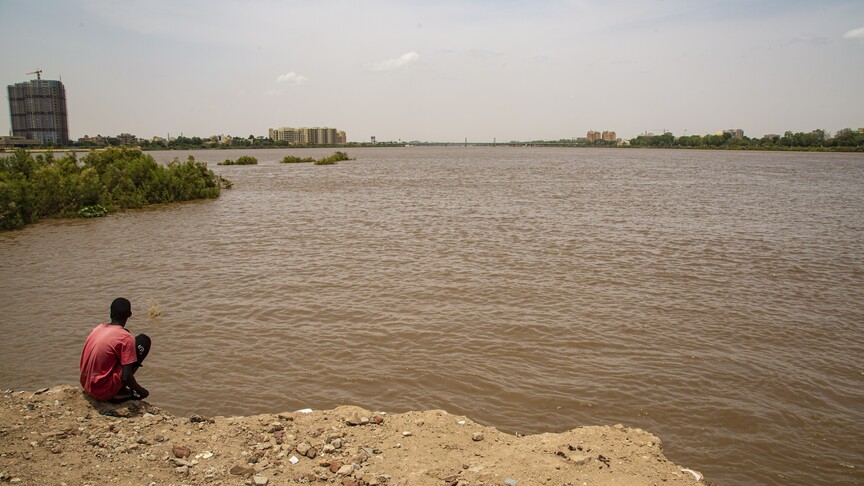
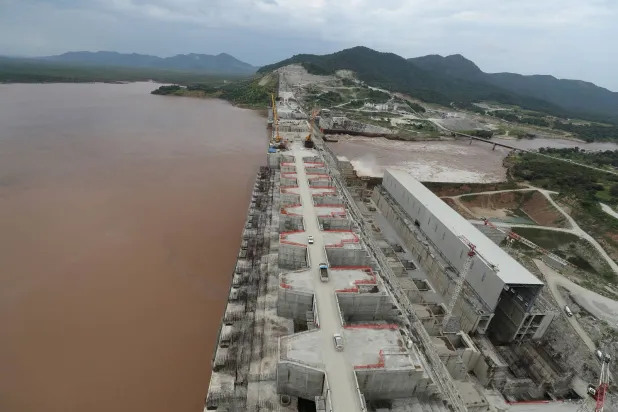
Contrary to the usual pattern in such days in past years, and in a historic precedent, Sudan is witnessing a massive recession in the water level of the Nile River, especially the "Blue Nile" tributary coming from the Ethiopian highlands, southeast of Sudan. The sudden recession wave of the Nile waters extended along its stretch from Khartoum to the Northern State. The decline in water levels also caused several drinking water pumping stations to stop service and reduced production from some of them, amid questions about interpreting the nature of what happened and its relation to the operation and completion of storage operations at the Ethiopian "Renaissance Dam."
Fears and Thirst
Several videos circulated on social media raised fears of the unprecedented decline and unnatural recession in Nile water levels, amid questions about the reasons and the role of the operation of the "Renaissance Dam" and its potential future impacts on Sudan.
The first direct effects of the Nile recession manifested in a severe water crisis threatening hundreds of thousands south of Omdurman city and north of "Khartoum North" in the Sudanese capital, due to the stoppage of the "Al-Saliha station" south of Omdurman because of the severe drop in water levels and its distance from the intake pumps, in addition to the decline causing irrigation pumps in several agricultural projects to go out of service.
The features of the crisis of the significant drop in water levels and the recession of the Nile riverbed over the past days have appeared in several forms in a number of riparian states affected by the problem of water decline.
In Khartoum State, the Water Authority officially announced the temporary suspension of the "Al-Saliha Water Station" and the "North Bahri Station" due to the watercourse moving away from the suction pumps, prompting authorities to use excavators to dig new water channels.
In River Nile State, residents in the Al-Bajrawiya area observed a noticeable retreat of water from the shores by distances of up to 15 meters, while in several areas of the Northern State, wide sand tongues appeared in the middle of the river, causing parts of the riverbed to dry up to the point that it became possible to cross on foot.
The technical reasons behind this recession, according to analyses by experts in dam engineering and water resources, are due to a mix of human and natural causes. The main reason is the nature of the impact of operating the "Renaissance Dam," as the Ethiopian dam has changed the historical natural pattern of the Blue Nile flows, not to mention the unilateral control over the dam gates and the amounts of water released, making the water levels of downstream countries hostage to uncoordinated operating decisions with Sudan and Egypt.
Causes and Factors
Specialists and researchers in the field of water consider what is happening in terms of the decline in water levels in the Nile River, especially the Blue Nile these days, as the worst historically, almost reaching a stage of drying along vast areas of the country. They see it as an early warning for both Sudan and Egypt, confirming the extent of the impact of water storage and retention in the Renaissance Dam reservoir on these two countries, especially if it coincides with a weak rainy season and Ethiopia's continued unilateral technical management of the dam without monitoring or even sharing data on storage volumes and water discharges.
Researchers point to a combination of several causes and factors, in addition to the storage in the "Renaissance Dam" reservoir, that led to the current recession in the Nile waters, chief among them the delay of the rainy season on the Ethiopian highlands that feed the Blue Nile with most of its annual inflow, leading to a delay in the usual flood for June and July, as well as the weak flow of seasonal rivers at the beginning of this year's autumn compared to previous years.
Specialists warn that if the decline in water inflows and the retreat of flows from the Ethiopian highlands to the Blue Nile continue as currently, this will threaten to reduce irrigated agricultural areas in both Sudan and Egypt, as it is expected to go beyond being a water crisis specific to Sudan, with its long-term impact extending to affect Egypt's management of its water reserves.
For its part, the Sudanese authorities have begun taking emergency measures by digging channels from the new water level towards the pumps, removing silt and deposits around them, with precautions to provide water to affected areas via mobile tankers.
The authorities in Khartoum State also plan to drill high-yield backup wells to reduce full reliance on Nile stations, pending improvement in seasonal rainfall on the Ethiopian highlands and a return to normal rates in the coming days and weeks, when the Nile level is expected to rise again with the arrival of the annual flood wave to Sudan.
Excavations and treatments to operate water stations in Khartoum due to the recession of the Nile waters (social media)
Severe Crisis
A statement from the Khartoum State government revealed a severe crisis in drinking water supplies after the stoppage of the Al-Saliha water station due to the significant drop in the Blue Nile level, causing water scarcity in several neighborhoods and villages south of Omdurman locality, amid urgent official moves to contain the crisis threatening hundreds of thousands of residents.
For his part, the Director of the Khartoum State Water Authority, Mohamed Ahmed Awad, pointed out that the drop in the Blue Nile level usually occurs during May and June, but the continuation of the recession during July is unusual, and may be linked to the delay in rainfall and weak flow of seasonal rivers.
Awad explained that technical and engineering teams continue to work to address the thirst crisis in affected areas, noting that the authority had previously opened a watercourse towards the pumps, but the renewed drop in the Nile level caused the Al-Saliha station to stop again, expecting that opening a new watercourse would allow the station to restart within a short period.
The Director of the Khartoum State Water Authority revealed the start of drilling two high-yield wells to compensate for the shortfall in the production of the "Al-Saliha station" and to provide a backup water source that can be relied upon to enhance the stability of water supply and reduce the effects of future crises during emergencies.
Filling and Levels
In this context, the former Undersecretary of the Ministry of Irrigation and Water Resources, Engineer Ahmed Mohamed Adam, explains the reasons for the recession of water in the Nile bed in northern Sudan, stating that before the start of the Renaissance Dam filling process in 2021, the Nile waters and levels remained high along the river course during the flood period extending from July to September.
Nile recession causes water pumping stations to stop (social media)
Adam points out that "the significant improvement in the White Nile inflows throughout the dam filling periods over the past four years (2021-2025) is what contributed to compensating for the shortfall in Blue Nile water inflows, so the areas north of the Merowe Dam were not affected by the operation of the Renaissance Dam to the extent that the increase in White Nile inflows led to increased power generation at the Merowe Dam."
Read more
Nile waters flood lands in Egypt and Sudan
Renaissance Dam after completion... Does Ethiopia ignore the demands of downstream countries?
Between natural and artificial... Sudan floods embarrass the Renaissance Dam
Original source: Independent Arabia


Comments (0)
Be the first to comment.