Pakistan Uses War Mediation to Extract Gains from Washington
Summary: Former Pakistani ambassador to Washington Maliha Lodhi said, "It is not possible to determine how long this marked improvement in relations will last given their volatile nature," adding, "The question also arises: Will this improvement continue after Donald Trump's term ends?"
Pakistan seeks to translate the diplomatic gains achieved through its mediation in Iran's war into broader security cooperation and US investments in the mining sector, via a substantial $1.2 million contract in Washington, according to an official document.
The two-year contract, deposited in a publicly accessible official database, took effect in May last year. It covers a period that officials and experts consider critical for converting the goodwill Pakistan has earned with the Trump administration into tangible gains in bilateral relations, but Islamabad may face a difficult task.
Former Pakistani ambassador to Washington Maliha Lodhi said, "It is not possible to determine how long this marked improvement in relations will last given their volatile nature," adding, "The question also arises: Will this improvement continue after Donald Trump's term ends?"
The contract tasks the group "Irvine Graves Strategy," based in the Capitol building, with engaging the US Congress and government, and facilitating meetings including with officials from the Pentagon and the National Security Council.
This contract extends a short-term agreement signed between the Pakistani embassy in Washington and the group in October 2025, but the new arrangement doubles the monthly payment to $50,000. The Pakistani Foreign Ministry did not respond to a request for comment on the contract.
A US State Department spokesperson said the two countries "continue to identify areas of cooperation that benefit both our countries regarding trade and certain security priorities."
Governments typically hire lobbying firms to enhance their presence in Washington's decision-making circles.
Pakistan's latest contract, disclosed under the US Foreign Agents Registration Act, provides direct insight into Islamabad's strategic priorities.
The agreement sets out frameworks for efforts to reactivate defense cooperation mechanisms that existed during the Afghanistan war and attract investments into the mining sector currently dominated by China.
Former US diplomat in Pakistan and head of the South Asia program at the Stimson Center, Elizabeth Threlkeld, said, "The contract highlights aspects of the relationship that align with the Trump administration's priorities, including critical minerals and counterterrorism."
Security Perspective: Threlkeld added that the text also shows "interest in engaging Congress to broaden the support base for the partnership" and includes guidance to emphasize "threats emanating from Afghanistan" and "encourage continued US support for Pakistan's counterterrorism efforts," as Islamabad strikes its neighbor in response to attacks by militants.
The Afghan Taliban government denies Kabul's involvement in any armed militant violence in Pakistan.
The relationship between Pakistani army chief Asim Munir and Trump has strengthened Islamabad's presence in a bilateral relationship often focused on the security dimension.
The US president describes Munir as his "favorite field commander," after they met following a conflict with India that Trump mediated last year.
Read more:
Pakistan intensifies its campaign to deport Afghans... demolishing houses and checkpoints
Can Pakistan and India learn dialogue before war?
9 killed in clashes in Pakistani-administered Kashmir
Pakistan's power-sharing plan for Libya
An informed source said Pakistan's assistance in US-Iran negotiations, which led to a memorandum of understanding last June, provided a timely opportunity.
A source who requested anonymity confirmed, "We seek to move relations beyond the personal level and make them institutional enough to ensure continuity despite changes in government."
Overall, Islamabad's relations with Washington have cooled since the US withdrawal from Afghanistan in 2021, after a 20-year war that largely defined the relationship's nature.
Pakistan tasked the Irvine Graves group with working on "resuming appropriate high-level bilateral dialogue mechanisms in defense and security."
According to the contract, this could take the form of reactivating the Defense Consultative Group, the forum that supported US-Pakistani cooperation during the Afghanistan war.
Fellow at the Atlantic Council research center and author of the book "Pakistan's Battle: Bitter American Friendship and Tense Neighborhood," Shuja Nawaz, said the Defense Consultative Group "gradually declined as security assistance to Pakistan decreased."
Fluctuating Scope of Cooperation: At the height of this partnership, Pakistan received billions of dollars in US funding, while Washington relied on it to secure military supply lines and counterterrorism cooperation.
But the relationship suffered a setback in 2011 when US forces found Osama bin Laden, the mastermind of the September 11 attacks that killed nearly 3,000 people, during a raid on a compound in Pakistan.
Nawaz said, "Today, there is no significant direct US aid to mention."
A Pakistani security source told AFP that defense relations continue.
The source added, "Despite the fluctuating scope and intensity of cooperation, security cooperation has rarely been interrupted," stressing that intelligence cooperation last year led to the arrest of an ISIS member suspected of involvement in the deadly 2021 attack on Kabul airport.
A section of the lobbying contract is dedicated to the mining sector, a global strategic priority for the Trump administration, instructing the firm to "support efforts to identify cooperation opportunities."
The Irvine Graves firm must provide recommendations on Pakistan's investment policies and strategies and identify potential investors, according to the contract.
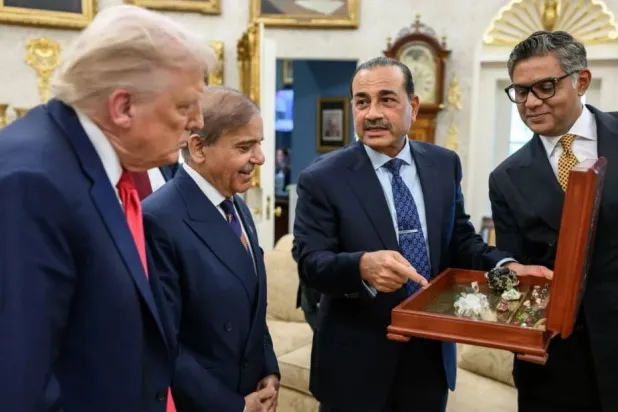
This could boost US interest in the mining sector in the vast southwestern province of Balochistan, which holds one of the world's largest untapped copper reserves, a metal increasingly in demand for building AI data centers.
In December 2025, Washington pledged $1.25 billion for the Reko Diq copper and gold mine in Balochistan.
But Balochistan, Pakistan's least developed province, is experiencing a growing separatist insurgency that has also targeted Chinese mining investments.
Nawaz noted that US-Pakistani relations need to address these challenges to move beyond reliance on potentially transient goodwill between the two countries' leaders, adding, "Pakistan must reform its domestic situation to strengthen its economy and make it a more attractive destination for foreign investment. Then, US interest in it will increase."
Original source: Independent Arabia
Comments (0)
Be the first to comment.