Residents enter first model towns in southern Lebanon after Israeli withdrawal
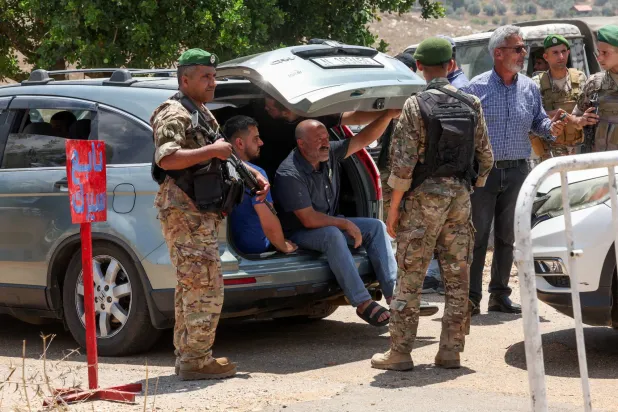
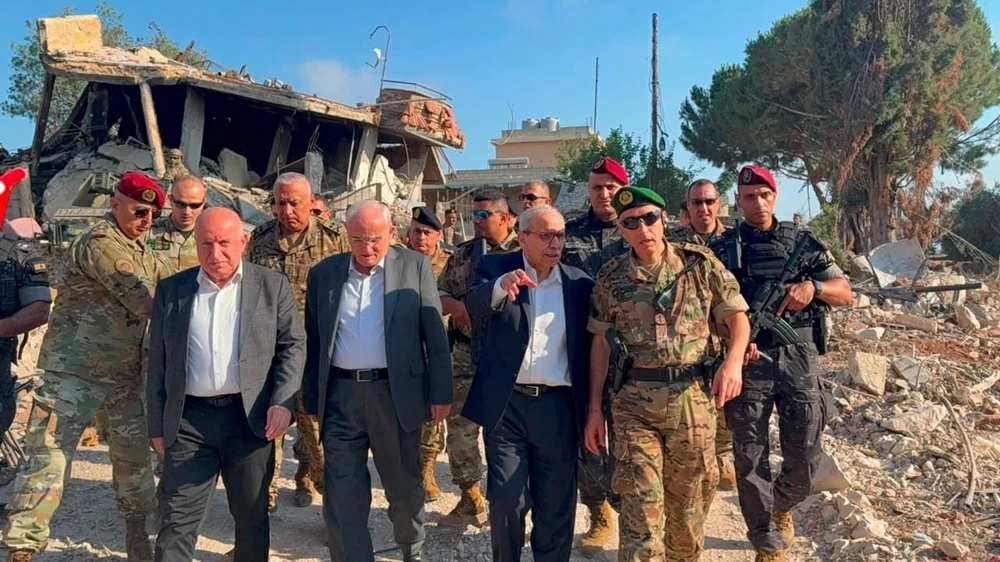
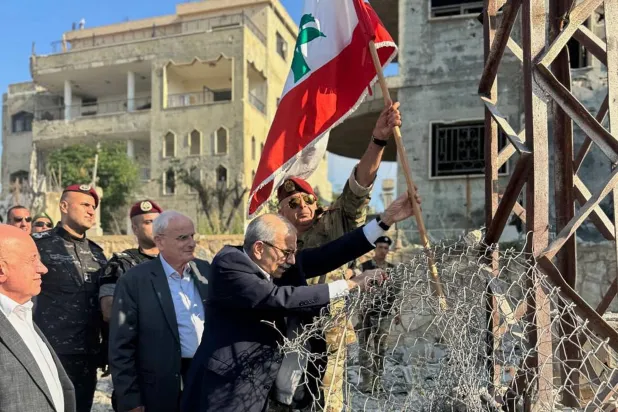
Residents of the western town of Zoutar began entering the town on Friday, from which Israeli forces withdrew last Tuesday, under the framework agreement with Israel sponsored by the United States, and in implementation of the experimental zones. They discovered that the destruction rate exceeds 80 percent, making life there "almost impossible at the present time."
The Lebanese army organized the process of bringing residents into the neighborhoods that had been completely inspected; residents began entering in batches, within specific groups to inspect their properties in the western and northern neighborhoods, which the army had fully secured. At the same time, military units and army engineering teams continued inspecting other neighborhoods and clearing them of war remnants, in addition to opening roads and removing rubble, to allow residents to enter, according to field sources told Asharq Al-Awsat.
No roads or services
One resident of the town, who entered on Friday, said that "there is no trace of the roads that were subjected to bulldozing and tampering," noting in statements to Asharq Al-Awsat that the destruction rate there is "very high."
He added that basic services in the town are "missing," referring to the outage of electricity, power generators, internet, and water networks, "due to Israeli military operations inside the town," noting that the possibility of living there at present is "almost impossible."
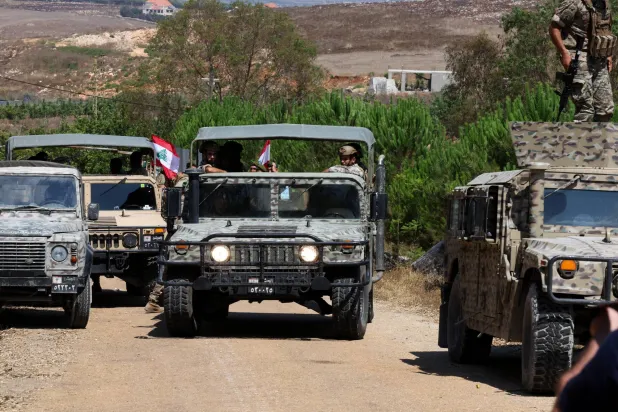
A Lebanese army military vehicle passes among residents of western Zoutar who gathered in preparation to enter the town located in southern Lebanon (Reuters)
Convoys of 5 cars
The official National News Agency reported that the town's residents began entering on Friday morning with support from the Lebanese army, amid security and organizational measures to facilitate the return process.
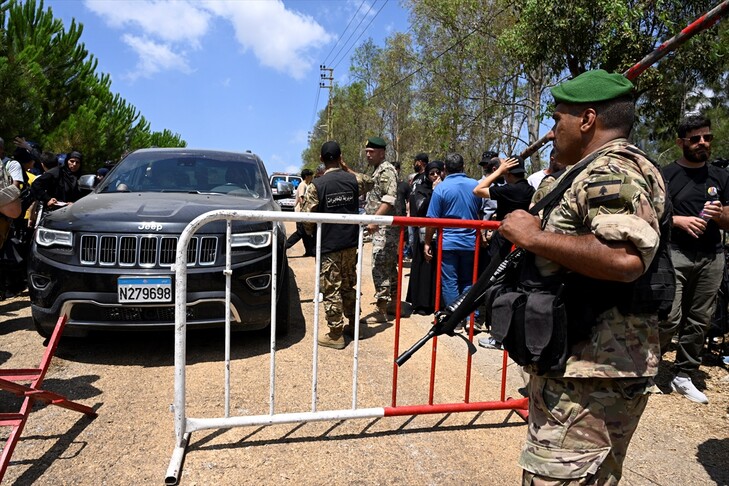
Army units at the entrance of Zoutar from the side of Qa'qa'iyat al-Jisr organized the entry of residents who had been stationed at the entrance of their town for 4 days, until they were allowed to enter, after the engineering battalion completed removing suspicious obstacles, unexploded bombs, and mines left by the Israeli army in the town's streets and neighborhoods.
According to the agency, the entry of residents was organized in convoys of 5 cars per batch, after being searched, with entry prohibited to neighborhoods adjacent to the occupied town of eastern Zoutar.
Field sources told Asharq Al-Awsat that those who entered the town "were surprised by the scale of destruction that befell it," noting that "a small percentage of homes are suitable for living after restoration or repair of damage, not exceeding 20 percent of the total civilian structures in the town."
They added that residents "entered the town accompanied by the army in small convoys, after their cars were subjected to careful inspection, but most of them left again, due to the impossibility of staying there currently."
Ambulances of the Red Cross at the entrance of western Zoutar in southern Lebanon (EPA)
Local activists are seeking to secure a power generator and repair the main water networks in the town as soon as possible, allowing residents wishing to return to live there with at least minimum services, a matter still under discussion between the municipality and residents.
The town's entrances witnessed heavy congestion, leading to very slow movement of cars entering, due to the large influx of residents wishing to return, while some preferred to continue on foot to reach their homes.
The sources said that military units "have intensified their work since Tuesday, to enable residents to return safely," noting that all residents are expected to have entered the town by Saturday.
Ongoing explosions
The return came against the backdrop of Israeli violations of the ceasefire agreement, as Israeli forces carried out large demolition operations in the towns of Khiam and Majdal Zoun, and also completely cut off the road between Hadata, al-Tiri, and Kunin, after detonating small culverts between those towns.
The National News Agency reported that drone warplanes flew over the capital Beirut reaching the southern suburb, at low altitude.
Hezbollah attacks the state
While the Lebanese state, through the diplomatic track, continues to work to secure an Israeli withdrawal from Lebanese territories based on the experimental zones model, Hezbollah continued to criticize the negotiating approach adopted by the state, and also attacked the meeting of Lebanese President Joseph Aoun with US President Donald Trump.
MP Ibrahim al-Moussawi said: "We are doing our duty and exercising our right to resistance, while those who were late to this path are in a position of accountability and reckoning."
Al-Moussawi considered that "the authority hastened to bring itself down, and created deep and profound valleys between itself and the people, and did not provide anything for the dignity and honor of the country and its people; so how can it be logically, morally, and nationally correct that the country's sons are being slaughtered and martyred every day by a murderous enemy practicing bulldozing and destruction, while the head of the authority goes to the primary supporter of this enemy, shakes hands with him, makes a covenant and pact with him, and makes concessions that open a new page with Lebanon's enemies and their supporters, and close pages with the honorable, dignified, and sacrificing sons of this country?" in a direct attack on President Joseph Aoun.
Original source: Asharq Al-Awsat
Comments (0)
Be the first to comment.