Tehran: Resumption of negotiations with Washington possible if our interests are respected
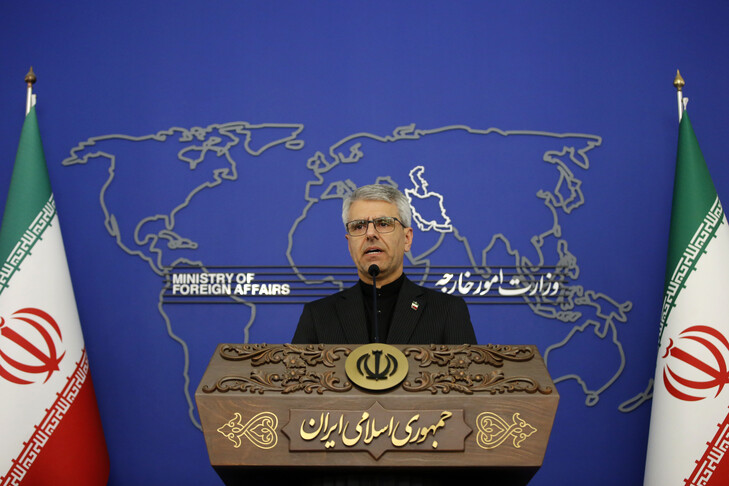
Foreign Ministry spokesperson affirmed that Iran's 'sovereign' right over the strait is 'not negotiable'..
Tehran / Anadolu
Spokesperson for the Iranian Foreign Ministry, Esmaeil Baghaei, said that resuming negotiations with the United States is possible if the national interests of his country are taken into account.
He added in a weekly press conference held Monday in the capital Tehran that intermediary states (unnamed) have conveyed messages to Iran regarding the course of negotiations with the United States.
He continued: 'If our national interests are taken into account, it is possible to resume negotiations with the United States.'
He added: 'The binary of either negotiation or war, either diplomacy or war, does not benefit our country. Iran protects its interests sometimes through defensive means and sometimes through diplomacy.'
Regarding the Strait of Hormuz, Baghaei affirmed that Iran's 'sovereign' right over the strait is 'not negotiable.'
He went on to say: 'We are determined to consolidate our sovereignty over the Strait of Hormuz through the measures we have taken, and we must not allow the strait to be used to threaten Iran's national security.'
He added that the terms of the memorandum of understanding signed between Iran and the United States 'are not open to interpretation, and there is no justification for Washington to shirk its commitments.'
He noted that Tehran has previously announced that it will not implement its commitments if it is proven that the United States is not fulfilling its commitments.
For more than a week, Tehran has been attacking what it says are U.S. military facilities in Arab countries, including Oman, in response to daily U.S. bombing that Iran is subjected to.
Trump announced on July 8 of this month the end of the ceasefire stipulated in the memorandum of understanding signed with Tehran on June 18 last month.
Trump's announcement came after Iran targeted three commercial vessels in the Strait of Hormuz, as Tehran insists on imposing a mechanism to regulate ship passage through the strategic waterway, while Washington demands ensuring freedom of navigation and its security in the strait.
The escalation has disrupted navigation through the Strait of Hormuz and threatened air traffic and energy supplies, amid intermittent closures of airspace and warnings of targeting U.S. facilities and interests outside the Middle East.
Original source: Anadolu Agency



Comments (0)
Be the first to comment.