Trump promises Aoun 'big help' for Lebanon
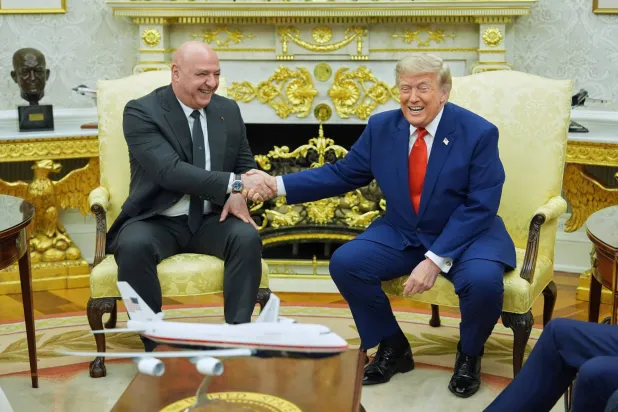
US President Donald Trump pledged to provide significant assistance to Lebanon, affirming that his administration has concrete plans to support its army, during his reception of Lebanese President Joseph Aoun.
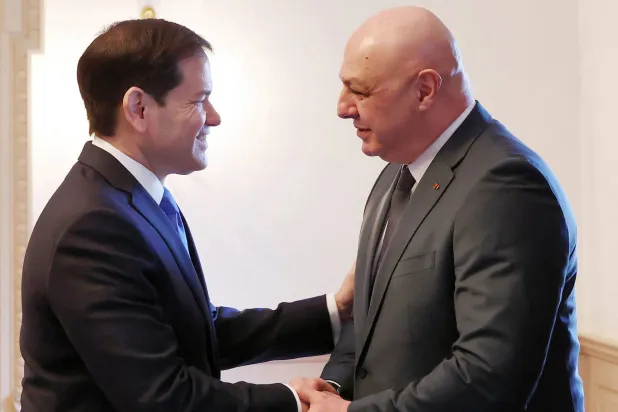
US President Donald Trump pledged Tuesday to provide significant assistance to Lebanon, confirming that his administration has concrete plans to support the Lebanese army, during his reception of Lebanese President Joseph Aoun at the White House on Tuesday morning, in their first direct meeting and the first visit by a Lebanese president to Washington since 2009.
At the outset of the meeting, Trump said that Lebanon has suffered a lot, but he stressed that the Lebanese cling to their country despite wars, explosions, and instability. He added: "We will provide him with help, and we will help him a lot," affirming that the United States will work to solve a number of problems facing Lebanon and will ensure it is treated with the respect it deserves.
US President Donald Trump receives Lebanese President Joseph Aoun at the White House (dpa)
For his part, Aoun described the framework agreement with Tel Aviv as a "historic achievement," noting that his ultimate goal is to end the state of enmity between Lebanon and Israel forever. Addressing Trump, he added: "I believe this will be your great legacy. Together we can achieve this goal. It is time for both Lebanon and the region to enjoy stability and security." Trump expressed agreement with this view, noting that Aoun has a people who love their country and will work to make it succeed.
President Aoun affirmed that the Lebanese army possesses the necessary funding, equipment, and manpower to implement the agreement. He called on President Trump to provide additional American aid to accomplish the mission, noting that he needs political support and support for the army as the most trusted institution in the country, possessing the strongest weapon: the confidence of the Lebanese. He said the Lebanese army is the backbone of security and stability.
In response to a question about when Israeli forces would fully withdraw, Trump avoided setting a timeline and used the term "redeployment." He said Israeli forces are in the process of redeploying other units, adding that Israel and Lebanon are in full agreement and that the agreement signed between them was "wonderful."
Plans to support the army
Support for the Lebanese army was a prominent focus of the meeting. When asked how to help Lebanese forces take control of the villages from which Israel is withdrawing, Trump said: "We will talk about that today, and we already have very concrete plans for this purpose, with the participation of other parties that will provide help." He added that the Lebanese army has become much more self-reliant, stressing that the support file would be one of the main topics in the talks.
Beirut seeks to increase US military and logistical aid, based on the fact that the army is the entity that will deploy in the experimental zones, confiscate weapons and illegal military infrastructure, and ensure that Hezbollah does not return to them. The United States is the largest supporter of the Lebanese military institution, having provided over $3 billion in security aid since 2006. Aoun hopes to translate US political support into a new aid package, in coordination with Arab and European countries. Aoun also expressed his desire to resume direct flights between Lebanon and the United States, while Secretary of State Marco Rubio had previously spoken about increasing US and international investments and helping Lebanon achieve recovery. Beirut seeks to link security progress in the south with an economic support and reconstruction package, allowing the state to deliver tangible results to the population and strengthen its position against Hezbollah.
President Donald Trump speaks during a meeting with Lebanese President Joseph Aoun at the White House on Tuesday, July 21, 2026 (AP)
President Trump joked with his Lebanese guest, calling Aoun a handsome man (just as he joked with the Iraqi prime minister last week) and said: "I think he may become one of the most important leaders in the Middle East." Trump also dropped a major surprise by expressing his readiness to talk with Hezbollah.
Syria
In a notable statement, Trump opened the door to the possibility of Syria playing a role in addressing the Hezbollah weapons file, when asked if he supported Syrian intervention to help disarm the party. The US president did not rule out the idea, but described it as a proposed idea, praising Syrian President Ahmed al-Shara. He said: "We have a very good relationship with the Syrian president, he has done a very good job, and I would not be surprised if he does a similar job. He succeeded in unifying Syria." He added: "Al-Shara wants to intervene and do something regarding Hezbollah," noting that there are long-standing differences between the two sides, and that such a role "could be very effective." Meanwhile, President Aoun insisted that the Lebanese army alone should be responsible for extending state authority and implementing the security arrangements stipulated in the framework agreement.
Part of the talks between Presidents Trump and Aoun at the White House in the presence of journalists (dpa)
The Zoutar al-Gharbiya incident
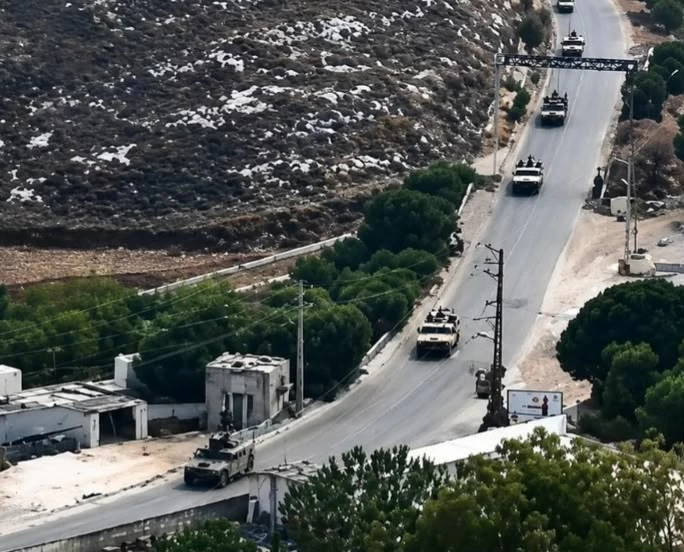
The meeting between Trump and Aoun coincided with the start of the first phase of the experimental zones in southern Lebanon, which includes a gradual Israeli withdrawal and the deployment of the Lebanese army in the villages of Froun, Sirfa, and Zoutar al-Gharbiya, under the framework agreement sponsored by the United States between Lebanon and Israel on June 26.
Trump faced a question regarding the Lebanese army's announcement that Israeli forces fired near Lebanese units that were trying to deploy in one of the experimental zones. The US president said he heard about the incident just before the meeting began and added: "We will study the matter."
Berri and internal objections
The meeting also addressed the stance of Lebanese Parliament Speaker Nabih Berri, after Aoun was asked about reports that he rejected the agreement and described it as potentially leading to internal strife. Aoun replied that the framework agreement does not require parliamentary ratification, noting that the constitution grants the president the authority to conclude it. President Aoun was keen to defend Berri, saying that the parliament speaker supports ending the state of hostility and war, and that his position as a Shiite leader requires him to handle the file cautiously. He added: "President Berri is a statesman," explaining that he hails from southern Lebanon, is aware of the scale of destruction it suffers, and wants to see an end to the war, even though he is required to consider the sensitivity of his position and his relationship with Hezbollah.
Trump said he heard that Berri is "a good person and a righteous man," expressing confidence that he will join the path when he sees the progress the agreement achieves.
Lebanese President Joseph Aoun speaks during his meeting with President Donald Trump at the White House on Tuesday, July 21, 2026 (AP)
These statements reveal Aoun's attempt to contain internal objections, especially from Hezbollah and its allies, who rejected the framework agreement and did not participate in the negotiations. The party believes that its disarmament cannot be discussed before a full Israeli withdrawal and an end to raids on Lebanon.
Lebanon and the Abraham Accords
Trump was asked whether he would pressure Lebanon to repeal the law that criminalizes communication with Israel, paving the way for its accession to the Abraham Accords. The US president praised the accords, describing them as a "huge success," and said he expects other countries to join them, but he did not explicitly demand immediate normalization by Lebanon, merely stating that Lebanon has a very important status.
Original source: aawsat.com
Comments (0)
Be the first to comment.