US Buildup Gives Trump Wider Options Against Iran
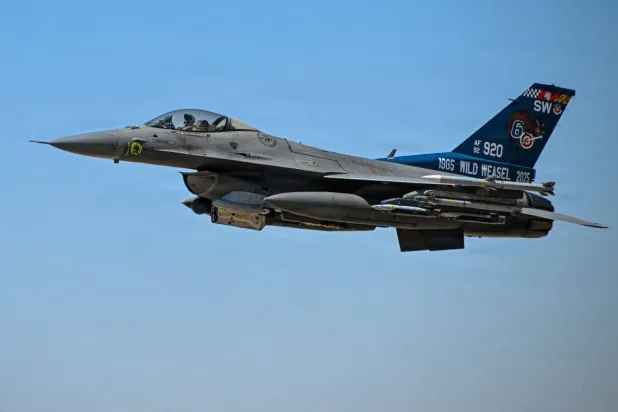
The United States has strengthened its military capabilities in the Middle East, with an increase in refueling aircraft and the redeployment of B-1 strategic bombers, in indications that Washington is preparing its options to expand operations against Iran, even though current strikes remain relatively limited.
The Wall Street Journal reported, citing informed sources, that the United States is sending additional troops, weapons, and medical teams to the region, as part of a move aimed at giving President Donald Trump wider military options as he considers escalating the war following the killing of three American soldiers in an Iranian attack on a base in Jordan.
According to the newspaper, US special operations forces moved over the past week from bases inside the United States to the Middle East, squadrons of fighter jets were transferred to locations across the region, and long-range bombers based in the United States and Britain were put on alert in preparation for possible expansion of operations.
The US Army also sent refueling aircraft, F-16 fighters from Spangdahlem Air Base in Germany, and F-35 fighters from RAF Lakenheath in Britain. Israel is among the likely locations to host these aircraft.
More than 150 medical personnel have arrived in recent days at the Landstuhl Regional Medical Center in Germany, according to a US official. The center is the main destination for treating American soldiers wounded in combat operations in the Middle East.
The US Central Command (CENTCOM) refrained from discussing details of the movements or force levels, citing operational security concerns. A Pentagon spokesman referred questions about reinforcements to the command, while the White House said Trump 'always has all options available.'
Retired General Joseph Votel, former commander of CENTCOM and US Special Operations Command, said the buildup does not necessarily mean large-scale military operations have become inevitable, explaining that the primary goal is to give the president and defense secretary maximum flexibility and provide multiple options to political leadership.
First Mission Since Resumption of Combat
The reinforcements came alongside the first known use of a B-1 bomber inside Iran since the resumption of combat on July 8.
Axios reported, citing US officials, that the US military used a long-range bomber of this type on Tuesday to strike targets belonging to Iran's Revolutionary Guard inside Iran, a step seen as an indication of escalating the campaign and expanding the range of means used.
US strategic bomber B-1 Lancer takes off from RAF Fairford in Britain on March 26, 2026 (AP)
The site said the bomber took off from an air base in Britain, and its flight path was tracked via open websites for tracking aircraft movements.
CENTCOM, in its statement on Tuesday's strikes, did not mention the use of the B-1. It only said its forces targeted military operations centers, naval capabilities, aircraft hangars, drone storage facilities, and logistical infrastructure, aiming to weaken Iran's ability to threaten civilian mariners and commercial ships in the region's waters.
It was not clear what type of targets the bomber struck, or the munitions used, or whether its mission achieved greater results than the strikes carried out by US aircraft in previous days.
The United States had used bombers of the same type during the first phase of the war that began on February 28 and ended on April 7, in operations targeting missile bases, command centers, weapons warehouses, and air defense systems.
Capability to Strike Deep Positions
The B-1 carries the largest weapons payload among US military aircraft, capable of carrying at least 70,000 pounds of munitions, including 24 2,000-pound bombs, or dozens of cruise missiles. It can also fly at supersonic speeds at low altitudes and carry several bunker-buster bombs, enabling its use against fortified or underground facilities.
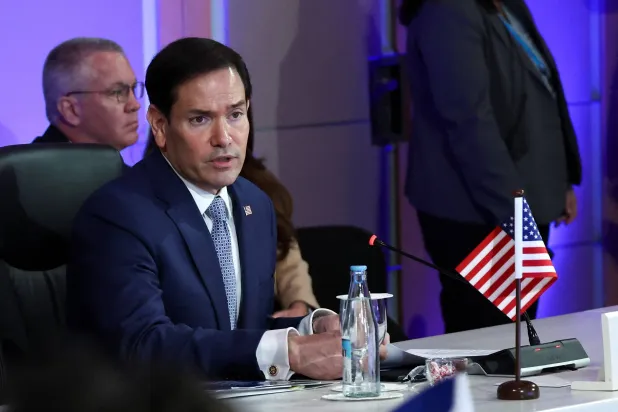
These capabilities gain particular importance in light of Trump's threat to target the 'Mount Ax' site, where Washington suspects Iran has buried centrifuges for uranium enrichment inside a deep nuclear facility under rock. Trump said Tuesday he might order an attack on the site, while Secretary of State Marco Rubio said the president has 'many options' if Iran continues what he described as non-cooperation.
The deployment of the B-1 does not mean a decision has been made to attack the site, but it gives the US administration an additional option if it decides to move from targeting conventional military capabilities to striking deeper, more fortified facilities.
President Donald Trump steps off Marine One helicopter at Joint Base Andrews, Maryland, Wednesday (AP)
Growing US Force
The new reinforcements arrive in a region where a large US force is already deployed. US officials told CBS News that there has been no significant reduction in troop numbers since the war began on February 28, meaning around 50,000 US military personnel remain in the Middle East.
The US Navy also has 17 warships deployed in the region, including two aircraft carrier strike groups and 11 accompanying destroyers, in addition to a Marine expeditionary unit, according to a naval official who spoke to the Wall Street Journal.
The newspaper said special forces were used during the first phase of the war in combat search and rescue missions, but they are capable of carrying out other operations, giving US command options beyond conventional airstrikes.
The buildup came after three American soldiers were killed in an Iranian attack on a base in Jordan over the weekend. A fourth service member was also killed in Iraq during a controlled detonation of an Iranian drone, according to the newspaper.
The number of US military personnel killed since the start of the war, whether by hostile fire or in accidents, has reached 18, while hundreds have been wounded.
So far, no clear indications have emerged of the start of the broad retaliation Trump threatened over the killing of American soldiers, or a return to the level of operations seen in the first phase of the war.
Axios quoted US and Israeli officials as saying Trump is still considering a return to large-scale combat operations against Iran, and that a decision on the matter could be made within days.
"); googletag.cmd.push(function() { onDvtagReady(function () { googletag.display('div-gpt-ad-3341368-4'); }); }); }]
Original source: Asharq Al-Awsat





Comments (0)
Be the first to comment.