What is the truth about Dbeibeh's stance on the American plan to end the Libyan crisis?

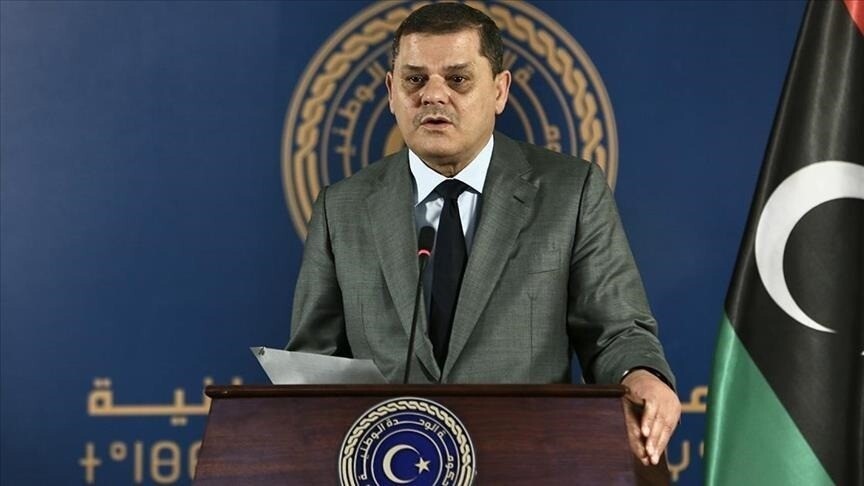
The head of the interim Government of National Unity in western Libya, Abdul Hamid Dbeibeh, opened the door to interpretations after he set conditions or what he called 'national determinants' for dealing with political initiatives, amid ongoing debate over an initiative led by US presidential adviser Massad Boulos, aimed at ending the Libyan crisis through power-sharing between the eastern and western camps.
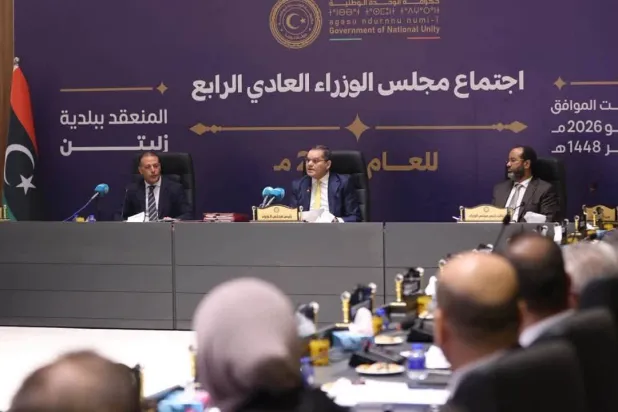
Pending his anticipated speech, in which he is expected to more clearly reveal his position on the US initiative, Dbeibeh's statements from the city of Zliten on Saturday raised questions about whether they represent an indirect rejection of the initiative or a prelude to gradually accepting it if it aligns with his political calculations.
The list of conditions set by Dbeibeh was topped by emphasis on building a civil state, holding fair elections, rejecting the use of force to settle disputes, and subjecting military and security institutions to oversight across the country. He also spoke of 'courageous concessions'.
Trump's adviser on African affairs Massad Boulos (Archive - AFP)
At first glance, from the perspective of observers, Dbeibeh's conditions appeared to be an attempt to use the 'street card' to avoid taking a definitive stance, by keeping his position between public rejection and not closing the door to acceptance, fearing opposition from his political base in western Libya, especially in Misrata, which rejects any rapprochement with the 'National Army' camp led by Field Marshal Khalifa Haftar in the east.
However, Libyan parliament member Ammar al-Abaliq saw in Dbeibeh's statements a 'veiled rejection' of the initiative, believing that the prime minister had been aware of its details for months but preferred silence to avoid an early clash with Washington and his allies in western Libya.
Al-Abaliq told Asharq Al-Awsat that the rise in public anger due to the government's failure, especially in the electricity file, pushed Dbeibeh to set conditions that align with the position of forces rejecting rapprochement with Khalifa Haftar or granting one of his sons a sovereign position, considering that they carry political messages to the eastern camp.
Field Marshal Khalifa Haftar (National Army)
Al-Abaliq pointed out that Dbeibeh also has political calculations, including what is rumored about his adviser and nephew Ibrahim Dbeibeh seeking the presidency of the unified government, in addition to his fear of a potential rapprochement between Saddam Haftar and military leaders in western Libya that could lead to his removal from the scene.
Al-Abaliq considered that 'Dbeibeh prefers to maintain the status quo and postpone elections amid the ongoing crisis of trust between east and west,' adding that 'his talk of concessions reflects a dual message to Washington, keeping the door open to accepting the initiative if US pressure increases.'
Boulos's initiative is based on a settlement between the eastern and western camps, through unifying institutions and forming a unified executive authority that leads to elections. Political circles are discussing that the proposal keeps Dbeibeh as head of government, in exchange for the deputy commander of the National Army, Saddam Haftar, assuming the presidency of the Presidential Council.
Meanwhile, the conditions set by Dbeibeh may be 'expected from a politician who realizes that the proposed settlement may not serve his political future,' a view adopted by political analyst Salah al-Bakkoush, who told Asharq Al-Awsat that the civil and military coalition supporting Dbeibeh in western Libya will not easily accept granting Haftar or one of his sons a sovereign position, considering that Dbeibeh's adherence to the conditions gives him room to maneuver, whether to buy time and rearrange his cards, or to improve the terms of his participation in any political agreement.
Al-Bakkoush suggested that Dbeibeh, with support from regional and Western parties, might push towards selecting a civilian figure for the presidency of the Presidential Council instead of Saddam Haftar, to reduce the scale of objections within western Libyan cities.
These concerns, according to observers, strengthen the state of rejection within sectors of western Libya of any political elevation of Saddam Haftar, based on fears of reproducing military rule, along with the legacy left by the 2019 war on Tripoli.
According to this assessment, political activist Hossam al-Qamati sees that Dbeibeh aimed to calm the fears of his political camp, after escalating talk of an imminent power-sharing agreement between east and west. Al-Qamati told Asharq Al-Awsat that Dbeibeh's talk of a 'societal dialogue' regarding any initiative gives him political cover that prevents him from being accused of abandoning the constants adopted by a wide sector of western Libyan supporters.
For his part, political analyst Hussam al-Abdali believes that Dbeibeh has not yet made his final decision, suggesting that he will deal with the initiative according to the political gains it might offer, taking into account the reactions of cities with military weight, foremost among them Misrata.
Al-Abdali told Asharq Al-Awsat that Dbeibeh 'may welcome the initiative if he finds it serves his interests, based on what the eastern camp might offer in concessions, but if he sees it does not serve him, he will link his position to the will of the street, presenting rejection as a popular rather than a governmental stance.'
Al-Abdali suggested that any potential settlement might be limited to holding legislative elections and forming a unified government, while postponing presidential elections to a later stage, if the US initiative succeeds in overcoming its obstacles.
As for political analyst Hossam Fneish, he sees that Dbeibeh is not working to obstruct the initiative as much as he is seeking to create a political and social environment that makes its acceptance less costly within his camp.
Fneish told Asharq Al-Awsat that he expects Boulos to make amendments to the initiative by expanding the representation base and involving other figures from the western camp, which might ease objections and open the door to broader acceptance, while some voices remain opposed for political or ideological reasons.
Osama Hammad, head of the government appointed by parliament (Stability)
Libya has been living in political and executive division for years between the Government of National Unity headed by Dbeibeh in Tripoli, and the government appointed by the House of Representatives headed by Osama Hammad, supported by the commander of the National Army, Field Marshal Khalifa Haftar, which administers the east and parts of the south.
Original source: Asharq Al-Awsat
Comments (0)
Be the first to comment.