Why is Russia so determined to control the Ukrainian 'Fortress Belt'? - The Independent
Russia's plans to destroy the Ukrainian defensive belt, and the Iran-Oman rivalry over the Strait of Hormuz, are among the highlights of the British press, along with a report on the impact of credit cards on future generations, 60 years after their introduction in Britain.
Why is Russia so determined to control the Ukrainian 'Fortress Belt'? - The Independent
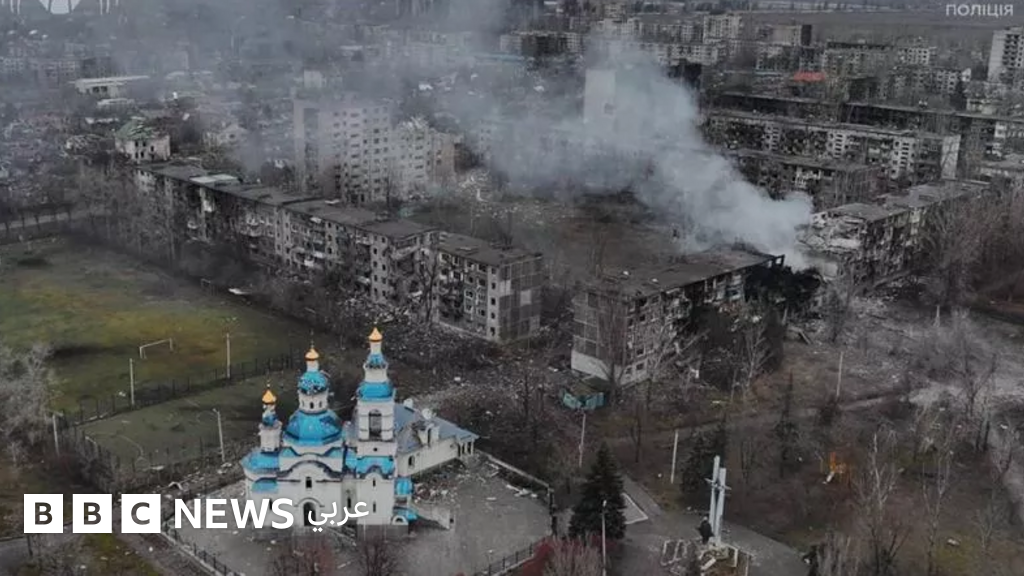
Image caption, The city of Kostiantynivka represents an important part of the Ukrainian defensive belt to maintain control over parts of the Donetsk region.
Published 30 June 2026
Reading time: 6 minutes
The British Independent newspaper published a report on the developments of the Russian-Ukrainian war, and Russia's attempt to destroy the Ukrainian defensive belt by capturing the city of Kostiantynivka, especially after the strong attacks on Russian territory recently.
In its report on the fighting around the city, titled 'Kostiantynivka: Why is Russia so desperate to control Ukraine's eastern ‘Fortress Belt’?', by its correspondents in Ukraine Dan Peleschuk, Daniel Flynn and Anatoliy Stepanov, the newspaper said that Kostiantynivka is currently the hottest front of the war because it forms an essential part of the Ukrainian defense line in the Donetsk region, and it is also the southern gateway to what is known as the 'Fortress Belt'.
The Ukrainian defensive belt includes four main cities that Kyiv relies on to maintain control over large parts of the industrial Donetsk region.
According to the report, battles have begun to reach the outskirts of Kostiantynivka, and fears have increased that the fighting will turn into direct confrontations inside the city itself. Russian President Vladimir Putin recently indicated that his forces are close to capturing the city, which is now almost empty of inhabitants.
Skip content and continue reading
How Trump and Putin got entangled in a 'permanent' war? - Article in the Washington Post 13 June 2026
Do Washington and Tehran have a vision to end the war between them? 23 April 2026
'NATO must be more ready to respond when the Kremlin crosses red lines' - Article in the Independent 30 May 2026
End of content
Moscow wants to tighten control over the entire Donetsk region, which is a key goal for it before any potential settlement of the war.
The report highlights the difficult conditions facing Ukrainian forces in the region. The roads leading to Kostiantynivka are under constant bombardment from artillery, drones, and guided bombs, which complicates supply and transport operations.
The risks have reached the point that transporting the wounded and dead in ordinary vehicles has become nearly impossible in some areas, forcing soldiers to move on foot or use small vehicles and ground robots to transport food, water, and ammunition.
Nevertheless, Russia faces increasing challenges due to Ukrainian strikes targeting supply lines, energy and oil facilities, as well as roads leading to the Crimean Peninsula.
Skip most read and continue reading
Do you really need to avoid gluten?
Ukraine strikes a major oil facility in the Russian city of Saint Petersburg
'A meal I had during my holiday ended with 38 parasites in my brain'
Hossam Abu Safiya: Warnings of danger threatening his life after repeated assaults inside an Israeli prison
The report indicates that Russian forces are under significant pressure, but they are still able to continue their offensive operations benefiting from their numerical and manpower superiority.
The report concludes that the battle for Kostiantynivka may be one of the most important battles of the next phase of the war, because it will determine the future of the Ukrainian defense line in Donetsk, and will reveal whether Russia can translate its gradual advance into broader strategic gains in eastern Ukraine.
Iran and Oman rivalry
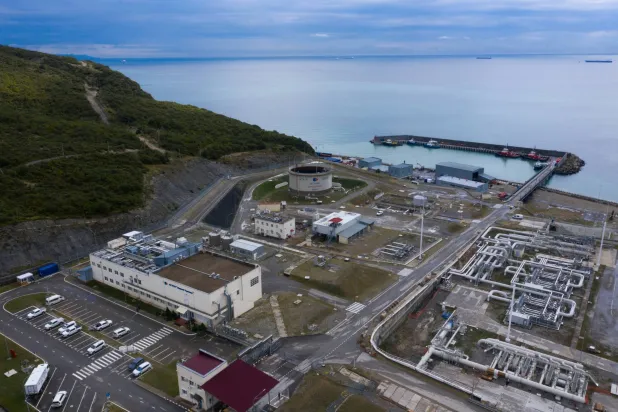
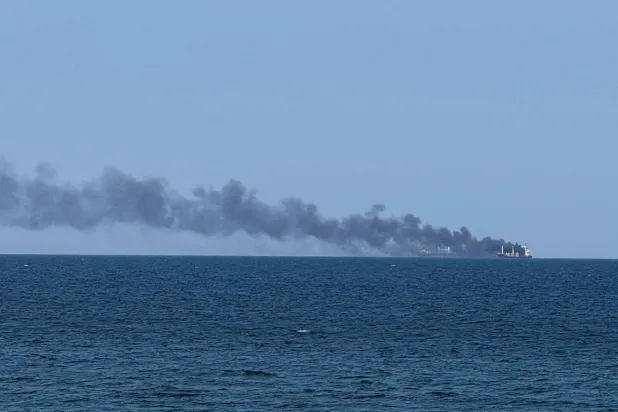
Image caption, Oman is trying to find arrangements that ensure maritime security and prevent the strait from turning into a permanent political pressure tool.
Skip the podcast and continue reading
Worth paying attention
In-depth explanation of the most prominent events and topics, to help you understand the most important changes around you and their impact on your life.
Episodes
End of podcast
Regarding the Middle East, The Guardian highlighted the 'rivalry' between Iran and Oman over asserting sovereignty over the Strait of Hormuz and navigation there, and it seems the conflict is no longer only about freedom of navigation, but about who has the right to manage this vital artery and control its future.
The newspaper said in its report titled 'Intense competition between Iran and Oman over the decision-making role in the Strait of Hormuz', by writer Patrick Wintour, that there are 'political and security complexities' facing the reopening of the Strait of Hormuz and the restoration of normal navigation in it.
The report indicates that Iran views the Strait of Hormuz as a strategic bargaining chip in its negotiations with Washington. Therefore, it tries to retain the main role in any process to reopen the maritime passage, refusing to let international bodies or neighboring countries take the initiative instead of it.
In contrast, Oman seeks to play a more active role, trying to push for solutions based on international law and freedom of navigation. Muscat had supported a proposal to establish a southern navigation corridor near its coasts to facilitate ship passage and reduce security risks, in coordination with the International Maritime Organization.
But this initiative faced a major setback after a ship using the proposed corridor was attacked, prompting the International Maritime Organization to suspend the plan. This incident showed the fragility of the security situation in the region, and the difficulty of separating the technical aspects of navigation from the complex political and military calculations among the different parties.
The newspaper clarifies that the real dispute is not only about opening the strait, but about who has the authority to make decisions within it.
Iran interprets the agreement with the United States in a way that gives it the exclusive right to determine the timing and mechanism for ending the restrictions on navigation, while other parties, including Oman and Western countries, believe that the management of the strait should be within an international framework that ensures freedom of transit and no new restrictions or fees on ships.
These disputes acquire special importance due to the economic status of the strait. Before the outbreak of the crisis, about a fifth of the world's seaborne oil and gas trade passed through this narrow passage located between Iran and Oman.
Oman tries to maintain its traditional role as a mediator between Iran and the West, enjoying good relations with almost all parties, so it continues its diplomatic efforts to find arrangements that ensure maritime security and prevent the strait from becoming a permanent political pressure tool.
The report concludes that the future of the Strait of Hormuz remains hostage to political balances more than being a navigational or economic issue. While Oman seeks to reopen it safely and according to clear international rules, Iran insists on its central role in managing this strategic passage. Between these two positions, the world watches warily the fate of one of the most important arteries of trade and energy.
Have credit cards made us lose the value of money?
Image caption, The transition from banknotes to cards and then to contactless payments has made the spending process invisible.
On the occasion of the 60th anniversary of the issuance of the first credit card in Britain, writer Charles Moore in The Telegraph reflects on the profound impact credit cards have had on people's lives, in his report titled: 'Credit cards are 60 years old. Have they made us forget the value of money?'.
Original source: BBC Arabic


Comments (0)
Be the first to comment.