US Tariffs on Brazil Take Effect Amid Global Anticipation of New Trade Wave
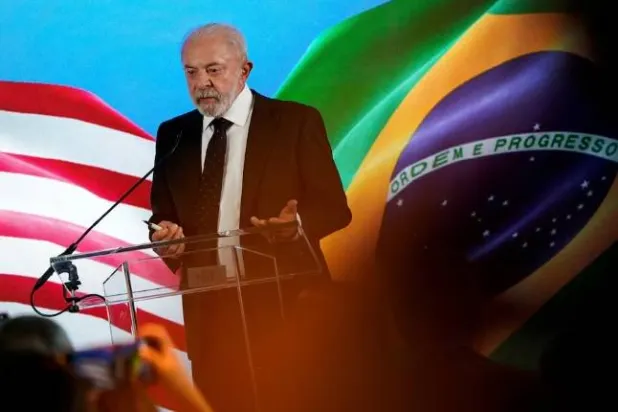
New US tariffs targeting Brazil came into effect on Wednesday, while other Washington trade partners prepare to face a fresh wave of tariffs as the temporary global duties imposed by President Donald Trump expire this week.
The 25 percent tariff on Brazil follows a year-long US investigation in which Washington accused Latin America's largest economy of unfair trade practices, according to AFP.
The decision sparked angry reactions in Brazil, but Brazilian Vice President Geraldo Alckmin said during a press conference on Tuesday that his country would seek to resolve the issue through negotiations rather than taking similar retaliatory measures.
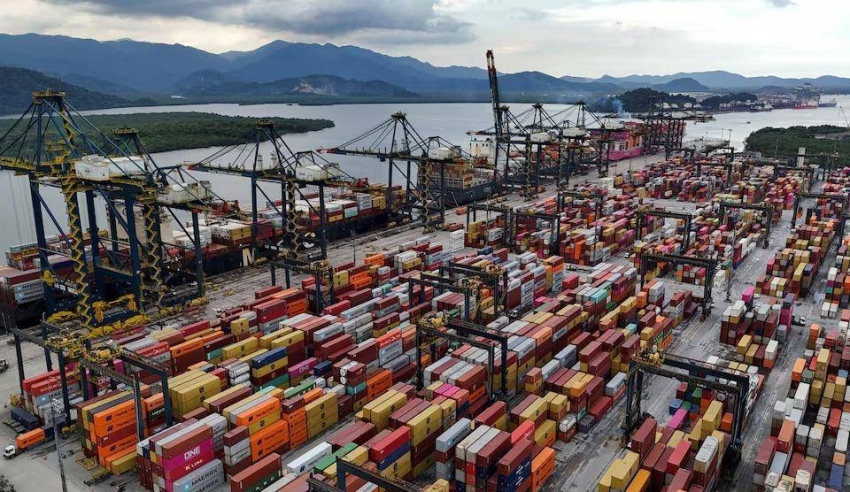
A range of products are exempt from the tariffs, including beef, coffee, and aircraft parts, while about half of Brazil's exports to the United States will remain outside the tariff scope, according to estimates by Valentina Sader of the Atlantic Council research center.
But the decision comes as Trump reactivates his policy of using tariffs as a bargaining tool in trade negotiations, raising fears of retaliatory moves and a new escalation of tensions.
Sader told AFP that US officials may 'use Brazil as a model to send a broader message about their priorities and approach to negotiations.'
The US Supreme Court had struck down several of Trump's tariffs in February, dealing a blow to his ability to impose broad new duties, but Washington has since sought to rebuild his trade agenda using other legal authorities.
Sader added that the US justification for imposing tariffs on Brazil, citing what it described as President Luiz Inácio Lula da Silva's failure to negotiate in good faith, 'reinforces the impression that the measure targets not only Brazil's trade practices but also Lula himself politically.'
These tariffs have become a major point of contention in the election campaign ahead of Brazil's presidential election scheduled for October.
The American Chamber of Commerce in Brazil recently warned that the US decision would affect exports worth more than $11 billion.
Broader measures are still under consideration, as US officials proposed in June imposing tariffs ranging from 10 percent to 12.5 percent on about 60 trading partners over allegations of insufficient action to combat forced labor.
Analysts widely expect these forced-labor-related tariffs to replace the temporary 10 percent universal tariff, which expires on Friday and was imposed by Trump after his loss before the Supreme Court.
US Trade Representative Jamison Greer told CNBC: 'We expect some action soon.'
Concerns over forced labor
Greer said on Tuesday that the new measures related to forced labor concerns would cover the bulk of US trade, though they could renew trade tensions.
The lower 10 percent tariff is expected to apply to US imports from trading partners including Canada, the European Union, Mexico, Taiwan, and the United Kingdom, after Washington concluded these countries had taken some steps to combat forced labor.
In contrast, imports from more than 40 other economies, including China, India, and Japan, will face a 12.5 percent tariff.
The European Union has said that imposing tariffs on this basis is 'unjustified.' Separate US investigations are also underway targeting 16 economies over what Washington describes as excess industrial production capacity, which could lead to additional tariffs.
Pressure on Canada
Washington's proposal to impose a 50 percent tariff on Canadian goods comes amid ongoing negotiations over the North American free trade agreement.
The United States recently refused to extend the agreement in its current form, while Greer is set to travel to Mexico between Wednesday and Friday for talks related to the joint review of the United States-Mexico-Canada Agreement (USMCA).
Trade talks between the United States and Canada are proceeding at a slower pace.
Some trade law experts believe Trump's use of an untested legal provision, Section 338 of the Tariff Act of 1930, represents a means to pressure Canada in USMCA negotiations.
Canadian Prime Minister Mark Carney said on Tuesday he is considering 'all options,' adding that he agreed with Trump to 'intensify discussions' in the coming weeks.
Dave Townsend, a trade lawyer at Dorsey & Whitney, said the tariff hike could be 'aimed at encouraging a deal between Canada and the United States, or a response to no deal, or both.'
He added that the question is whether the two sides will enter a 'cycle of escalation and retaliation.'
Original source: Asharq Al-Awsat


Comments (0)
Be the first to comment.