Mobily Compensates for Revenue Slowdown by Expanding Margins in Q2

The results of Etihad Etisalat (Mobily) for the second quarter of this year showed that improved operational efficiency offset most of the revenue gap compared to market expectations.
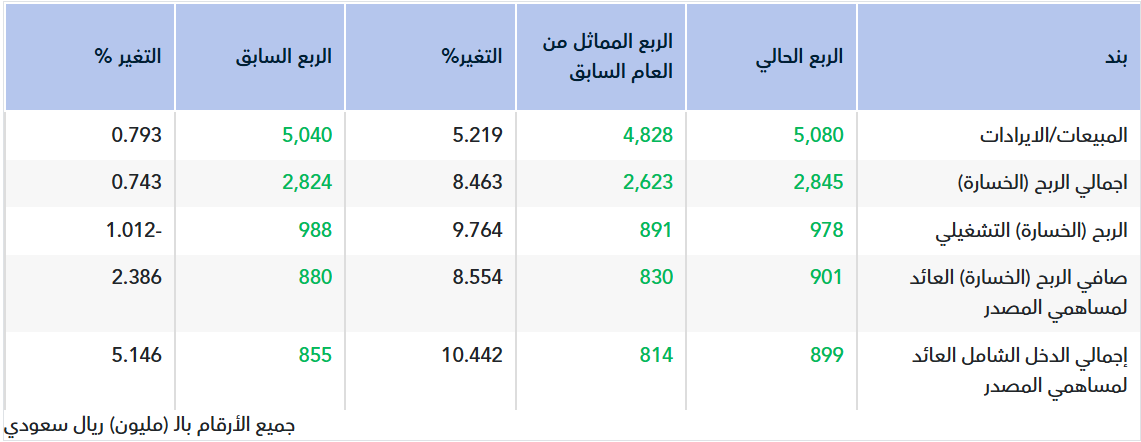
Revenue reached 5.08 billion riyals, about 1% lower than the average analyst estimate, while both EBITDA and net profit came in only about 0.3% below expectations.
This gap reflects the company's ability to convert revenue into profit more efficiently, but it does not mean an improvement in all cost items, as the gains were primarily concentrated in the cost of providing services and the revenue mix, while cash operating expenses rose at a faster pace than sales.
Slower revenue and profit growth
Revenue increased 5.2% year-on-year to 5.08 billion riyals, continuing to grow but at the slowest pace in five quarters, compared to growth of 8.1% in the second quarter of last year.
The slowdown occurred despite year-on-year growth in main operating units, as consumer revenue, which represents about 61% of sales, grew only 3.2% to 3.11 billion riyals.
In contrast, business revenue rose 9.7% to 1.24 billion riyals, and the carrier and wholesale unit increased 10.9% to 628 million riyals.
Of the annual revenue increase of 252 million riyals, the business segment and carrier and wholesale unit together contributed 171 million riyals, or about 68% of the growth, illustrating a gradual shift in the growth center from the large consumer base to corporate services, connectivity, and digital infrastructure.
Gross profit grew 8.5% to 2.85 billion riyals, operating profit 9.8%, and net profit 8.6% to 901 million riyals.
The outperformance of profit growth over revenue is due to the fact that cost of revenue increased by only about 30 million riyals, compared to a sales increase of 252 million, allowing 222 million riyals, or 88% of the additional revenue, to flow to gross profit.
However, an increase in other net expenses by about 15.6 million riyals, due to a decline in Mobily's share of profit from a joint venture, limited the full transmission of the operational improvement to net profit.
Margin improvement offsets revenue growth slowdown
Despite slower revenue growth, Mobily continued to improve its ability to convert sales into profit. Gross margin rose to 56% in the second quarter of 2026, compared to 54.3% a year earlier, returning to its level recorded in the second quarter of 2023.
The improvement came after cost of revenue rose only about 1.4%, compared to revenue growth of 5.2%, allowing most of the additional sales to be converted into gross profit.
EBITDA margin also rose to 38.6% from 37.8%, reaching a record level for the second quarter of previous years, and more importantly, the improvement continued after accounting for depreciation and amortization, as operating margin rose to 19.3%, versus 18.5% a year earlier.
However, the quarterly picture was less robust, with EBITDA margin declining from 39.1% in the first quarter to 38.6%, indicating some return of pressure from operating expenses, although margins remained above last year's levels.
Mobily expands profitability margins - 02
Customer base grows annually but declines quarterly
The number of mobile subscribers rose 16.4% year-on-year to 14.9 million customers, but the composition of growth indicates that the expansion was almost entirely driven by prepaid customers, who accounted for about 95% of net additions, compared to limited growth in the postpaid base. Therefore, the strong growth in subscriber numbers did not translate at the same pace into consumer revenue, which rose only 3.2%.
This comparison does not necessarily imply a decline in average revenue per user, because the subscriber count represents the end-of-period balance, while revenue covers the entire quarter's activity. However, it indicates that the added customers contributed less to revenue than the average of the existing base, consistent with the concentration of growth in the lower-spending prepaid segment.
In addition, the number of fiber optic subscribers rose 9% year-on-year to 315,000 customers, and about 1.3% compared to the first quarter, reflecting more stable growth than the mobile subscriber base.
The quarterly comparison also showed a slowdown in momentum, with total mobile subscribers declining from 15.1 million in the first quarter to 14.9 million in the second quarter, due to a decrease in prepaid customers, while postpaid remained stable at 2.1 million customers.
Financial Analysis Unit
Original source: Aleqtisadiah



Comments (0)
Be the first to comment.