Energy this week: Ukrainian attacks on Russian refineries boost crude exports... and El Niño increases pressure on markets
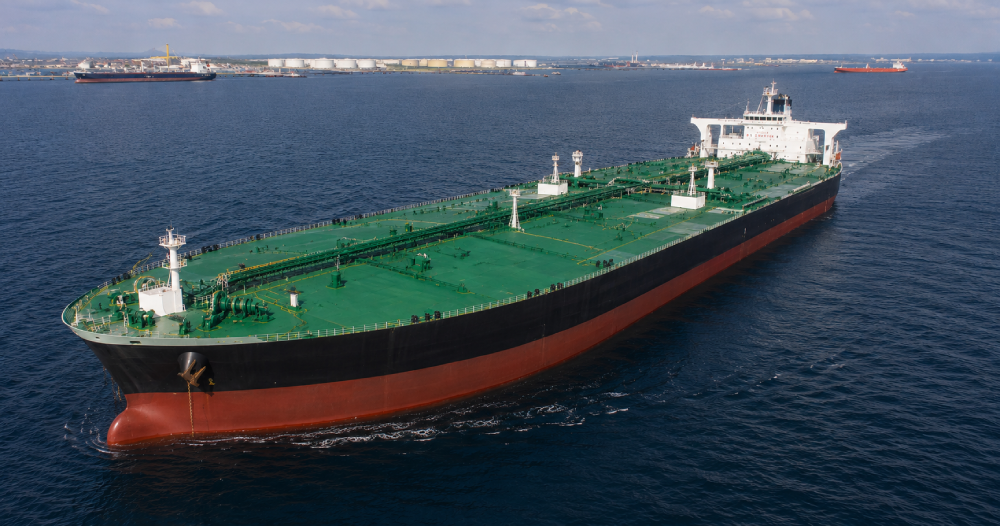
An oil tanker enters a more complex phase in global energy markets, as geopolitical conflicts escalate and the climatic effects of El Niño coincide. While Ukrainian attacks force Russian refineries to cut their refining capacity to the lowest level since 2005, Russia is compelled to increase its crude oil exports. In contrast, El Niño is expected to boost Indian demand for liquefied natural gas, further straining global markets. In the region, renewed confrontations in the Middle East are reshaping shipping routes through the Strait of Hormuz. Amid intensifying competition for critical minerals, China has unveiled a new technology for extracting lithium from water associated with oil and gas production.
Energy this week: Ukrainian attacks on Russian refineries boost crude exports... and El Niño increases pressure on markets
An oil tanker
Global energy markets are entering a more complex phase, as geopolitical conflicts escalate and the climatic effects of El Niño coincide. While Ukrainian attacks force Russian refineries to cut their refining capacity to the lowest level since 2005, Russia is compelled to increase its crude oil exports. In contrast, El Niño is expected to boost Indian demand for liquefied natural gas, further straining global markets. In the region, renewed confrontations in the Middle East are reshaping shipping routes through the Strait of Hormuz. Amid intensifying competition for critical minerals, China has unveiled a new technology for extracting lithium from water associated with oil and gas production.
Ukrainian attacks on Russian refineries force Moscow to increase its oil exports
The successive Ukrainian attacks on Russian refineries have reduced Moscow's refining capacity and accumulated about 135 million barrels of Russian crude oil at sea, forcing Russia to divert larger volumes of crude to export markets instead of processing it domestically.
According to estimates, about a third of Russia's refining capacity went offline after several refineries were targeted, including Gazprom Neftekhim Salavat and Afipsky, bringing operating capacity down to about 3.91 million barrels per day, the lowest level since 2005.
With domestic demand for crude declining, Russia has turned to increasing its seaborne exports, even as its production fell to 8.93 million barrels per day in June, about 830,000 bpd below its quota under the OPEC+ agreement.
However, the increase in exports has faced bottlenecks at export ports, where shipments of Sokol and Sakhalin Blend crudes face days-long delays during ship-to-ship transfers, while ESPO crude shipments have been accumulating near the port of Kozmino, as the number of buyers willing to deal with sanctioned Russian oil declines.
Russia's 'shadow fleet' tankers continue to accumulate off the Egyptian coast and near Indonesia's Riau Islands, while some ships resort to hiding their destinations or remaining idle, as buyers grow increasingly cautious about the risks of secondary sanctions.
Despite Russia's seaborne exports rising to an average of 4.13 million barrels per day in the four weeks ending June 28, the highest level since early 2022, revenues fell by about $200 million per week to $1.68 billion, impacted by lower global oil prices, wider discounts on Urals crude, and delivery delays.
These developments indicate that Russia is managing to maintain its export flows, but at a higher cost and lower efficiency, as its oil sector faces mounting pressures from disrupted refining, higher transport costs, and continued sanctions-related restrictions.
El Niño boosts Indian gas demand and increases pressure on markets
A report by the Centre for Research on Energy and Clean Air (CREA) indicated that El Niño could push India to increase consumption of coal and liquefied natural gas, at a time when energy exports from the Middle East face rising risks due to war and navigation disruptions in the Strait of Hormuz, threatening to tighten global energy markets as Asian demand rises and supply pressures persist.
According to the report, India may be forced to generate about 17.7 terawatt-hours of additional electricity using fossil fuels between July 2026 and June 2027, with the gap potentially rising to 24 terawatt-hours if El Niño impacts are more severe than expected. This is attributed to increased demand for cooling along with a decline in electricity generation from wind and hydropower.
These forecasts come at a time when thermal power plants (using gas or coal) in India are already operating at high utilization levels. Their output rose by 12.5% year-on-year in June to 122.37 terawatt-hours, with the average capacity factor increasing to 72.3%, while coal accounted for about 86% of conventional electricity generation. In contrast, hydropower output fell by about 20% due to weak monsoon rains, after the country recorded a cumulative rainfall deficit of 42% from June 1 to 24, while power plants maintained strong coal inventories of 43.05 million tons.
Despite India adding 44.6 gigawatts of solar capacity in 2025, the report says that limited electricity storage capacity and grid modernization will make coal and LNG the fastest option to cover any supply shortfalls during peak demand periods.
The repercussions of these developments are not limited to India, as rising Asian demand for gas could intensify competition for scarce supplies from the Middle East at a time when shipping risks through the Strait of Hormuz are escalating due to war, keeping risk premiums high and supporting oil and gas prices.
Shipping companies change routes as risks escalate in the Strait of Hormuz
The repercussions of renewed confrontations between the United States and Iran have begun to extend beyond security, redrawing the shipping map in the Strait of Hormuz, as energy producers in the Middle East and oil importers in Asia and Europe face higher transport and insurance costs and supply chain disruptions.
Windward data shows that shipping companies are now favoring the northern navigational corridor along the Iranian coast, after the southern corridor along the Omani coast became more vulnerable to attacks. On July 15, 13 out of 18 ships heading to the Gulf crossed via the Iranian route, while only one ship used the southern corridor, indicating that safety considerations have become the main driver of navigation decisions.
With renewed confrontations, transit traffic remains far from normal levels, as only 29 ships crossed on July 15, about 22% of pre-war levels. Vortexa data also reveals that 7 out of 22 Long Range (LR) tankers that were in the Gulf when the war broke out on February 28 remain inside the region after more than four months, reflecting continued caution and higher fleet operating costs.
The impact of the crisis is not limited to a decline in the number of ships, but extends to changes in their operating patterns. Tankers are taking longer to complete their voyages, while some ships have redistributed their routes or returned to the Gulf after delivering their cargoes, and the fleet turnover rate has slowed compared to before the war.
For energy markets, the continued flow of oil and gas from the Gulf does not mean a return to normal trade. Every day a tanker spends inside the Gulf or waiting to cross reduces the effective capacity of the global fleet, raises shipping and insurance costs, and is reflected in the cost of delivering oil, refined products, and LNG to Asian and European markets.
Original source: Argaam



Comments (0)
Be the first to comment.