For the fifth time, US Congress fails to restrict Trump's powers in Iran war
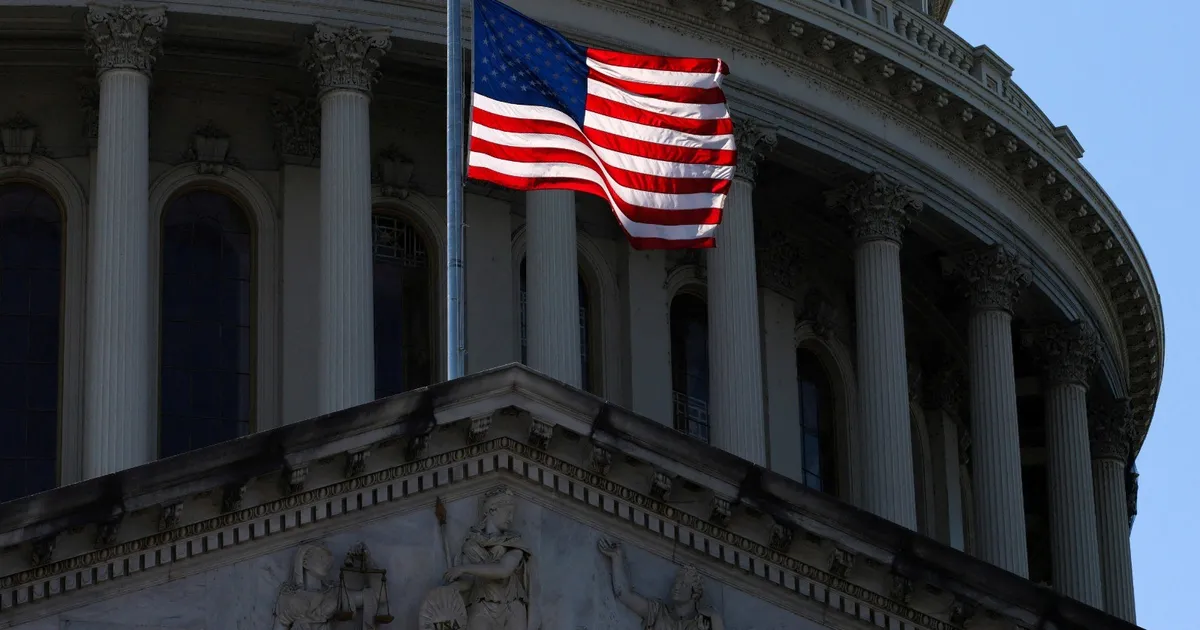
The US Senate on Wednesday rejected a new attempt to limit President Donald Trump's ability to use further military force against Iran, marking the fifth time Democrats have sought to do so since the Iran war began eight weeks ago.
By a vote of 46 to 51, a proposal to discharge the committee (the Foreign Relations Committee) from considering the bill failed. Democratic Senator John Fetterman of Pennsylvania voted with Republicans against it, while Republican Senator Rand Paul of Kentucky voted with Democrats in favor, according to CBS News.
The resolution, introduced by Democratic Senator Tammy Baldwin of Wisconsin, would have directed the president to "remove United States Armed Forces from hostilities in or against Iran unless explicitly authorized by a declaration of war or a specific authorization for use of military force."
The vote came a day after Trump announced an extension of the two-week ceasefire with Iran as the deadline approached, reversing course after threatening to resume attacks if the Iranian regime did not accept his terms for a deal.
Senate Democratic Leader Chuck Schumer said before the vote on Wednesday that while he was "relieved that the ceasefire deadline has been extended," Congress must "seize this opportunity to stop this terrible mistake before fighting resumes."
Schumer stressed that Democrats would continue to push for a vote on war powers "every week until Republicans see things rationally and help us end this war," adding that they would "be doing Donald Trump a favor."
He added: "With each day this disastrous war continues, Donald Trump sinks deeper and deeper into a quagmire."
The New York Democrat urged Republicans to break party ranks and support the resolution, saying: "If Trump won't get himself out of the quagmire he caused, you Republicans should pull him out by voting for our war powers resolution today."
60-day deadline
Although the majority of Senate Republicans have so far shown no willingness to disagree with the president on Iran, the approaching deadline may change the situation.
Next week, unless significant progress is made to end the conflict, the war will exceed the 60-day threshold. Under the War Powers Resolution of 1973, operations not authorized by Congress are limited to 60 days. However, this deadline can be extended to 90 days if the president certifies in writing to Congress that "unavoidable military necessity" respecting the safety of US Armed Forces requires the extension.
Next week, unless significant progress is made to end the conflict, the war will exceed the 60-day threshold. Under the "War Powers Act" of 1973, the duration of military operations not authorized by Congress is capped at 60 days. However, this deadline can be extended to 90 days if the president certifies in writing to Congress that "unavoidable military necessity" respecting the safety of US Armed Forces requires the extension.
Senate Majority Leader John Thon indicated last week that the Republican conference feels "very satisfied" with what the United States has achieved in Iran.
When asked Wednesday how he would handle the approaching 60-day deadline and whether Senate Republicans would consider issuing an authorization for use of military force, Thon said "we'll see" what members' positions are on the issue.
Thon added: "The president is still within the deadline, and I think he can extend it unilaterally for 30 days. But, you know, we are watching. It appears the ceasefire has been extended a bit now, and they will try to see if they can reach some agreement. That's the ideal scenario. But we will see what our members' positions are."
Growing pressure on Trump
Nevertheless, some Republicans have indicated that this legal deadline could be a turning point, expecting the president to either end the conflict or seek congressional approval to continue, according to The New York Times.
The newspaper noted that during eight weeks of the Iran war, congressional Republicans have repeatedly blocked Democrats' attempts to stop military operations by invoking the War Powers Act.
However, the law also includes a set of deadlines, the first of which falls on May 1st, which could increase pressure on the Trump administration in the coming days.
When the US launched joint strikes with the Israeli Air Force on February 28, Trump said he was acting as commander-in-chief to protect US bases in the Middle East and "advance the vital interests of the United States," considering it part of "collective defense of regional allies, including Israel."
Many Democrats disputed this justification, asserting that the president acted illegally. In contrast, White House officials and most Republicans view his actions as within the bounds of the law, which grants the president 60 days to withdraw forces from combat operations without congressional authorization.
Since Trump formally notified Congress on March 2, the 60-day deadline ends on May 1st. Some Republicans have already indicated they would not support continuing operations after that deadline without congressional approval.
After the 60-day deadline expires, the president's options are limited: either request authorization from Congress, begin winding down operations, or seek an extension. The law allows only one 30-day extension to secure the safe withdrawal of forces, not to continue offensive operations.
Congress can at any time grant formal authorization to continue operations through an "Authorization for Use of Military Force" (AUMF), the primary mechanism for approving wars since World War II.
But despite Republican unity in blocking Democratic attempts to end the war, it remains unclear whether they would agree to support a formal authorization to continue it.
Possibility of ignoring deadlines
US administrations from both parties have long considered that the Constitution grants the president broad powers as commander-in-chief, making the restrictions imposed by the War Powers Act subject to constitutional debate.
Previous administrations have ignored these deadlines, as occurred under former President Barack Obama in Libya in 2011, which could be repeated in the case of Iran.
But ignoring these deadlines could create a political problem for Republicans, especially as the 60-day deadline approaches, making it difficult to continue supporting the war without congressional oversight or authorization.
Original source: Asharq News


Comments (0)
Be the first to comment.