Gold rises as oil's rally pauses; stocks lifted by technology

ارتفعت أسعار الذهب بأكثر من 1% الثلاثاء مع تراجع النفط بفعل جهود الوساطة الأمريكية الإيرانية، بينما صعدت الأسهم الأوروبية مدفوعة بقطاع التكنولوجيا. ويترقب المستثمرون اجتماع الاحتياطي الفيدرالي ونتائج أرباح كبرى شركات التكنولوجيا.
Gold rises as oil's rally pauses; stocks lifted by technology
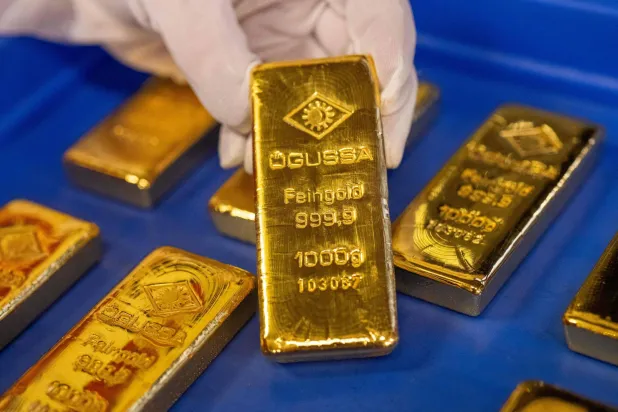
Spot gold rose 1.6% to $4,071.59 an ounce
Gold prices rose more than 1% on Tuesday as investors monitored diplomatic efforts to ease tensions between the United States and Iran, which could alleviate inflation risks from higher oil prices and influence the Federal Reserve's interest rate path.
Spot gold rose 1.6% to $4,071.59 an ounce, while U.S. gold futures for August delivery rose 1.5% to $4,076.00.
Ilya Spivak, head of global macro at Tastylive, said: 'Gold appears to be trying to find a price base around the $4,000 level and will attempt to resume its uptrend from there. These headlines from the Middle East seem to have some effect, albeit transient interest.'
Oil prices fell on Tuesday as markets assessed reports of mediation efforts between the U.S. and Iran amid a fresh exchange of attacks. An Iranian official said Tehran received a proposal from mediators for a 10-day ceasefire in an attempt to salvage the interim deal aimed at paving the way for a permanent agreement to end the war. The recent escalation in the conflict pushed oil prices to their highest in over a month on Monday, with increasing voices from U.S. policymakers arguing that interest rates may need to rise to combat persistent inflation. Higher interest rates raise the opportunity cost of holding non-yielding bullion. While the Fed is widely expected to keep rates unchanged next week, traders see a 64% chance of a hike in September.
In other precious metals, spot silver rose 4.5% to $58.96 an ounce, platinum gained 2.3% to $1,630.21, and palladium rose 2.8% to $1,288.02.
European and Asian stocks rise
In global stock markets, European shares edged higher on Tuesday after a shaky start to the week, as reports of U.S.-Iran mediation efforts pushed oil prices lower, while investors awaited corporate earnings results.
The pan-European STOXX 600 index rose 0.1% to 640.61 points. Technology stocks rose 0.9%, the best-performing sector on the index, led by ASM International and ASML Holding, which gained 2.1% and 2.8%, respectively.
Major U.S. tech earnings, such as Alphabet, will be in focus this week as investors look for signs of sustained AI demand and whether their high valuations are justified.
Fiona Cincotta, senior market analyst at City Index, said: 'We've seen this volatility in investor sentiment, and it highlights the kind of tension surrounding the tech sector, especially AI and the chip industry. But if we see another strong season, it could be a catalyst for tech stocks to rise in the next leg.'
Mining stocks rose 0.6%, supported by higher copper and gold prices. In contrast, Swedish mining company Boliden fell 6.9%, posting limited gains after reporting quarterly adjusted operating profit below expectations.
In contrast, media and personal & household goods sectors fell 1.1% and 0.7%, respectively, underperforming. Wienerberger shares dropped 6.5% to their lowest since October 2022 after the building materials maker issued a full-year profit warning, citing a decline in new construction activity. Cincotta said uncertainty from rising U.S.-Iran tensions could negatively impact the company's outlook. Swiss bank Julius Baer fell 4.2% despite reporting stronger-than-expected net new money inflows in the first half, while elevator maker Schindler dropped 5.1% after quarterly sales missed market expectations. Novartis rose 2.2% after the drugmaker beat core operating profit estimates in the second quarter.
In Asia, Asian stocks snapped a three-day losing streak on Tuesday as oil prices pulled back from a one-month high amid Middle East mediation efforts, with investors awaiting corporate earnings that will test the pressured AI sector's performance.
The MSCI's broadest index of Asia-Pacific shares outside Japan rose more than 2% after three consecutive sessions of decline. Japan's Nikkei gained nearly 3%, while South Korea's KOSPI rose 4.5%.
Charu Chanana, chief investment strategist at Saxo, said: 'This rally looks more like a temporary rebound than a sign that the crisis is over. It could continue if oil prices remain under control and if tech earnings support AI spending, but both assumptions remain uncertain.'
Fred Neumann, chief Asia economist at HSBC in Hong Kong, said: 'While demand for AI hardware remains extremely high and companies struggle to meet growing demand, investor expectations for earnings have become increasingly elevated, making the sector vulnerable to even minor adjustments in forecasts.'
Neumann added: 'The economic backdrop is also becoming more difficult, with rising energy prices and interest rates, complicating the outlook and showing that the AI hardware sector is not immune to these broader developments.'
Escalating U.S.-Iran tensions revived inflation fears and pushed Treasury yields higher. The two-year yield, which typically moves in step with Fed rate expectations, stood at 4.206% during Asian hours after rising 4 basis points on Monday.
The dollar held steady against most major currencies, supported by safe-haven flows. The euro traded at $1.14145, while the Japanese yen stood at 162.51 per dollar, keeping traders on alert for intervention from Tokyo.
Original source: Al-Riyadh





Comments (0)
Be the first to comment.