Shift from In-Kind to Cash Subsidies: Why Does It Worry Egyptians?
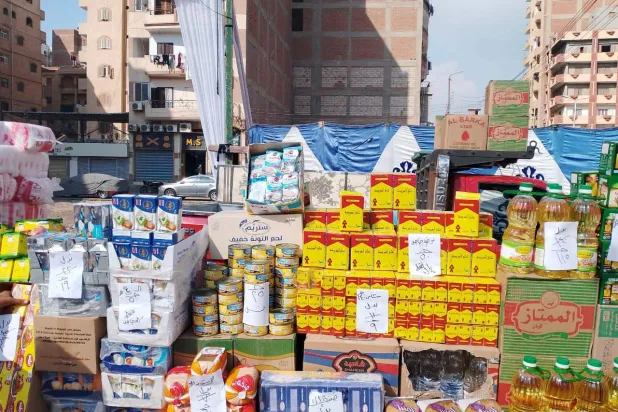
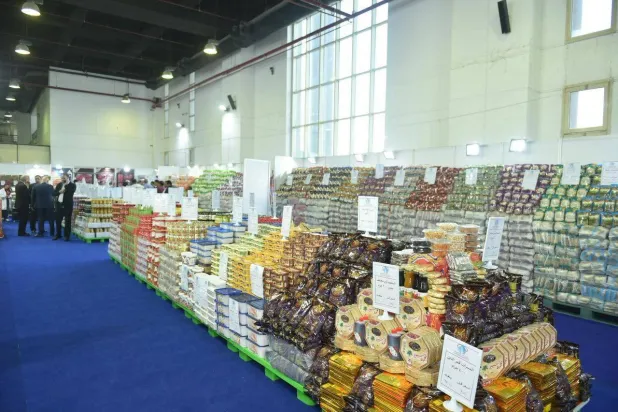
Egyptians fear a government move to shift from in-kind food subsidies to cash subsidies, which entails liberalizing the prices of subsidized goods.
Mahasin Khamis has no qualms about receiving neighbors or relatives who suddenly visit her modest home in Ismailia Governorate in eastern Egypt, as long as she has enough tea and sugar to offer hospitality, even if she lacks enough food to cook for her household.
The sixty-something woman considers tea and sugar as 'covering the house,' meaning they conceal any financial hardship. She obtains them from her ration quota, along with her husband and daughter, plus three bottles of oil, a packet or more of pasta and noodles, and 45 loaves of bread every three days—sometimes more than the family needs, allowing her to exchange the surplus for a box of cheese or halva for breakfast or dinner.
Mahasin, who does not work and whose husband is ill and receives a 'Takaful and Karama' pension, is one of about 61 million Egyptians who receive ration goods worth 50 Egyptian pounds per person per month (about one US dollar), which gets them a bottle of oil and a kilogram of sugar at subsidized prices, as the market price for the two items exceeds 80 pounds. They can also buy other goods like pasta and noodles, but at prices close to market rates. Cardholders choose between subsidized and other goods based on their needs.
The ration system also includes bread, with five loaves per person daily allocated as points that can be exchanged for other goods like tea, tuna, and cheese if not fully consumed.
A protective umbrella
According to economist Wael al-Nahas, this system has provided a 'protective umbrella' for Egyptian families since its implementation under the late President Gamal Abdel Nasser, becoming akin to an 'acquired right' as he described.
Al-Nahas told Asharq Al-Awsat that the system 'protects the neediest families from market price fluctuations, ensuring they obtain basic goods without having to buy them at market prices.'
However, there is currently a government trend to shift from in-kind subsidies (goods) to cash subsidies, which entails liberalizing the prices of subsidized goods—meaning they will be sold at ration outlets at market prices, with an increase in the subsidy value.
Egyptian Minister of Supply Sherif Farouk during a field visit (Ministry of Supply)
Prime Minister Mostafa Madbouly attributed the reason for resorting to the new system, expected to be implemented during the current fiscal year 2026-2027, to the pursuit of 'ensuring that subsidies reach the real beneficiaries, thereby enhancing social protection and achieving optimal use of state resources,' according to his remarks at a press conference on June 24.
Egypt's annual inflation rate recorded about 14.3 percent in June, compared to 14.6 percent in May.
Fears of 'complexity'
Fifty-something Samira Ismail (a pseudonym), a resident of a village in Minya in southern Egypt, fears the shift to cash subsidies. She says she does not know if it will allow her to buy enough basic goods each month, and she worries about getting involved in complicated procedures she does not understand.
Samira, who is illiterate, wakes up early every morning to prepare popcorn and koshari, which she sells to children throughout the day. She receives rations for two people—her share and that of her only son who remains with her after her husband left and her six children married and got their own ration cards.
Samira complains that the ration quota is insufficient, especially since she uses some goods, like oil, for her small business.
Subsidized goods provide protection for Egyptian families from price fluctuations (Egyptian Ministry of Supply)
As for Wafaa Ahmed, who receives ration goods for four people—herself and her three daughters—she confirms that the goods help her get through the month and reduce her budget deficit.
Wafaa owns a bookstore selling school supplies in the Gamaliya district of central Cairo, and she spends her profit on her daughters, along with her deceased husband's pension. She told Asharq Al-Awsat that cash subsidies might be better for her if they give her the freedom to buy what she needs according to her requirements, but only if the amount increases in line with price rises.
Implementation issues
The government has announced the removal of about 850,000 ration cardholders deemed 'not entitled,' as part of a revision process aiming to restructure subsidies, excluding those living in a 'compound,' owning a recent-model car, or having children in private schools.
Economist al-Nahas points out that the idea of shifting from in-kind to cash subsidies has undergone many discussions and ideas, noting that 'it is not without problems, especially with forcing consumers to buy goods from government ration outlets, making the government a competitor to traders, earning a profit margin from the subsidy system, and depriving citizens of offers to buy at lower prices outside its outlets.'
He suggested that the transition will not be easy.
Original source: Asharq Al-Awsat





Comments (0)
Be the first to comment.