Washington continues strikes on Iran for 11th consecutive day, Trump says: 'We are not done yet'
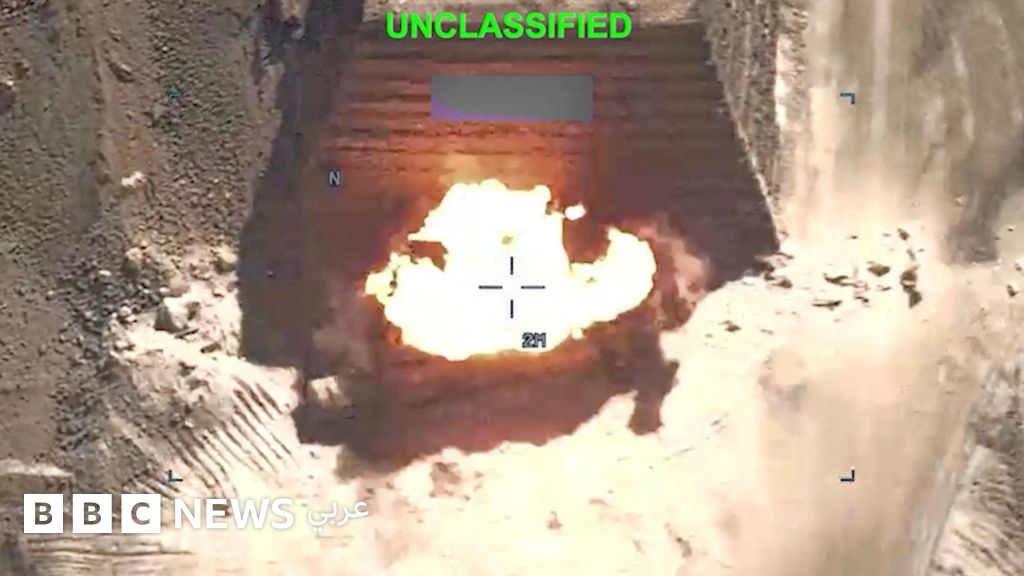
The US military completed the eleventh day of its strikes on Iran, targeting military and naval facilities as well as drone capabilities, aiming to weaken Tehran's ability to threaten navigation in the Strait of Hormuz.
Washington continues strikes on Iran for 11th consecutive day, Trump says: 'We are not done yet'
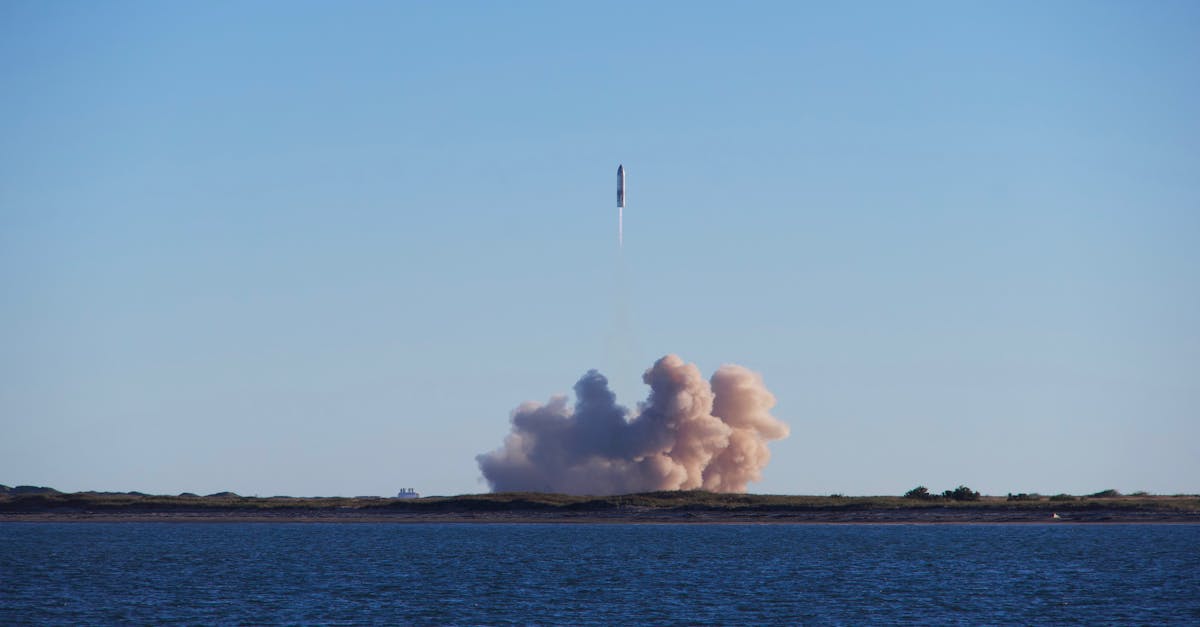
Image caption, Explosion at an unknown location, during what the US Central Command (CENTCOM) described as raids on Iran, on July 20, 2026
Published July 22, 2026, 02:24 GMT
Last updated 1 hour ago
Reading time: 5 minutes
The US army announced the completion of the eleventh consecutive day of strikes on Iran, and the US Central Command said the strikes targeted Iranian military operation centers, naval capabilities, aircraft hangars, drone storage facilities, and military supply infrastructure.
It added that the strikes aimed to 'continue weakening' Iran's ability to threaten commercial ships in the Strait of Hormuz.
The Command stated that Iran attacked more than 30 commercial ships while crossing the strait, adding that 'these unprovoked attacks endangered hundreds of innocent sailors and undermined freedom of navigation.'
This announcement comes as the White House said President Donald Trump will attend a formal ceremony on Wednesday to transfer the remains of US military personnel killed in Iranian attacks in the Middle East.
Trump said his country is not done with its military operations against Iran, estimating that Tehran would need between 20 and 25 years to rebuild what the war has destroyed so far.
Trump added, during his meeting with Lebanese President Joseph Aoun at the White House: 'If we leave now, Iran will need 20 or 25 years to rebuild, but we are not done at all... we will not leave now.'
For the second time in days, the US president threatened to strike the area known as 'Pickaxe Mountain', located near Iran's Natanz uranium enrichment facility, 'soon.'
'Mount Pickaxe' is a nuclear site deep underground near Natanz, where Western intelligence agencies suspect Iran of building an undeclared enrichment facility.
Skip most read and continue reading
Princess Leonor at the forefront of 2026 World Cup celebrations... Who is the Spanish heir to the throne?
From Uganda to the United States: Foreigners fighting and dying in the Russian army
What do we know about the 'Cockroach People's Party' protests in India?
The other winner of the World Cup... Lamine Yamal's little brother who took the internet by storm
The site is linked to Iran's nuclear program and is located near the Natanz facility, which suffered significant damage in the recent strikes.
Iran's Mount Pickaxe facility: What do we know about the site the US president is threatening?
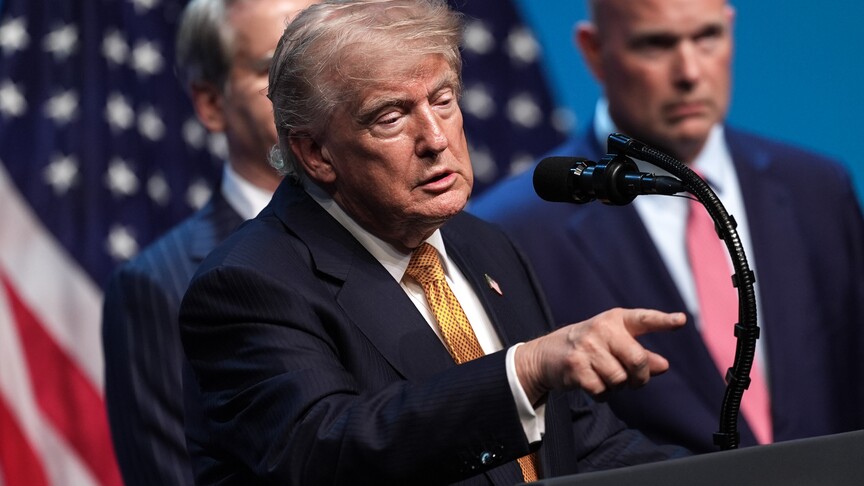
Image caption, US President Donald Trump
Rubio: Iran's control of the Strait of Hormuz would set a dangerous precedent
Skip podcast and continue reading
Worth noting
In-depth explanation of the most important events and topics, to help you understand the key changes around you and their impact on your life
Episodes
End of podcast
US Secretary of State Marco Rubio said that Iran's control of the Strait of Hormuz and imposing fees on navigation or targeting ships that do not pay would set a 'dangerous precedent' that could be repeated in other regions of the world.
Rubio affirmed, during the Association of Southeast Asian Nations (ASEAN) meeting in Manila, that freedom of navigation in international waterways is 'under threat', stressing that the United States 'cannot allow that to happen.'
His statements coincide with the United States continuing its strikes on military targets in Iran for the eleventh consecutive night, while Rubio confirmed that Washington remains open to negotiations with Tehran, provided they are 'serious' in their commitments, threatening that his country will take 'whatever is necessary' to protect its interests and allies.
Shipping sector data showed that the number of ships crossing the Strait of Hormuz decreased further on Tuesday, amid ongoing security concerns and continuous attacks between the United States and Iran.
Data from Kepler showed that three cargo ships crossed the strait on Tuesday, down from four on Monday.
Kepler data showed that the general cargo vessel (Kaiser) left the strait laden with goods, while the dry bulk carrier (H7SMB8) entered the strait empty, meaning it will pick up a load in the Gulf.
Kepler said the vessel (Xin Ocean) entered the strait on Tuesday carrying refined palm oil.
No crude oil supertankers or LNG carriers were seen crossing the strait on Tuesday.
A fire broke out on Tuesday in southern Iran, specifically on a mountain overlooking the city of Shiraz, according to the official news agency (IRNA), without specifying its cause.
The agency reported that 'a large fire broke out on Tuesday evening on Darak hills and mountains near Bab al-Quran in Shiraz,' adding that 'thick smoke and flames could be seen from several neighborhoods in the city.'
Mahmoud Farmani, director of public relations for the local fire and security services, said about a hundred firefighters were deployed on the ground in an attempt to contain the fire and prevent its spread, without specifying the area it covers.
London pledges support to reopen the Strait of Hormuz
In a related context, British Prime Minister Andy Burnham agreed to allow the United States to use British military bases to carry out what the British government described as 'defensive strikes' against Iran, according to Bloomberg on Tuesday evening.
For his part, Pakistani Prime Minister Shehbaz Sharif on Tuesday, during his reception of Iranian Interior Minister Eskandar Momeni, called on Washington and Tehran to exercise restraint, affirming that Islamabad will continue to act as a mediator between the two sides.
A statement from the Prime Minister's Office quoted Sharif as urging 'all parties to exercise restraint and refrain from steps that could further destabilize the region,' adding that he informed the Iranian minister that his country would continue its efforts that contributed to the signing of the memorandum of understanding to end the war in June.
What is driving Iran to war again? - Financial Times
Strait of Hormuz: Are alternative routes enough to export Gulf oil and gas?
Image caption, Iranian Interior Minister Eskandar Momeni (left) speaks with his Pakistani counterpart Mohsin Naqvi (right)
Meanwhile, US President Donald Trump said he had a 'very good conversation' with new British Prime Minister Andy Burnham, and discussed with him 'clearing mines from the Strait of Hormuz.'
Trump said in a post on his Truth Social platform, 'We discussed North Sea oil, trade, the military alliance, clearing mines from the Strait of Hormuz, and many other topics. The call was interesting and went well,' adding that he would meet Burnham 'in the near future,' without specifying a date.
Trump criticized former British Prime Minister Keir Starmer over the US-Israeli war with Iran as well as issues of immigration, energy, and technology sector regulation.
In response, Burnham's office said he assured Trump that London would commit to defense and security and would help support the safe reopening of the Strait of Hormuz.
Original source: BBC Arabic

Comments (0)
Be the first to comment.