Trincão.. Pursuing His Passion Between Mother's Anxiety and Father's Stubbornness
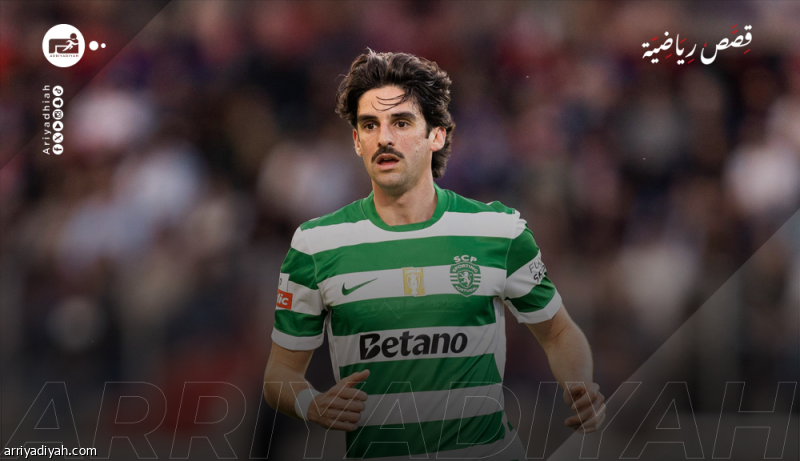
In Viana do Castelo, the coastal city in northern Portugal, the neighborhood knows a mischievous child who could only be seen playing with a ball in the alleys and streets, until he became one of the stars of the Portuguese national football team. That boy is Francisco António Machado Mota Castro Trincão, the new Al-Ahli player, born December 29, 1999, in Braga, whose real childhood and upbringing took shape in coastal Viana do Castelo, where he lived in a very close-knit family, consisting of his father Gonçalo Trincão, and his mother, who was known for her extreme anxiety during his matches, and his younger sister who was his first childhood companion. He says about that era: 'When I was three years old, I never let football leave my feet; I turned everything into a small pitch from the alleys and streets of the neighborhood to the living room, and I considered the doors of the rooms as the goalposts, and my father would compete with me strongly and deliberately win at first to instill in me a spirit of challenge and anger at losing, and when he sees my frustration he returns to encourage me, and by chance my going to Vianense club changed my life; the club did not accept children my age, but the coach asked me to go down to the field to try it out, and from that moment I have never left the green rectangle.' His father Gonçalo recalls in the folds of memories that Francisco, at the age of two or three, would turn the living room into a mini football pitch, exchanging the ball with his father, and the doors and exits were the targeted nets. At that time, the father would deliberately win at first to test his child's determination, and when he felt the little one's frustration and anger at losing, he would return to support him, which ingrained in the young player's mindset a spirit of challenge and early refusal to give up. At the age of five, the walls of the house became too small for Trincão's skills, prompting his parents to take him to the local Sporting Vianense club. The father recalls that moment when they went to ask about the possibility of registering him, and the officials told them that the club does not accept children under five, but by chance, there was a children's training session in progress, so the coach asked Francisco to go down to the field to try out, and within minutes he caught the eye, and his official career began from that local venue. Trincão's childhood was not limited to the pitches; the beach was an integral part of his identity, as he grew up loving the sea, walking on the sand, and playing with his sister, who had a strong personality that pushed him to overcome his shyness, taking him by the hand to play with other children in the public squares. The biggest turning point in his career and athletic formation came through the doors of Sporting Braga, which he joined at the age of 11 and remained until he was 20, interspersed with a brief and short stint at Porto, but due to his young age and the difficulty of logistics and distances, the family preferred to return him to his northern environment, to learn the true fundamentals of the game in Braga, where his family support network was. The Portuguese youngster says about his family's support: 'I am a very calm and shy person in my public life, but I completely transform when I step onto the pitch, and my younger sister always had a strong personality, and she would take me by the hand in my childhood to force me to play with other children on the beach and in the squares and overcome this shyness, and the connection to family is everything to me; my mother still to this day experiences pathological tension and extreme anxiety during my matches, to the point that she often cannot bear to watch the matches on screen, and prefers to go out for long walks in the city streets until she ensures the match is over, then calls to find out the result.' In Braga, Trincão had coaches who refined his talent, most notably the Portuguese Rúben Amorim, who later supervised him, and he progressed through the youth categories amid great difficulties, as he sometimes did not start as a key player with the youth and junior categories, and he always had to prove his worth in every training session. Trincão's talent exploded on the international stage in 2018, when he led the Portugal under-19 team to win the European Championship in Finland, and was crowned the tournament's top scorer with five goals, tied with his teammate and fellow traveler the late Diogo Jota, an achievement that opened the doors to global fame, and moved him in 2020 to Spanish club Barcelona in a massive deal worth about 31 million euros, followed by a loan experience in the English Premier League with Wolverhampton Wanderers. Trincão describes that period by saying: 'Moving to live outside Portugal at an early age puts you in front of difficult psychological challenges, and in my experience with Wolverhampton in England, life was completely different from the nature of Portugal and its warm atmosphere, and the biggest challenge there was not on the pitch, but was facing long and boring free time after training sessions, and I spent those long hours going out with my compatriot Fábio Silva, where we would get in the car and drive around the city streets at night with no specific goal, just escaping the emptiness and boredom, and having my childhood friend Pedro Neto in the same team relieved me a lot and helped me adapt.' After that external journey, Trincão returned to Portugal through the doors of Sporting Lisbon, where he regained his brilliance and won the Portuguese league title. Today, the Portuguese star temporarily turns the page on European stadiums, reaching out for a new professional experience in the Saudi stadiums, wearing the Al-Ahli shirt, carrying with him a legacy from the mountains of northern Portugal and broad ambitions to write a new chapter in his football career.
Original source: Arriyadiyah




Comments (0)
Be the first to comment.