Heatwave in Egypt with Warnings of Heat Stress and Damage to Agricultural Crops
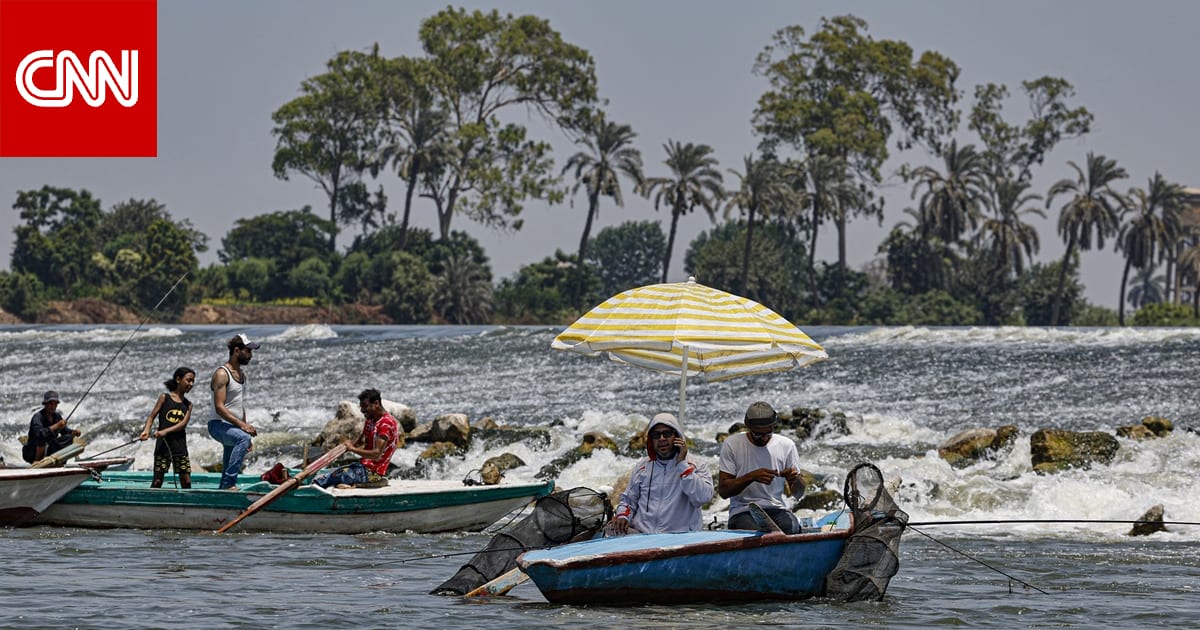
Credit: KHALED DESOUKI/AFP via Getty Images
(CNN) -- Egypt is experiencing a severe heatwave that peaked this week, with temperatures higher than seasonal averages across most of the country, amid official warnings of heat stress risks, while the exceptional weather has prompted climate and agricultural experts to call for preventive measures to mitigate its impact on citizens and some summer crops.
The heatwave is due to the extension of the Indian monsoon depression, which brings extremely hot and humid air masses, coinciding with a high-pressure system in the upper atmosphere, raising temperatures and the feeling of heat, especially in Greater Cairo, the Delta, and Lower Egypt, while the meteorological authority expects the wave to recede gradually from the end of the week.
Manar Al-Ghanem, a member of the media center of the Egyptian Meteorological Authority, said that the peak of the severe heatwave will continue until tomorrow, Thursday, with temperatures 3 to 4 degrees Celsius higher than normal, along with a significant increase in humidity levels across most of the country.
She added that temperatures will begin to drop from Friday by about three degrees compared to the peak of the wave, with the weather remaining extremely hot, explaining that the most noticeable improvement will be at the beginning of next week, from Sunday, when temperatures return to their usual summer averages, while high humidity continues as a natural feature of summer.
Al-Ghanem explained, in exclusive statements to CNN Arabic, that Greater Cairo recorded a maximum temperature of 39 degrees Celsius, while the actual feeling of heat ranged between 41 and 42 degrees due to humidity, while Upper Egypt provinces recorded the highest temperatures, with a maximum of 45 degrees Celsius in Aswan.
She called on citizens to avoid direct exposure to sunlight during the midday period, to wear head coverings and light, loose cotton clothing, to drink plenty of water and fluids, to stay in well-ventilated places, and not to leave any flammable materials inside cars parked under the sun.
The member of the media center of the Meteorological Authority linked the current heatwave to the influence of a high-pressure system extending in the upper atmosphere, along with the extension of the Indian monsoon depression on the Earth's surface, which brings extremely hot air masses saturated with large amounts of water vapor, leading to higher temperatures and an increased feeling of heat by about 3 to 4 additional degrees due to humidity.
Regarding the agricultural sector, Mohamed Ali Fahim, head of the Climate Change Information Center, said that the current wave requires preventive measures to protect crops, recommending adjusting irrigation intervals according to the nature of the crop and soil type, irrigating during the early morning hours or after sunset, and supporting sensitive crops with potassium and magnesium elements according to technical recommendations.
He added that fruits exposed to direct sunlight, especially mangoes, pomegranates, tomatoes, and peppers, need protection measures to reduce the damage from high temperatures, in addition to intensifying monitoring of agricultural pests and fungal and bacterial diseases that may become active with high humidity levels, stressing that the peak of the wave requires a high degree of caution on the part of farmers.
For his part, Hussein Abu Sadam, head of the Farmers' Syndicate, said that the impact of the current heatwave on crops remains limited, explaining that most summer crops, especially fruits, have already reached the ripening or harvest stage, which reduces the extent of damage resulting from high temperatures.
Abu Sadam added, in exclusive statements to CNN Arabic, that crops such as mangoes and grapes are currently entering the harvest season, and corn is at a growth stage that is not significantly affected by high temperatures, noting that the greatest impact is concentrated in some new plantings, especially newly planted tomato seedlings.
Abu Sadam explained that high temperatures may cause damage to a percentage of new seedlings, forcing farmers to replant the damaged parts in what is known as 'replacement,' which raises production costs, especially with the high prices of seedlings, adding that existing crops, whether fruits or most summer vegetables, will not be significantly damaged by the heatwave because they are naturally adapted to the prevailing climatic conditions during the summer.
Original source: CNN Arabic





Comments (0)
Be the first to comment.