US Army announces completion of ninth wave of attacks on Iran
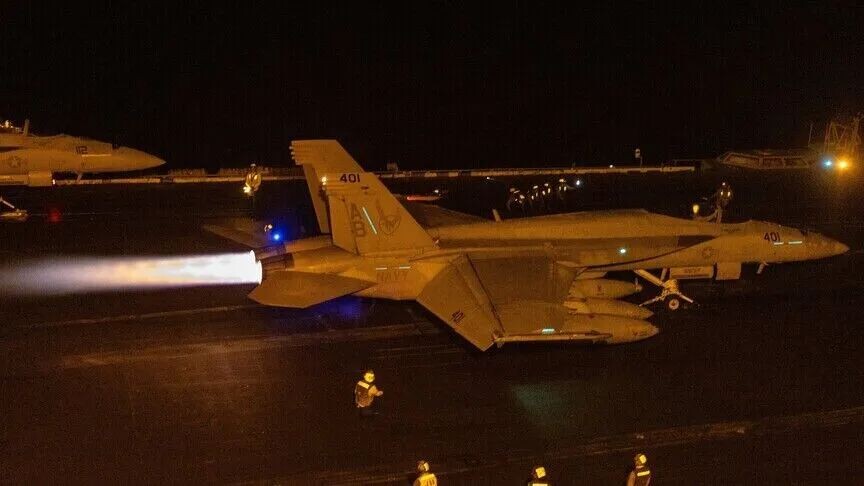
According to a statement by the US Central Command (CENTCOM), with no immediate comment from the Iranian side..
Ankara / Anatolia
The US Central Command (CENTCOM) announced early Monday the completion of the ninth wave of attacks launched by the United States on Iran.
A statement published by CENTCOM on the US platform X stated that the ninth wave of airstrikes "aimed at reducing Iran's ability to attack commercial ships and civilian navigation vessels transiting the Strait of Hormuz" has been completed.
The statement affirmed that operations aimed at weakening Iranian military capabilities will continue, and that US forces remain at full readiness to carry out their missions in the region.
It explained that the attacks carried out during the ninth night targeted Iranian military command centers, communications networks, coastal surveillance and air defense facilities, naval forces, as well as missile and drone bases.
No immediate comment was issued by Iranian authorities on the ninth wave of US attacks.
On June 18, 2026, Washington and Tehran signed a memorandum of understanding that included a ceasefire, and they began negotiations mediated by Pakistan and Qatar to end the war launched by the United States and Israel against Iran on February 28 of the same year.
However, US President Donald Trump announced on July 8, 2026, the end of the ceasefire following renewed escalation, after Iran attacked three ships a day earlier while they were transiting the Strait of Hormuz, claiming they did not adhere to the navigation course it had set, to which Washington responded by launching attacks on sites inside Iran.
Washington demands guaranteeing freedom and security of navigation in the Strait of Hormuz, while Tehran insists on imposing a mechanism to regulate the passage of ships through the strategic waterway and asserts that it targets any vessel that does not coordinate with it before crossing the strait, exacerbating fears of disruption to oil and gas exports from the region.
Original source: Anadolu Agency
Comments (0)
Be the first to comment.