World News / New Archaeological Discoveries in Quweisna, Menoufia Governorate, Egypt
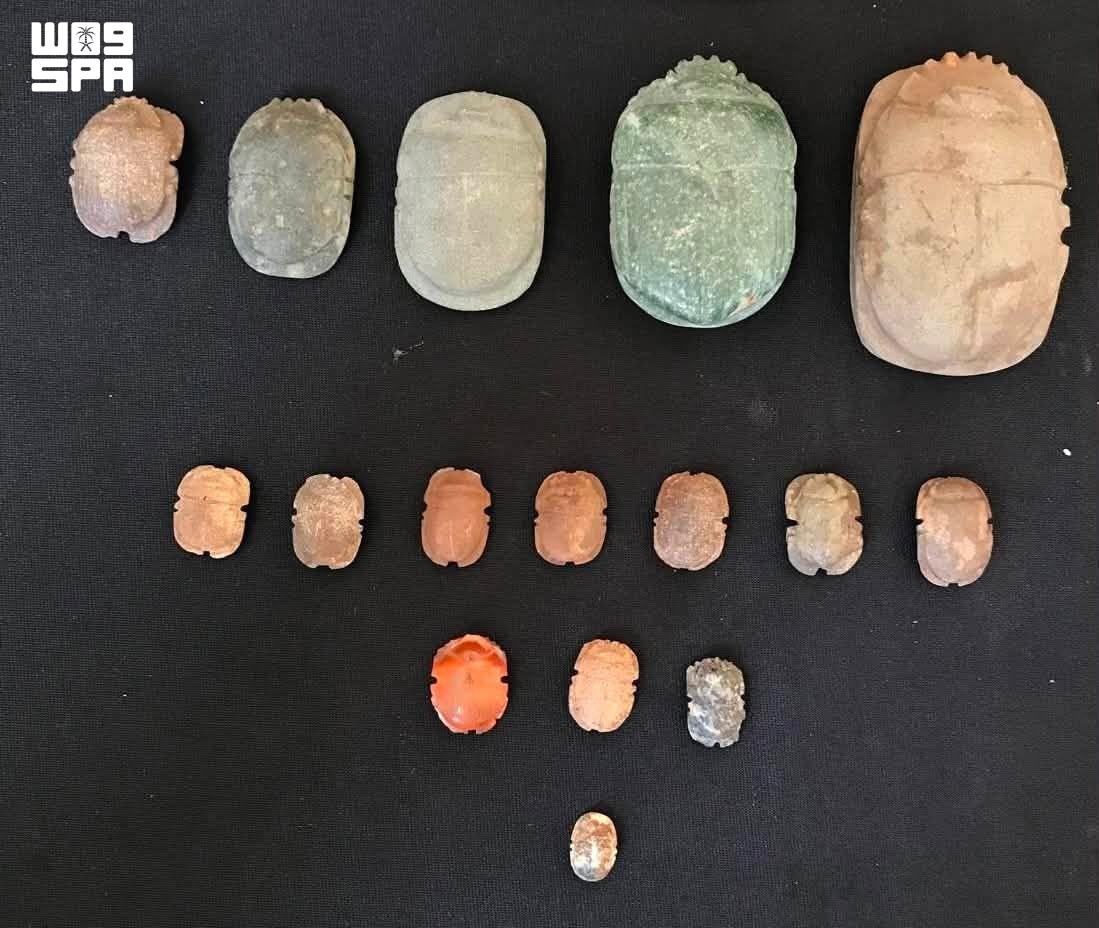
أعلنت وزارة السياحة والآثار المصرية عن العثور على وحدة جنائزية ومئات تماثيل الأوشابتي واللقى الأثرية في جبانة تل آثار قويسنا بمحافظة المنوفية، تعود إلى العصرين المتأخر واليوناني الروماني.
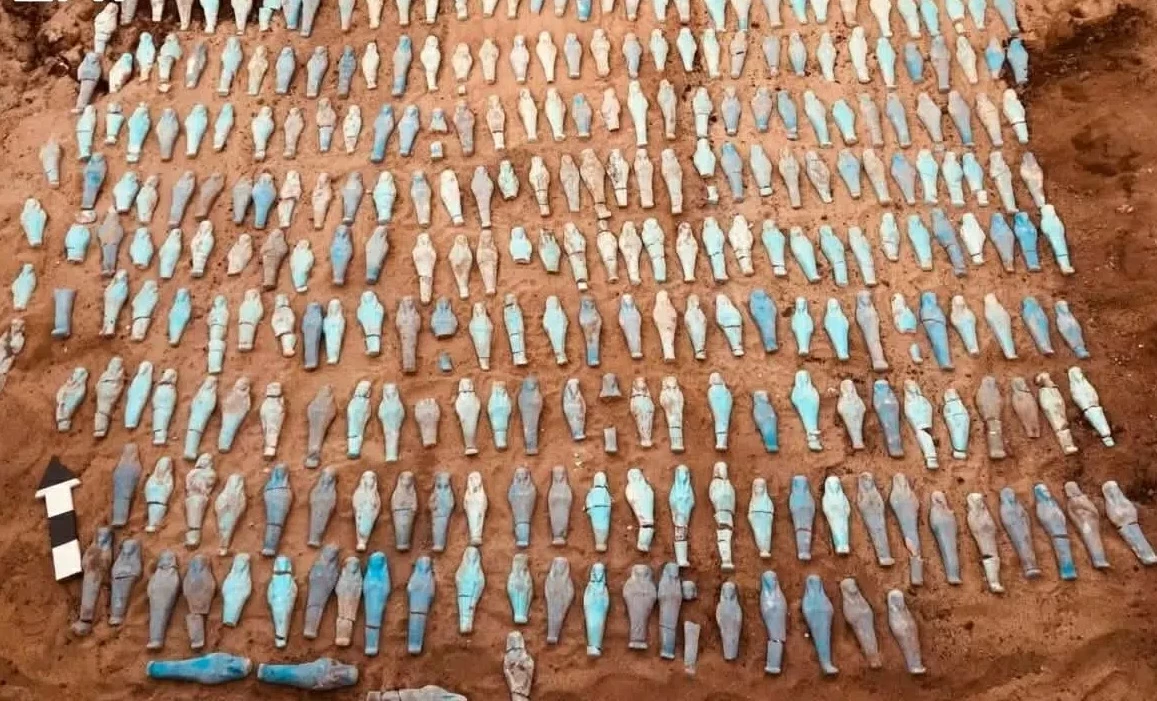
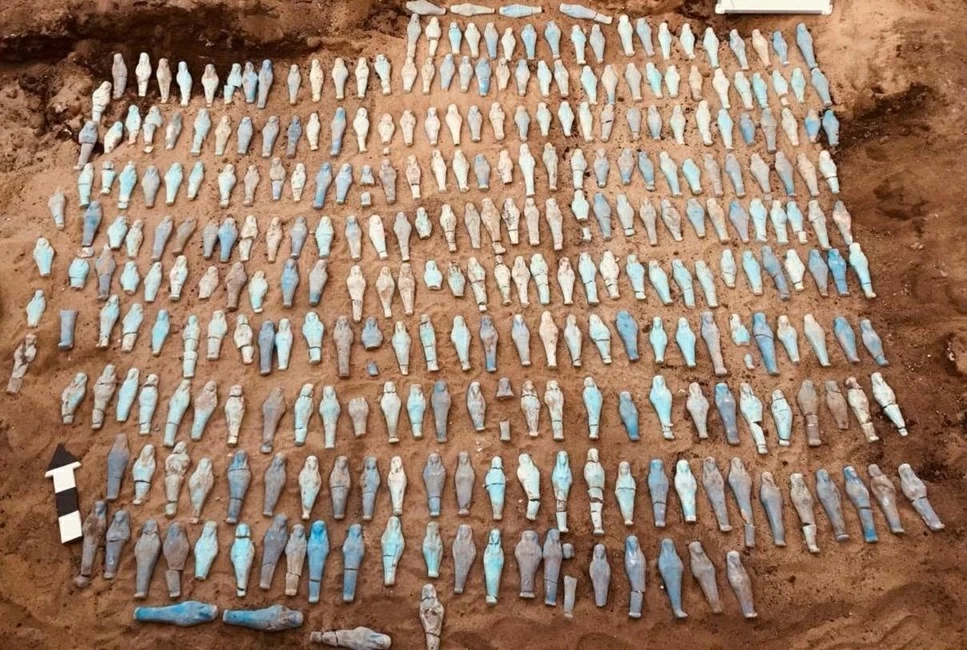
Cairo, Safar 08, 1448 AH corresponding to July 22, 2026, SPA. The Egyptian archaeological mission working at the Quweisna Tell Cemetery in Menoufia Governorate, Egypt, has uncovered a new funerary unit characterized by an organized architectural layout and a variety of archaeological finds dating back to the Late Period and the Greco-Roman era. The Egyptian Ministry of Tourism and Antiquities stated in a press release today that the excavations carried out by the mission resulted in the discovery of a variety of pottery vessels, including plates and bowls of different sizes, in addition to a pottery vessel containing remains of materials likely used in funerary rituals accompanying burial, as well as two pottery lamps. It also stated that two large groups totaling 560 ushabti figurines made of faience, varying in shape and size, were discovered, along with a set of amulets made of semi-precious stones, and large quantities of blue and green faience beads. It noted that the excavations also revealed examples of pottery imported from the Greek island of Rhodes, including part of a vessel handle bearing the name of its maker, which serves as material evidence of active trade relations between Egypt and the Mediterranean region during the Late Period and the Greco-Roman era. It is worth noting that the Quweisna Tell Cemetery in Menoufia Governorate is one of the most important individual cemeteries in the central Nile Delta region. It was first uncovered in 1991 and contains a number of funerary units dating back to successive historical periods, making it one of the most prominent archaeological sites for studying the evolution of burial practices, beliefs, and funerary rituals throughout the ages. // End // 21:26 Mecca Time (0204)
Original source: SPA




Comments (0)
Be the first to comment.